Back to Top

Monthly Archives: December 2010

I have a terrible confession to make. I am Amanda, and I am an avid royal watcher. Yes, there it is, terrible but true. I think it all started when I was a preschooler, and got up in the middle of the night to sit on the couch with my mother and watch Princess Diana’s wedding. I insisted on wearing my ballet recital tiara and a bedsheet tied around my waist for a train for days after, and I guess I never totally got over it. The best Christmas gift I ever received came that year, when my aunt bought me a porcelain Diana doll complete with massive train (which I still have). I buy British tabloids whenever possible just to read about them. And the thought of a royal wedding coming up soon fills me with guilty glee, and I have a secret longing to go to London this spring just to sit on the sidewalk with thousands of other people and watch the procession go by. (See “Kate Middleton will be sixth Queen Katherine”)

Now you know my secret. So I thought we could take a brief look at some of those other Queen Katherines and their weddings (and a few Charlottes and Victorias as well…)

Catherine of Aragon married Prince Arthur of England on November 14, 1501 (having been already married by proxy in 1499!). This was a sort of affirmation for those upstart Tudors, landing a Spanish infanta for a bride, and they did it up big-time for the 15-year-old couple. The wedding was at St. Paul’s Cathedral, presided over by the Archbishop of Canterbury and witnessed by dozens of courtiers (and hundreds of commoners lined up on the procession route outside). The bride wore a white gown embroidered with silver thread, pearls, and diamonds, with her auburn hair loose to her knees and a Spanish lace veil. She was escorted up the aisle by her 10-year-old brother-in-law Henry. The celebrations went on for two weeks of jousting, balls, and masques, and then the couple (consumated or not? Who knows…) were packed off to damp Wales. Arthur died 6 months later. When Catherine went on to marry Henry, it was a quiet and private affair. In fact, all Henry’s weddings were quiet–some were even totally secret.

Catherine’s daughter Mary I married Philip of Spain in another lavish ceremony, this one at Winchester Cathedral on July 25, 1554. There were thousands of guests packed into the church to witness the ceremony, conducted by Bishop of Winchester Stephen Gardiner. The cathedral was hung with gold and crimson cloth, and everyone was dressed in their most lavish fashions despite the rain outside. Philip wore white and gold; Mary wore a purple and gold gown, “rich tissue with a border and wide sleeves, embroidered upon purple satin, set with pearls.” An immense banquet followed at the Bishop’s palace. (Here is a reproduction of her gown, as well as the chair she used for the ceremony, both seen at Winchester Cathedral. I actually quite like that dress!):


Charles II married Catherine of Braganza three times. The first was by proxy in April 1662, followed on her arrival at Portsmouth by a secret Catholic ceremony and a public Protestant one, presided over by the Bishop of London on May 21. It was a cozy affair, with a few privileged courtiers to witness it. The bride wore a rose-pink gown sewn with blue love knots, which were then cut off and passed out as favors. She was deemed quite dowdy by the fancy Court ladies, but the groom wrote to his sister, “I think myself very happy, for I am confident our two humors will agree very well together.” This is a medal struck for the occasion of their marriage:


George III married Queen Charlotte only a few hours after her arrival in England, when she was bundled into a lavish white and gold Court gown and mounds of jewels and carted off to the Chapel Royal at St. James Palace for the wedding on September 8, 1761. Despite this abrupt beginning, the marriage was a harmonious one (despite the madness and all that). The same could not be said of their son, George, the Prince Regent.

His wedding to Caroline of Brunswick on April 8, 1795 was famous for the deep inebriation of the groom. Like his parents, the wedding was at the Chapel Royal. It was attended by dozens of snickering courtiers, presided over by the (presumably taken aback) Archbishop of Canterbury, and the bride wore a gown of silver tissue and lace with a train of ermine-lined velvet so heavy she could hardly walk. Somehow they managed to beget a child within the next few days, and that was the end of that.
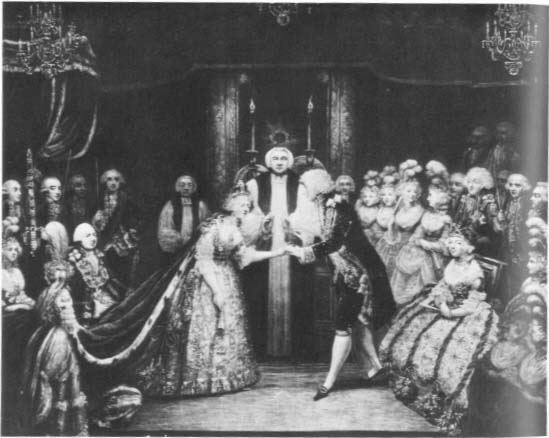

That unfortunate child, Princess Charlotte, grew up to marry Prince Leopold on May 2, 1816 at Carlton House in front of 50 guests. Despite the small size of the wedding, it was a lavish one. The bride’s dress of silver lame on net embroidered with silver shells and flowers and trimmed with Brussels lace, was said to cost 10,000 pounds! It still exists today.

Princess Charlotte’s Wedding Page

Regency Weddings


Queen Victoria was really the one who started all the stuff we consider to be “wedding-y” today. White dresses, veils, flowers, bridesmaids, etc. She married Prince Albert at the Chapel Royal on a rainy February 10, 1840, with crowds of people lining the route to see the royal procession. She had 12 bridesmaids to carry her train, and a gown of white satin trimmed with lace, a lace veil held by a wreath of orange blossoms, satin slippers, and a sapphire brooch given to her by her groom. (the lace was said to have cost over 1000 pounds! The veil was later worn by her youngest daughter Princess Beatrice, and Queen Victoria was buried in it). The wedding breakfast was at Buckingham Palace, after which the couple dashed off to honeymoon at Windsor. The honeymoon must have been a great success, for Princess Vicky came along 9 months later! Her wedding to the Crown Prince of Germany was also hugely lavish…


And that’s only a tiny taste of royal weddings! What is your favorite historical wedding? Are you looking forward to the next royal wedding like I am??

Posted in Uncategorized | Tagged | 16 Replies

The Arts Journal website (thanks, JA for this resource) led me to an article on Big Questions Online: A Not-So-Distant Mirror by Alan Jacobs, a professor of English at Wheaton College, who writes the Text Patterns blog.

The article is about how the 18th Century is similar to the 21st. His article is based on a social history of Georgian England, English Society in the Eighteenth Century by Roy Porter.

Because people often lump the Regency into issues relevant to the late Eighteenth Century, I thought this article was relevant to “our” time period. But, I warn you, my “social worker” self will be peeking out here.

Here are some of Jacobs’ (and Porters’) points:

1. The English in the 18th century were developing a social conscience, showing more concern for the poor and for children than their ancestors. Certainly through our modern times, we’ve developed more services for the poor–welfare, food stamps, unemployment, disability, etc. We’ve shown concern for children–education, head start, WIC, Child Protective Services, Foster Care, etc.
Of course, Jacobs quotes Porter as saying, “Tears for the exploited, the unfortunate and the afflicted flowed freely, but sympathy cost little, and was only occasionally translated into action.” I suppose we could make a case for this in our present society, too.

2. Child rearing practices were changing. Porter says, “Many ladies abandoned the wet nurse and experimented with breast-feeding; swaddling disappeared, partly in response to mothers’ new-found desire to fondle, dandle and dress their infants.” Our Regency mothers are more apt to breast feed than their mothers. From, say, the 1950s, when formula and scheduled bottle feeding was the norm, in more recent times mothers have turned back to breast feeding. Jacobs also notes that 18th century parents were more apt to turn away from physical punishment and to rely on “reasoning, coaxing and kindness” in disciplining their children. We in modern times have also turned away from physical punishment, relying on “consequences” and “time out.” Jacobs also notes that 18th century parents could tend to be over-protective and we can certainly relate that to parenting today where parents are involved in every aspects of their children’s lives.

3. Jacobs notes that ethical norms were loosening in the 18th century, much like today, and were more apt to be based on an individual’s own psychological make-up and what feels right and good to the individual. An 18th century version of the Me Generation!

I thought of other parallels, more attuned to the Regency, like, maybe:

1. An economic downturn and high unemployment? Certainly that was the experience in the Great Britain after the Napoleonic Wars. The populace complained about what the Parliament enacted to try to solve the problems (which did protect the wealthy landowners who tended to be themselves)

2. More relaxed fashions? Enter in the era of grecian fashions, empire waists for women, and elimination of brocades, lace, and a rainbow of colors for men. No more powdered hair or wigs. Of course, we have turned even more casual than the Regency. Remember when we used to dress up to ride in airplanes?

3. A long war? The Napoleonic Wars lasted from 1803 to 1815.

Can you think of any other social or political parallels between today and the Regency?

Don’t forget to enter the Harlequin Historical Holiday Contest. Prizes are awarded every day and the Grand Prize is a Kindle. Go here for more information. This Thurday is my day! Come to Diane’s Blog on Thursday for a chance to win your choice of a signed copy of one of my backlist books and a $10 Amazon gift certificate.

Help me!

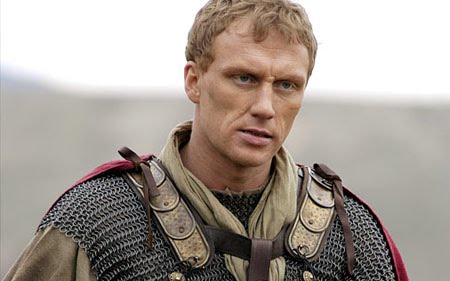
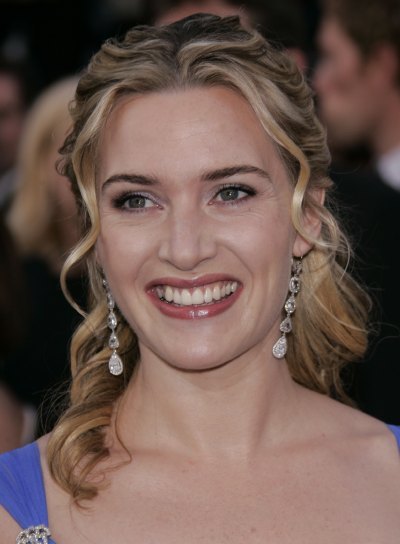
I finished the novella I titled “Secret Scot Baby” a few weeks ago, and sent it to my agent for her review. I now have to think of a title that doesn’t suck, or make me laugh, both of which this title does. When I first began it, all I knew was that I wanted the heroine to be an English widow living in Scotland and the hero is a Scot who served in the war, and has unexpectedly inherited a viscountcy (The people I based the characters’ looks on are here, just for some nice visual interest). A good friend–Myretta Robens–came up with a compelling reason for them to meet, and that reason is the baby the widow’s late husband fathered while away from home.

Here’s the brief blurb (it’s a Regency-set historical, which isn’t clear from this. D’oh!):

A weary soldier returns to Scotland from the battlefront bringing a fallen comrade’s baby—to the house of the comrade’s widow.

Katherine doesn’t know what to make of the man who arrives on her doorstep, and knows even less what to make of the baby Mac says was fathered by her late husband—and now has no home but hers to go to.

I have to write the synopsis, too, but I won’t ask for help with that (although I do not promise not to whine about it!). Any suggestions for a title are welcome!

Megan

Posted in Uncategorized | Tagged | 19 Replies

I’m thrilled to welcome Victoria Janssen to the Riskies to talk about her latest release (and isn’t that a super hot cover?). Not quite a Regency writer, Victoria has created her own world, and here is how she “researches” it.

Over to you, Victoria …

The Duke and the Pirate Queen is set in the same world as The Duchess, Her Maid, The Groom & Their Lover and features characters who appeared in that novel, Duke Maxime and Captain Imena Leung. Captain Leung is forced to abduct Duke Maxime, who is her employer, to thwart an assassination plot against him. He wants her. She wants him. Unfortunately, issues of birth, rank, and their own pasts are in conflict with their desires. And then there are the pirates, the storm, the hostile islanders…not to mention the sharks.

The Duke and the Pirate Queen isn’t a historical. However, it is set in a fantasy world, and I’ve often noted that my approach to creating a fantasy world is very similar to the way I research to write a historical novel. The difference is in the variety of sources I feed into my brain. My subconscious, which I call my “backbrain,” assimilates all the information and, hopefully, leaves me with an idea of a world that holds together like a “real” world. My theory is that my own “voice,” as it were, imposes a kind of internal consistency on the ideas I choose to include.

I use history as a guide. Most of the countries in The Duke and the Pirate Queen are loosely based on one culture or another, sometimes with elements from different time periods depending on the thematic needs of the scenes I’ve set there. The Duke Maxime’s duchy, for example, is essentially a Mediterranean setting. Captain Imena Leung comes from an empire similar to fifteenth century China that is plagued by ninth century-style Japanese pirates.

Another important research source for The Duke and The Pirate Queen was its predecessor, The Duchess, Her Maid, The Groom & Their Lover. I carefully went through my manuscript file and copied out all descriptions of the characters I planned to use again as well as all the descriptions of Maxime’s palace. I kept those bits of text on hand while writing new scenes set in Maxime’s duchy, to ensure internal consistency between the two novels.

For the main ship featured in the novel, Seaflower, I relied on a wide range of research material, most of it relating to ships used in the Napoleonic Wars, some to modern sailing ships. This was partly because I already had an interest in that period, and there are plenty of resources; but also as an homage to the sea adventure novels of Patrick O’Brian and C.S. Forrester, which influenced several events that take place in the story. I returned to O’Brian’s novels themselves to put a little more life into my understanding of sailing ships.

Finally, most of the plot turns on long-distance trade. When I first conceived the novel, I had not yet figured this out. The idea came later, from my pleasure reading; or rather, reading I knew might be useful to the story, except I pretended it wouldn’t, so I could pretend it was for pleasure!

Dangerous Tastes: The Story of Spices by Andrew Dalby and Sweets: A History of Candy by Tim Richardson added immeasurably to the “feel” of a world newly discovering trans-oceanic trade: “Whole pears, glittering with an armor of sugar crystals, spilled from a brightly polished silver bowl, and a mixture of saffron pastilles and candied violets adorned a perfect marzipan replica of the king’s castle.”

Those two books also provided me with an important character motivation, which I won’t reveal here. If I hadn’t been reading “outside” books, the novel would have been much poorer for it.

The final research source I used might not really count as research. I think of it as mining my own brain. All the research I’ve done before is in my brain, somewhere. When writing a fantasy novel, bits and pieces I may not even consciously remember rise to the surface and fill in gaps with my own voice.

Nothing I read is ever wasted.

Victoria will give away a signed copy of her book, so please tell us what you think of fantasy vs. historical, and what, as reader or writer, makes a fictional world comes alive for you.

Posted in Uncategorized | Tagged , | 11 Replies
Follow
Get every new post delivered to your inbox
Join millions of other followers
Powered By WPFruits.com