Back to Top

Monthly Archives: May 2013

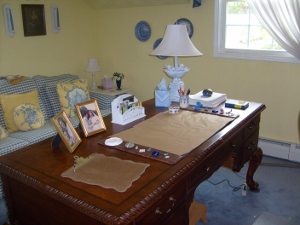
Over the recent long weekend, I started a major cleanup and reorganization of my writing room. As it’s also our home office, it had gotten cluttered with all sorts of stuff, most of it not writing-related. Anyway, the task is not done (there are bookshelves and cubbies you can’t see that still need attention) but I did find my desk!

Some creative people seem to thrive in clutter, but I really don’t. Clutter makes me feel I ought to be cleaning something rather than writing. I do have a few tchotchkes for fun and inspiration, including the “lucky stone” found while walking on the beach with Gail Eastwood last summer. (She told me that stones circled by an unbroken band of a different color were said to bring good luck.)

I found this article in the Guardian about Jane Austen’s working space at Chawton.

It’s very plain and simple; check out the link for the picture. Here’s a quote from the article:

Having no room of her own, she established herself near the little-used front door, and here “she wrote upon small sheets of paper which could easily be put away, or covered with a piece of blotting paper”. A creaking swing door gave her warning when anyone was coming, and she refused to have the creak remedied.

I also like my privacy. My family has learned not to interrupt me when I’m writing and I find it difficult to work in public spaces. I can do editing there, but not the more vulnerable work of fresh writing.

I also like taking walks to clear my mind and work out plot snags. This has been true of writers for a long time. Some Regency era poets certainly did so, according to this section from The Immortal Dinner by Penelope Hughes-Hallett.

He (William Hazlitt) said that Coleridge liked to compose ‘in walking over uneven ground, or breaking through the straggling branches of a copse-wood’; but Wordsworth preferred to write whenever possible ‘walking up and down a straight gravel-walk, or in some spot where the continuity of his verse met with no collateral interruption.’

She also wrote that:

For the ‘Ode to a Nightingale’, his friend Charles Brown recalled that Keats took his chair from the breakfast table out into the garden of Wentworth Place and sat writing under a plum tree, returning indoors with a completed draft only two or three hours, a time span a little hard to credit.

I will probably never be a fast writer, but I also like working outdoors. I do that sometimes on writers’ retreats. At home, when it’s warm enough, I like working in our enclosed porch (no bugs to distract me, but big windows give the feeling of being outdoors).

How about you? Whether or not you’re a writer, are there special places or ways you like to work?
Elena
www.elenagreene.com
www.facebook.com/ElenaGreene

Time to let the inner curmudgeon out for some exercise.

So first of all we had Young Adult. Okay.

Inner curmudgeon: Couldn’t they read Wuthering Heights?

Then New Adult. Okay. I think.

Inner curmudgeon: Couldn’t they just get over themselves already and read Pride & Prejudice?

What’s next? Disaffected Late 20s? Early 30s seeking for affirmation? 40s going through marital angst (oh wait, we already have that–it’s Women’s Fiction).

Because this begs the curmudgeonly questions, What About the Grownups? What the heck are we supposed to read? Who’s writing for us? And why does the industry–and oh yes, writers, too–insist on niching us all into oblivion?

Which brings me to the subject of the week from a few weeks ago, Dear Author’s post We Should Let the Historical Genre Die and Diane’s elegant rebuttal here. It seems like historicals are filling a major niche in that editors (and some of us but so obviously not me) can have all the hot dukes they need to get through the day. But for those of us who like a bit of historical accuracy what a terrific opportunity to show young people taking on life experiences and responsibilities and all that stuff. You were either a child or an adult then, despite what your hormones thought. (Although I should add that fiction as an excuse to teach a moral lesson is just a wee bit out of date by a couple of centuries. The comment “Yes, but what does your heroine learn?” makes me growl.)

(And I should also add that we can get into squicky territory with medieval heroines in their early teens marrying aristos old enough to be their father/grandfather, but let’s not go there.)

But back to our regularly scheduled program and I think I’ve used up the parantheses quota for the day anyway. So while I’d like to say that historicals will provide some grownup reading experiences, it may not happen. I guess we’d all rather read about hot young things bumping boots, although I’m rather fond of characters who know what they’re doing after years of practice.

Thoughts, anyone?

Posted in Rant | 8 Replies

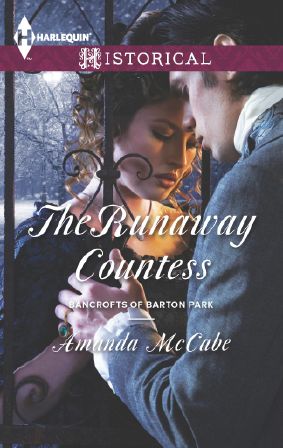
Last week I finally got the cover for my September Harlequin Historicals release, The Runaway Countess!!  It’s such a suspenseful moment just before opening those new cover files.  Will it be hideous?  Beautiful? Make my heroine look weirdly like Miley Cyrus or something?  But I didn’t need to worry at all about this one, I love it wholeheartedly.

RunawayCountessCover1

Wed to wickedness 

In Society’s eyes, Hayden Fitzwalter, Earl of Ramsay and Jane Bancroft have the perfect marriage. But what can’t be seen are the secrets hidden behind closed doors. Believing Hayden will never renounce his dissolute ways, Jane flees to her family’s dilapidated estate in the country. 

Years later, Hayden now longs to win back the only woman who has ever touched his heart. But first he has to convince her that this rogue is ready to be tamed…. 

BANCROFTS OF BARTON PARK 

Two sisters, two scandals, two sizzling love affairs

It’s available for pre-order now

This book was my first attempt at a “marriage in trouble” story, which was a fun challenge!  How to take a couple already married, but torn apart by disappointed expectations and a lost child.  It made writing their HEA twice as sweet, I think.  (Book two will be the story of Jane’s free-spirited sister Emma…)

Do you like “marriage in trouble” plots??  What do you look for in Regency covers?

And I will be drawing a winner for Kae Elle Wheeler’s The English Lily later tonight!  You still have time to comment on last Tuesday’s post….

Today is Memorial Day in the USA, a day of remembrance that began as Decoration Day, a day freemen (freed slaves) decorated the graves of Union soldiers. The holiday eventually became a day to include remembrance of all who have died in defense of our country.

Most of us do not know first hand what soldiers face when they are sent into combat. We suppose their valor, their fear, their willingness to face enemy fire. We imagine it and recreate it in books (Most of my heroes are soldiers or former soldiers) and movies.

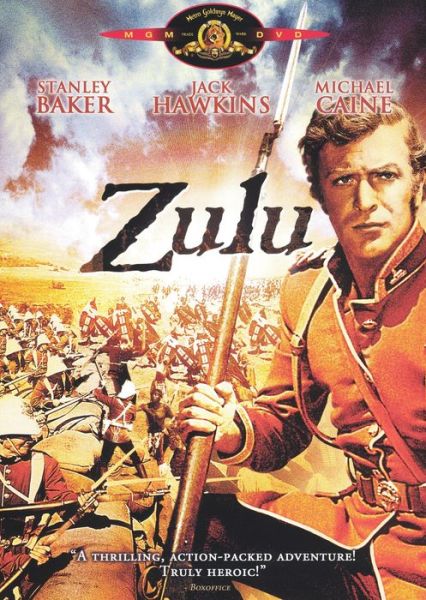
One of my favorite war movies is one released in 1964, Zulu. Zulu tells the true story of the Battle of Rorke’s Drift on January 22, 1879.

The British had invaded the Zulu lands in South Africa under the direction of the British Governor General, but without the sanction of the Government, as part of an attempt to unify the area under British rule. On January 22, at Isandhlwana, a British force of 1700 men was attacked by the Zulu and defeated, leaving only 400 survivors. One Zulu reserve corps of 3,000 missed the battle, but wanted to partake in the glory of victory. They attacked a British store depot and hospital at Rorke’s Drift.

There was only a tiny British garrison of 140 men at Rorke’s Drift. Many of them were sick or wounded. They were commanded by Lieutenant John Chard of the Royal Engineers, who outranked the one infantry officer present, Lieutenant Gonville Bromhead (played n the movie by a very young Michael Caine), whose company had been assigned to guard the station.

The 140 men at the station fought for 12 hours to repel repeated attacks by the 3,000 Zulu warriors. Queen Victoria’s government rewarded their heroic defense by awarding 11 Victoria Crosses and 5 Distinguished Conduct Medals.

What I loved about this movie was its depiction of the valor and dignity of both the British soldiers and the Zulu warriors. I loved that bravery and sacrifice was celebrated.

It turns out that my favorite two scenes in the movie didn’t really happen, but they still depict soldiers at their best.  Here is a YouTube video of those two scenes.

And here is to the valor of soldiers. We remember them today.

Come visit the Pink Heart Society today for my blog on Male on Monday. I’m giving away a signed copy of A Reputation for Notoriety.

My winner for last week’s giveaway of A Reputation for Notoriety is….bn100. Congratulations, bn100. Email me at diane@dianegaston.com with your mailing address.


Posted in TV and Film | 1 Reply
Follow
Get every new post delivered to your inbox
Join millions of other followers
Powered By WPFruits.com