Back to Top

Monthly Archives: July 2013

I’m back from RWA, all bone-weary and brain-dead, but also rejuvenated and ready to conquer everything about the Romance writing world. I did have a lovely time.
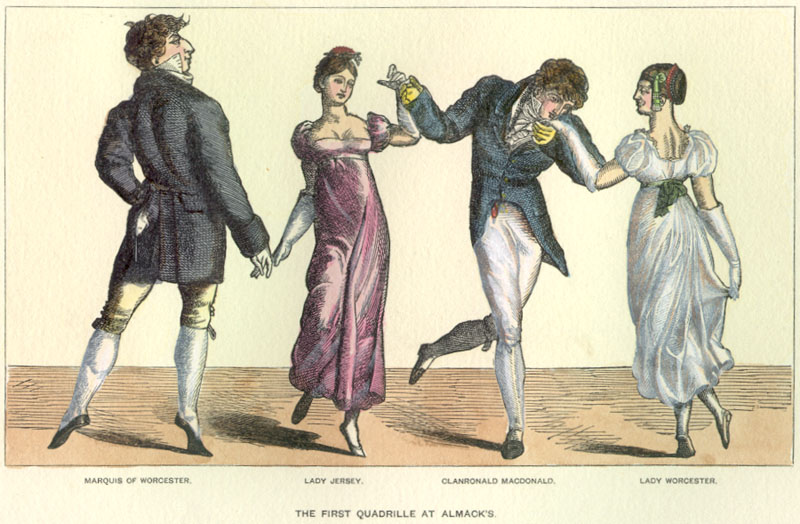
The_First_Quadrille_at_Almack'sBefore the RWA conference, though, there was the Beau Monde conference. The Beau Monde is the Regency chapter of Romance Writers of America and they had a one day conference before the big conference. It is a great time to reconnect with writing friends who love the Regency as much as I do.

Big thanks to Isobel Carr who made the Beau Monde published authors little pins of their latest bookcovers. I wore mine proudly the whole week–until I lost it the last day (sniff!!).

Every one of the workshops I attended at the Beau Monde conference was terrific.

The first was by our very own Risky Susanna Fraser who spoke on Your Hero’s Military History: Beyond Trafalgar and Waterloo. Susanna’s love of the Napoleonic War and its heroes equals (or maybe even exceeds) mine and she did a beautiful job of making a huge topic understandable and useful. Plus in her handouts she provided a fabulous set of timelines.

The next workshop I attended was A Quack or Dr. House by Sharon Lathan, RN, which made the different professions in Regency Medicine much clearer. Now I know the difference between a physician, a surgeon, an accoucheur (midwife) and an apothecary.

The afternoon began with Louisa Cornell, who is such a loyal friend of Risky Regencies. Louisa’s topic was A Great Proficient, about the performance of music in the Regency, especially what a proper lady or gentleman might do. One of the fascinating things about her topic was how similar music became popular then as it does in modern times. One heard music performed, say at Vauxhall Gardens, then ran to the lending library or music shop to get the broadsheet so it could be played at home. The real delight of this workshop, though, was getting to hear Louisa sing. I’ve known for years that she was once a professional opera singer who performed all over Europe, but I’d never before heard her sing!

Last workshop I attended was by our very own Risky, Janet, who talked about The Jewish and Black Communities of Georgian London. I won’t say too much about this one in case Janet wants to expand upon the topic for the blog, but she showed the stereotypes portrayed and some of the ways these groups were assimilated and accepted beyond stereotypic expectations. I will say that Janet was her usual very entertaining self and just listening to her was a pleasure!

The workshops I didn’t get to see were Regina Scott‘s What is So Grand About A Grand Tour, Historical Accuracy: When To Worry And When To Fudge with Anne Cleeland, Jade Lee, and Elizabeth Hoyt, and Ashlyn Macnamara‘s How To Play Whist. But I have the conference tapes so I can catch up on those later!

Later that evening we had the Beau Monde Soiree with Regency dancing. I love this part of the conference because so many of the members dress in Regency dress. I didn’t this year, but wore a long “Regency-esque” dress. One lovely part of the Soiree is that the Mills and Boon editors from the UK (Amanda’s and my editors) always attend. It just seems fitting that they should!

Of course I have NO PHOTOS. I’m terrible at remembering to take pictures until it is too late!

For more on the RWA conference-according-to-Diane, see my blog on Thursday.

If you attended the Beau Monde conference, what was your favorite part. If not, which of these workshop titles most appeals to you?
ldmaudioPart of me wishes I could be at RWA. It’s been years since I’ve seen many of my writing friends. However, the logistics involved in leaving my disabled husband for that many days make it complicated. Not impossible, but complicated.

This year, I’ve actually been too busy to pine (much).

After mulling the top two auditions, both very good, I picked a narrator, Robin Rowan, for the audio book version of Lady Dearing’s Masquerade (cover shown here). I look forward to working with her, because she makes my story sound so good!

I’m continuing to edit Fly with a Rogue to address comments received through critique. Last week I compared being critiqued to sitting in the dentist’s chair. This week it’s more like therapeutic massage. It takes some pressure to work out the knots, but it feels so good afterwards!

I’m also excited to hear that the RITAs will now be open to-self published books. This is partly on a personal note, as I will be able to enter Fly with a Rogue this year. The opportunity for peer recognition is not critical for me—I had already decided, for business reasons, to self-publish this book—but it is nice to know I have the option.

On an organizational level, I think it’s very important. If the purpose of the RITAs is to “promote excellence in the romance genre by recognizing outstanding published romance novels and novellas”, it doesn’t make sense to exclude self-published romances, many of which have already hit the New York Times, USA Today, and other bestseller lists. As I understand it, entrants will have to be eligible for RWA’s Published Authors Network, which means the contest will be open only to authors with a proven record of sales.

There will also be a new category for erotic romance, which many authors of erotic romance have been asking for. I know there are others who say erotic romance should just be entered in whichever category fits otherwise (paranormal, historical, etc…) I understand their point, but I also know that there are judges whose reaction to extremes of sexuality in a book can impair their ability to judge fairly. Allowing those judges to choose not to opt in for the erotic romance category should help ensure better judging.

I haven’t read enough erotic romance to know for sure if this is always true, but in the ones I’ve read, sexual awakening or healing is an important part of the characters’ journey. This is in addition to being part of the relationship development, as it would be in sexy romances in other categories. The special role of sexuality in an erotic romance is also another argument for a unique category.

What do you all think of the RITA changes?

I hope everyone is having a great time in Atlanta and I’m looking forward to seeing pictures here!

Elena
www.elenagreene.com
www.facebook.com/ElenaGreene

Posted in Risky Book Talk, Writing | Tagged , | 4 Replies

In Jane Austen’s Emma, when Mr. Woodhouse goes to Donwell Abbey as part of the strawberry-picking party, he is ensconced inside with Mr. Knightley’s collections.

curiositycabinet1

Mr. Knightley had done all in his power for Mr. Woodhouse’s entertainment. Books of engravings, drawers of medals, cameos, corals, shells, and every other family collection within his cabinets, had been prepared for his old friend, to while away the morning; and the kindness had perfectly answered. Mr. Woodhouse had been exceedingly well amused. Mrs. Weston had been showing them all to him, and now he would show them all to Emma; fortunate in having no other resemblance to a child, than in a total want of taste for what he saw, for he was slow, constant, and methodical.
Chapter 42

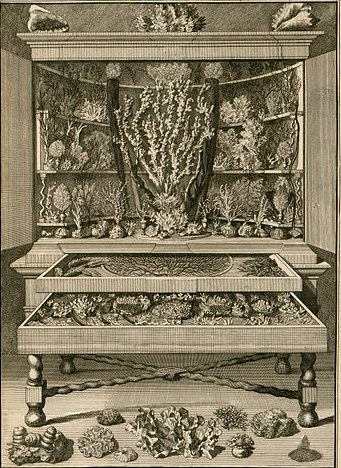
wunderkammen--1715

Wunderkammen–1715

These cabinets of curiosities, or Wunderkammern appear to have become popular in the 16th century and proliferated throughout Europe. Collectors were typically encyclopaedic in their approach, and the cabinets contents were items thought to be exceptional, rare, and marvellous.  The items Jane Austen decribes- drawers of medals, cameos, corals, shells, and every other family collection within his cabinets– were typical of the sort of items which made their way into such collections.

Below is a description of the Cabinet of Curiosities assembled by the famous Tradescant family, gardeners to the Cecil family of Burghley. This cabinet  became known as the Ark and was opened to the public, forming the basis of the Ashmolean Museum:

To be ‘curious’ was a compliment in Elizabethan/Jacobean times and both Tradescants became famous for gardening, design, travel and their collection of curiosities. The epitaph on their tombstone describes very well why they became well known, and the interest there is today in their activities. This can be read today on their tomb at the museum.

The John Tradescant the Elder first travelled after 1609 when he entered the service of Robert Cecil who became the first Earl of Salisbury. He visited Europe to bring back plants and trees including roses, fritillaries and mulberries to the gardens at Hatfield. Later, in the service of Sir Edward Wotton, Tradescant accompanied a diplomatic mission to Russia, and he also visited Algiers, always taking botanical notes and gathering plants. By the 1620’s Tradescant had achieved a prominent position as a director of gardens whose advice was sought by the highest in the land.

In 1626 Tradescant leased a house in Lambeth where he developed his own garden and a cabinet of curiosities where he displayed ‘all things strange and rare’ that he brought back from his travels. The original is in the Ashmolean, and a copy is on display in the museum. Tradescant’s home came to be called ‘The Ark’ and was an essential site to see in London at the time as more was being learnt about the world and different cultures. It was the first museum of its kind in Britain open to the public, charging 6d admission…

At the suggestion of Elias Ashmole, he began to catalogue the collection at the Ark, and the Musaeum Tradescantianum of 1656 was the first museum catalogue published. Tradescant willed that the collection was to go to his widow on his death, but Elias Ashmole obtained the collection by deed of gift and established the Ashmolean Museum in Oxford with the collection. Some of these original items can still be seen in that museum and Ashmole is also buried at the Museum of Garden History. The tomb of the Tradescants stands beside the knot garden near that of Captain Bligh of the Bounty, and is covered in carvings representing their interests in life which marked them out as curious men.

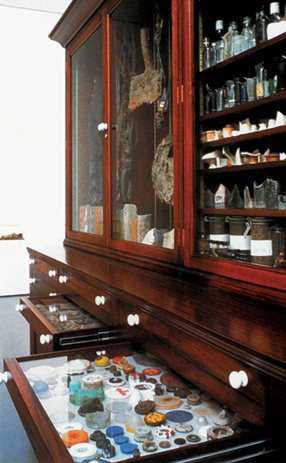
Mark Dion Thames Dig Display at the Tate

Mark Dion Thames Dig Display at the Tate

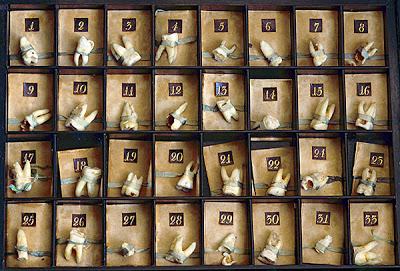
Trawling Google seems to indicate a fairly wide range of interests, collections, and types of cabinets.  I’ve been trying to imagine what Mr. Knightley’s might look like.  I think it’s probably not very like Peter the Great’s tooth collection.  And the description indicates it’s probably broader and more eclectic than 1715 illustration above.  I think of it as a smaller version of the Tradescant’s collection, accumulated through the generations of Knightleys at Donwell Abbey but perhaps collected a little closer to  home than the contents of the world-traveling Tradescants’ cabinet.

Peter the Great's Tooth Collection

Peter the Great’s Tooth Collection

I picture it more like the more carefully organized drawers and shelves pictured in the Mark Dion designed cabinets from this century.  A tad more grand than a messy box of interesting items.

What’s in your cabinet?

Yes, I’m in Atlanta at the great big conference (RWA) but this is too important a date to ignore.

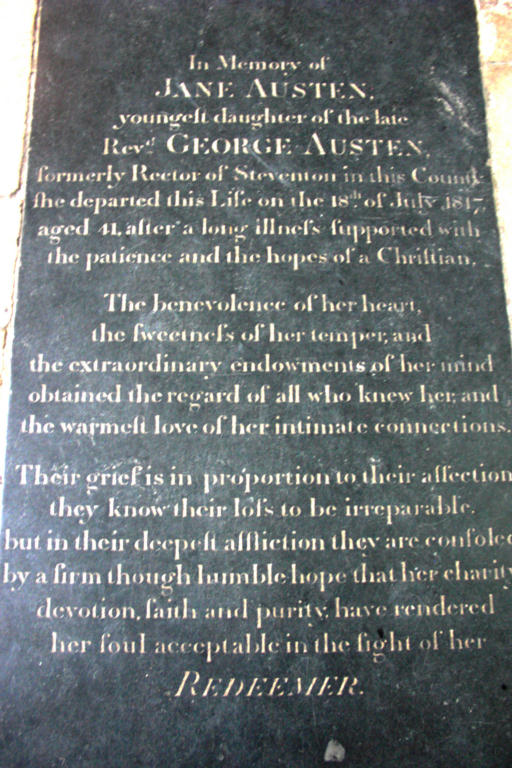
Jane Austen died oaustengraven this date in 1817. She was buried in Winchester Cathedral, because she died within the Cathedral Close and probably her clergymen brothers had some influence. Famously, her tombstone bears no mention of her writing, but that’s because she published anonymously. It was only after her death that her family invented the Austen mystique (dear Aunt Jane who couldn’t help being a wee bit coarse) and allowed her name to be used.

She was much loved by her family and particularly by her sister Cassandra, who wrote this moving epitaph:

She was the sun of my life, the gilder of every pleasure, the soother of every sorrow; I had not a thought concealed from her, and it is as if I had lost a part of myself.

She was only 41 when she died. It’s tempting to think that Persuasion, all about regrets and acceptance and second chances, was her final work and her testament. It was her last completed book but she was at work on Sanditon, a rollicking farce full of jokes about invalids.

That Jane Austen–always full of surprises! I wonder what her life would have been like it she’d inherited the Austen longevity genes and lasted into her 80s? A lioness of the literary scene? A subverter of Victorian delicacy?

What do you think?

Today I am leaving for RWA, the one week a year I get to talk nothing but books and writing with far-flung friends, wear my prettiest shoes, and hang out a lot at the bar.  (ok, the shoes and bar thing I do here too….)  I look forward to this all year, and thanks to some health disasters I haven’t been since Orlando 3 years ago this is extra special.  Look for me there, I will have books to give away!  (once I get past the terrifying plane ride, that is…at least I have something Regency travelers did not have.  Xanax)

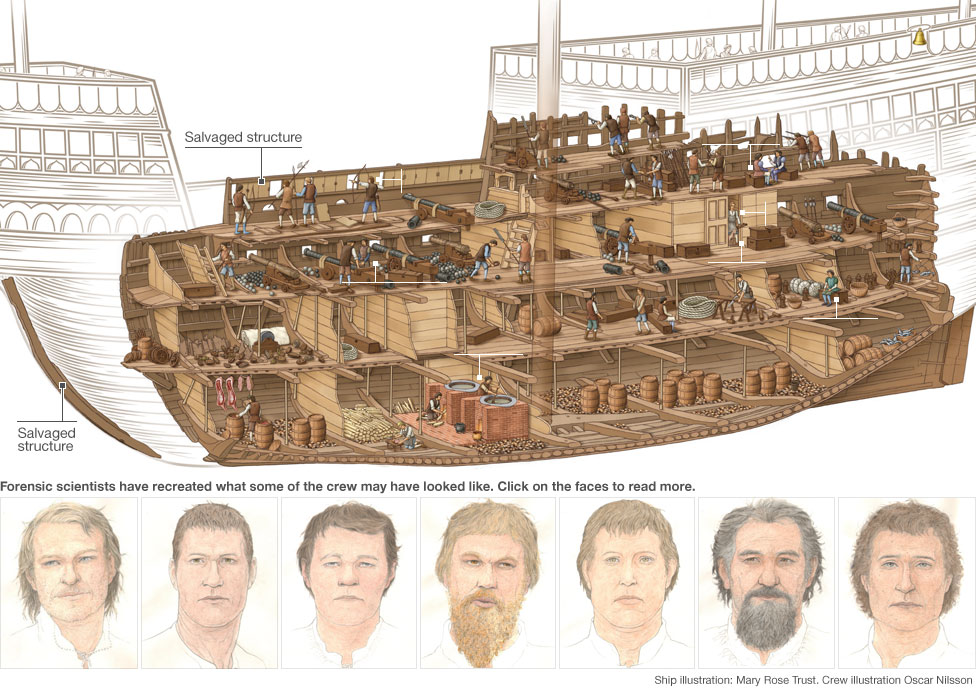
But this week also marks the anniversary of the sinking of the ship the Mary Rose.  Built in 1510 and supposedly named after Henry’s favorite sister, it sank in the Solent in 1545 in sight of Henry VIII and his horrified court, with loss of all hands.  Discovered in 1971 and raised in 1982, it was a rare time capsule and  it has spent all this time under painstaking restoration.  Thousands of fascinating artifacts (including skeletons, whose features have been hauntingly recreated) are now on display at the stunning-looking new museum, which also included the remains of the ship.  This is definitely on my Must See list next time I go to London.  Here are a few of the pics from their website (which has a treasure trove of information)

Here are a few pics of the ship and its artifacts (including, most sadly, the ship’s dog):

mary-rose1 mary-rose2 mary-rose3 mary-rose4

Has anyone been to this museum yet?  What did you think??  And will you be at RWA???

Posted in Research | Tagged , | 1 Reply
Follow
Get every new post delivered to your inbox
Join millions of other followers
Powered By WPFruits.com