Back to Top

Today our guest is Maggie Andersen who’s paying an afternoon call from Australia via the magic of the internet. Welcome Maggie! Tell us about your book.

The Reluctant Marquess is a Georgian romance. Lord Robert, the Marquess of St. Malin, and Charity Barlow have very different views of marriage. A marriage between a city rake and a country-bred daughter of an academic requires quite a period of adjustment. Charity believes marriage is about love. To Robert marriage is merely an arrangement to produce an heir. He then plans to pack Charity off to one of his country estates. Charity is not the malleable young woman Robert expects her to be. She fights for what she believes in and much conflict ensures.

What drew you to the theme of an arranged marriage?

Writing about married couples interests me. What happens after the wedding? It’s not always the expected happy ending, particularly, when they come from such different worlds. To complicate matters, Lord Robert appears to be carrying a hurt from his past. Charity is a practical woman and sees it as her role to help heal that hurt.

You’ve also written books set in the Victorian and Regency period. Which is your favorite?

The Regency is my favorite era. I read Georgette Heyer at a young age and loved her. She created such charming worlds, I wanted to keep dipping into them. When I’d read all her books dozens of times, I began to create my own.

Did you come across anything surprising in your research for the book?

My mother was an artist, and instilled in me a love of art at an early age. I’m interested in art history particularly. When researching for The Reluctant Marquess, I was interested to discover that during the reigns of the third and fourth Georges it was seen to be unfeminine for a woman to do anything with professional skill. The only career open to a Georgian woman was marriage. She would have considered a loveless marriage infinitely more respectable than the pursuit of a profession. If a suitor presented himself it was her duty to love him, or at any rate marry him. The kitchen and the nursery were her sole spheres of action. She was expected to treat her men-folk with respectful admiration and accept their judgments in a spirit of childlike faith and obey them with unquestioning submission.

Women who wished to be creative were forced to invent a kind of ‘mock art’. Modeling in clay was seen as unfeminine but modeling in wax or bread a feminine occupation. Filigree and mosaic work was copied in coloured paper, Dresden china of rice paper, flowers of lambswool.

Frustrated by the conflict in her marriage and how little of interest she could do as a marchioness, Charity rebels in a small way by carving in wood, a skill she learned from her grandfather, which was a distinctly masculine pursuit.

What’s your writing process?

I rough out the plot first, although that may change and go off in tangents. How the story ends stays fairly fixed in my mind. Names are important, I seldom change them. They help to shape the characters in some mystical way. I edit what I have written the following day which carries me on to the next scene.

What do you like to read/which writers have influenced you?

Georgette Heyer was a great influence as I’ve mentioned. Victoria Holt’s Victorian Gothic romances inspired me to write Victorian mysteries. Daphne Du Maurier’s Rebecca was just marvelous. I think my alpha heroes developed from reading these writers. My favorite contemporary historical romance writers are Eloisa James, Joanna Bourne and Deanna Raybourn.

What’s next for you?

I have two books coming out later this year. A Baron in Her Bed, (Book One, The Spies of Mayfair Series) set in the Regency era, is released in September. Book Two and Three will be released next year. The Folly at Falconbridge Hall, a late Victorian mystery romance, is released in December.

I have a copy of The Reluctant Marquess to giveaway (world-wide, print or e-book).

The Riskies will pick a winner on Monday evening, March 19, from participants. So let’s chat. If you were a Georgian heroine, which artistic pursuit would you choose?
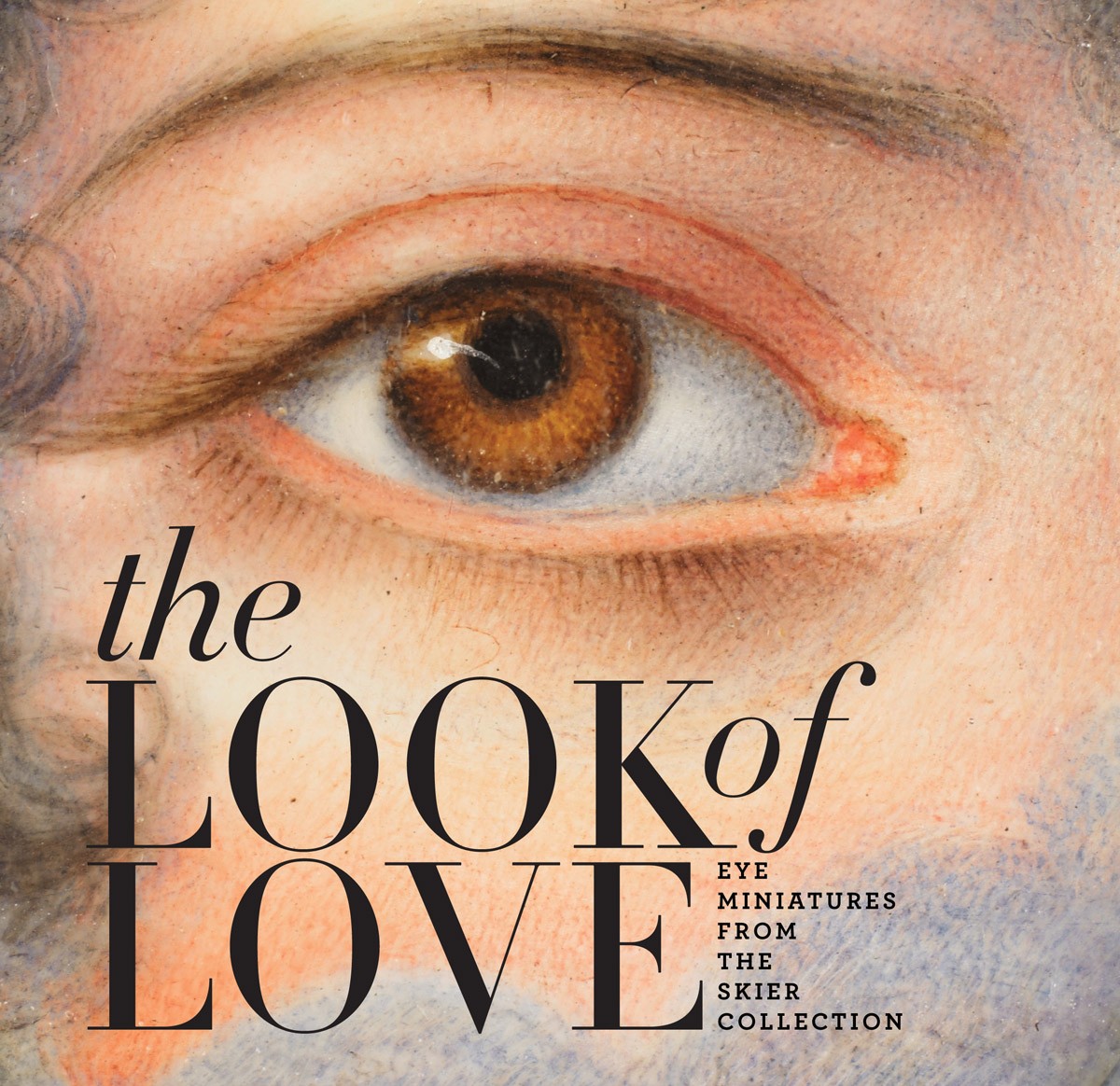
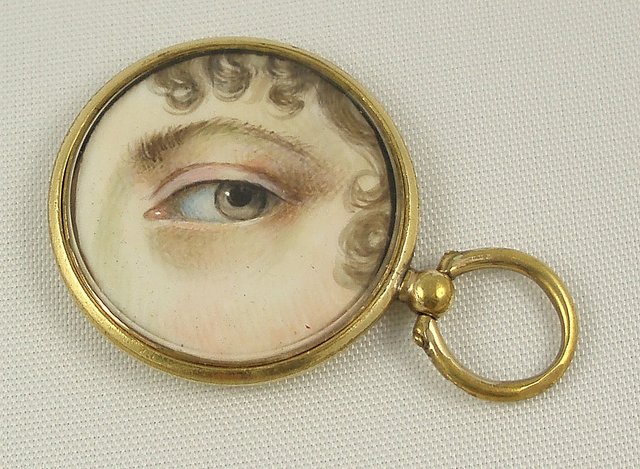
I have a new “guilty pleasure” book for you. The Look Of Love: Eye Miniatures From The Skier Collection, the catalogue of the Birmingham (Alabama) Museum of Art’s exhibit of eye miniatures dating from the 1780s to the 1820s.

Jo Manning, author of My Lady Scandalous, the biography of famous courtesan Grace Elliot, and of many fine Regency romances, contributed fictional vignettes about certain eye miniatures, imagining the circumstances of the creations of the jeweled pieces of art. The addition of these vignettes to the catalogue seemed an inspired idea, because the identities of most of the subjects in the collection are unknown.

Apparently it was George IV, then Prince of Wales, who commissioned the first eye miniatures. When the Prince secretly married the Catholic widow, Maria Fitzherbert, they exchanged miniatures of their eyes, painted on ivory and set in jewels, as tokens of their love. Soon it became the fashion for lovers and loved ones to bestow these tiny portraits of a single eye, made into brooches, pendants, even rings, on their favored ones. It was the perfect love token for clandestine lovers–one eye was enough to spark the memory of the person, but not enough for another person to identify whose eye it was.

Some eye miniatures were not secrets. They might be gifts between husbands and wives, mothers and sons, betrothed couples. Some were sad mementos of a loved one who died. But the identities of so many miniatures that were gifts from secret lovers are lost to us.

What remains are beautiful, sometimes spooky, images set in gold, surrounded by gems, or decorating tortoiseshell boxes. Some of the jewelry include woven locks of hair on the underside of the miniature. One includes the miniature of a hand; others, inscriptions such as “Esteem the giver.” One of the most unusual settings is a tiny image of an eye on a toothpick box. Another, in the book but not in the exhibit, is an eye painted onto a porcelain teacup.

These were gifts whose only purpose was to convey love. What an inspiration for romance writers and readers!

Read Jo Manning’s guest blog on the exhibition at Number One London.
Here’s an article on the exhibition from Vanity Fair.
More information on eye miniatures from Antiques Roadshow.
Preview of a scholarly article from Jstor.

I found an artist who will paint an eye portrait, but I think one of us (Amanda???) once found someone else who accepted commissions for eye miniatures.

Have you read (or written) about eye miniatures in any Regency Historicals?


First, here’s the new cover for Dedication, coming from Loose-Id next month, and you’ll hear all about it as time goes on. There’s more information on my site. Isn’t it pretty!

My task of the day is coming up with a blurb for another book that will be out sometime … soon. It’s called The Malorie Phoenix and was originally written as an option ms. for Signet Regencies (remember them? Polyester dresses, no sex?). So on p. 7 the hero and heroine (who was, uh rather young, but the age of consent then was 12… No, of course she’s not 12! But she’s not 21 or 31, but inexplicably she’s a virgin) are at it. And I was going to send this to Signet? Thank goodness the line ended.

I can’t but help think of this in tabloid language which isn’t helping me with the blurb.

Earl’s Son Bonks Virgin at Vauxhall Gardens
“I didn’t ask to see ID,” says Benedict de Malorie, officer in some regiment or other. “I thought she was doing her bit for the Napoleonic war effort.”

Suspected Criminal Tangles with Aristocracy
Alleged pickpocket Jenny Smith, who refused to give her age, today accused the younger son of the Earl of T— of fathering her child. “And he was pretty incompetent in the sack,” Miss Smith reported as she emptied her pockets of three handkerchiefs, a fob seal, and a cravat pin. “Where the heck did these come from? I’ve never seen them before in my life.”

Vauxhall Gardens Shock Horror
… and so on.

So let’s take a look at a few tabloid interpretations of favorite books

Red Carpet Shocker at Meryton Assembly
Neither Fitzwilliam Darcy nor Elizabeth Bennet were available for comment following their encounter at the Meryton Assembly. Ms. Bennet, described by close friends as “in remarkably good shape following a night of dancing” has been seen working at her embroidery.

Willoughby Does It Again!
“I’ve no idea what her problem is,” John Willoughby said after accusations made publicly last night by Marianne Dashwood. “She obviously came out of rehab too soon.”

Just Friends
Pooh and Eeyore denied any romantic entanglement again today after they were seen sharing honey and thistles in an intimate thicket. “I think we should give them their privacy to work things out,” commented John Watson, long time companion of hottie Sherlock Holmes.

OK, now it’s your turn…

Follow
Get every new post delivered to your inbox
Join millions of other followers
Powered By WPFruits.com