Back to Top

Monthly Archives: January 2008


A few weeks ago, I blogged about my favorite books of 2007. A bit later, I blogged about New Year’s Resolutions, one of which was to reduce the size of the TBR pile. Well, I got a bit of cash for the holidays, and instead of putting it sensibly into my ongoing house renovation, I went a little nuts at Amazon.

So let me share what I am looking forward to in 2008:

Sabrina JeffriesLet Sleeping Rogues Lie (School for Heiresses)
Lilith Saintcrow‘s To Hell and Back (Dante Valentine, Book 5)

Julie Anne Long‘s The Perils of Pleasure
Diane Gaston‘s The Vanishing Viscountess
Colleen Gleason‘s The Bleeding Dusk: The Gardella Vampire Chronicles
Meljean Brook‘s Demon Night (The Guardians, Book 5)


One of my moral imperatives is to purchase books by authors whom I wish to support, despite the proximity of the library and my cash-strapped self (see house renovation, above).

So if an author consistently wows me, I will continue to buy their books. In the years since I’ve made my commitment, authors have fallen off the list, but I’ve added more that I’ve dropped, which is a good thing (except for Lee Child; his books now come out in hardcover, and I don’t do hardcover. I’m not that moral).

I am looking forward to plenty of good reading in 2008, and yes, perhaps, a smaller library? (stop chortling, you guys!) What new releases are you looking forward to?

Posted in Uncategorized | Tagged , , | 15 Replies

I was sad to hear that George MacDonald Fraser, creator of the Flashman series and one of the great historical novelists of our time, died a few days ago.

Fraser took a minor character, Flashman the school bully, from the nineteenth-century novel Tom Brown’s Schooldays, and elaborated on his later career. Flashman is one of the great literary anti-heroes–quivering in fear, lying and cheating his way out of trouble, and behaving in a thoroughly despicable way (particularly where women are concerned), he manages to become embroiled in just about every military crisis of the nineteenth century. He’s a survivor of the Indian mutiny, the battle of Little Bighorn and the charge of the Light Brigade; and he managed to fight on both sides of the American Civil War. Despite his egregious behavior he manages to emerge from each adventure a revered and adored hero.

His many decorations include the Victoria Cross, US Medal of Honor, and San Serafino Order of Purity and Truth, 4th class, and in addition to his military dishonors Flashy was director of the British Opium Co., honorary president of the Mission for Reclamation of Reduced Females, and author of such works as Twixt Cossack and Cannon and The Case Against Army Reform.

Fraser presents his books as Flashy’s memoirs, based on original documents discovered in an attic, with Fraser’s meticulous footnotes and comments–hilarious stuff and totally devoid of political correctness. Fraser was particularly proud of the fact that in the US, over one third of the reviewers of the first Flashman book thought they were reading genuine memoirs and not meticulously researched and written fiction.

Have you read the Flashman books? What are your favorite moments? One of mine is when Flashy (and I can’t remember whether it’s shortly before or after he’s shot in the backside), meets a young lawyer called Abraham Lincoln and tells him you can’t fool all of the people all of the time… And then there’s the wagon train going west, that includes an entire New Orleans whorehouse on the move and a wagon of invalids, battling the plains for their health…

Great stuff, all twelve volumes, and I’m sorry Fraser didn’t live long enough to finish all the disgraceful episodes of Flashy’s long and eventful life.

Posted in Uncategorized | Tagged , | 7 Replies

I recently finished ON WRITING by Stephen King (one down on the TBR list!) and I highly recommend it to fellow writers. I suspect even non-writers might be intrigued by King’s insights into the insane business of fiction writing.

For anyone who has not read it, the book has two main elements: memoirs of King’s own journey as a writer including the story of his comeback to writing after his horrific accident in 1999, along with practical and entertaining advice on the craft. Both make good reading. His advice on adverbs alone cracked me up:

They’re like dandelions. If you have one on your lawn, it looks pretty and unique. If you fail to root it out, however, you find five the next day..fifty the day after that..and then, my brothers and sisters, your lawn is totally, completely and profligately covered with dandelions.

But I’ve been writing long enough that advice like this is not new. What I did find most useful are his ideas on how to deal with reader reaction and critical feedback.

You can’t please all of the readers all of the time; you can’t please even some of the readers all of the time, but you really ought to try to please at least some of the readers some of the time.


I ought to print this out and tack it up somewhere in my writing space. Just for those moments when my work gets slammed by a reader on Amazon or on an online review site and I forget that for each online bashing I can show at least 10 positive reviews.

The concept that struck me most in ON WRITING is King’s concept of an “ideal reader”. He writes:

I think that every novelist has a single ideal reader; that at various points during the composition of a story, the writer is thinking, “I wonder what he/she will think when he/she reads this part?” For me that first reader is my wife, Tabitha.

The Ideal Reader is the personification of your target audience. Someone who enjoys the genre and the type of stories you write, someone who “gets” you at your personal best but is also smart enough to know when you have fallen short.

I don’t think I have a single Ideal Reader. My critique partners are great but none of them love the Regency enough that I would write with them in mind. Failing an Ideal Reader, I’m all too prone to let the wrong people into my head when I’m writing: my mother, the nun who taught me in 1st grade, the random wacko on Amazon, the lady who wrote at length to chastise me about all the “pages and pages of explicit sex” in SAVING LORD VERWOOD (though she did say she forced herself to read the whole thing!). Having an Ideal Reader might help.

What would my Ideal Reader be like? She must love the Regency, relish a nice dollop of historical detail along with the romance, not have rigid expectations about whether she wants a sweet or sensual book, and enjoy reading about flawed characters.

Perhaps I am my own Ideal Reader. Pretending I’m writing just for myself often helps me through rough patches. But it is hard to judge my own work while I’m writing it and taking the time to let a manuscript rest is hard given publishing pressures. Thinking of a reader outside myself might be the better way.

Maybe, when I’m driving myself crazy trying to please too many different readers, I should just think about the Riskies and friends here. I’ll have to try that next time Mrs. Grundy gets in my head!

My fellow writers, what do you think? Do you write with an Ideal Reader in mind? What is she or he like?

For readers, whose Ideal Reader do you think you might be?

Elena
www.elenagreene.com

Posted in Uncategorized | Tagged , | 14 Replies

I thought I’d try something a bit different today — an offbeat introduction to a new Regency author, shorter and sillier than our formal interviews (er, I mean the introduction, not the author!) and hopefully fun.

Many of you have probably seen Georgie Lee’s comments on our blog — well, her first Regency, Lady’s Wager, has just been published by Cerridwen Cotillion, and you all know how I love any sort of Regency gambling! (In this particular wager, if the heroine loses, she has to get married — and that’s always great fun.) So let’s get to know Georgie Lee a little better!
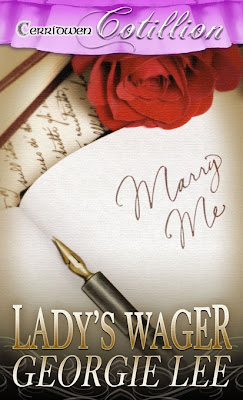
So, Georgie, how did you feel when you sold your first book?

Excited, and somewhat terrified. I’ve heard many authors describe their first sale experience but until I went through it, the contract, the edits, the nail biting countdown to release day, I had no idea the trials awaiting me. However, the feelings of accomplishment and pride that came with selling Lady’s Wager made all the other stresses and headaches worth it and I can’t wait to do it again.

What’s one big difference between writing for Hollywood, and writing novels?

Well, so far neither has made me rich but there is still time (haa-haa). It was an adjustment moving from screenwriting to novels and it took a while to make the switch. In screenwriting, a writer provides the director with a dialogue blueprint and the end result is someone else’s vision. Writing a novel made me responsible for everything and it took a while to get the hang of scene descriptions and sensory details. My first draft of Lady’s Wager was difficult to read because I hadn’t learned how to move characters through a scene without constantly using the word “and”. However, after a couple of drafts I got the hang of it and my writing greatly improved.

Why do you like writing in the Regency period?

I’ve always loved the manners and the elegance of the Regency. I know those manners covered up what could be a very harsh society but the delight of romances is the ability to enjoy a time period without the ugly reality. Also, writing in the Regency is like being a screenwriter during the golden age of Hollywood. Back then, characters couldn’t always say everything they wanted to say, especially if it was racy. As a result, writers came up with very clever dialogue and scenes to suggest what the characters were forbidden to express.

What’s your favorite Jane Austen novel?

Persuasion. Unlike many of Austen’s other characters, such as Emma and Elizabeth, who are self-confident, Anne lacks self-confidence at the beginning and must learn to believe in herself and her opinion. I think we all feel a lack of self-confidence at times and so we can easily identify with Anne. Also, it’s touching to watch her change and grow and to see her growth rewarded with a second chance at love.

Non-Jane Austen Regency Romance?

His Lordship’s Swan by Martha Kirkland. It was one of the first Regencies I read and I love the heroine’s spunk and the way her defiance of convention catches the hero’s attention. I enjoy strong female characters who don’t conform to social expectations and this non-conformist attitude is one of the defining features of Charlotte, the heroine of Lady’s Wager.

What’s your favorite period movie?

Where do I begin? I love so many period movies, from Dangerous Beauty to An Ideal Husband, Pride and Prejudice and Sense and Sensibility to Elizabeth. However, my all time favorite is Gone with the Wind. I first saw it in junior high, and Scarlett O’Hara’s determination to succeed combined with her devil may care attitude and her belief in the promise of tomorrow really spoke to me. About ten years ago I was finally able to see it in a theatre and it was like seeing it for the first time.

If you had to marry one Jane Austen hero, which would it be?
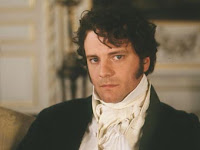
Mr. Darcy. In a lot of ways he reminds me of my husband. Both of them are reserved and somewhat shy, which can sometime be mistaken for pride, and both are devoted to those they love.

Thanks for joining us, Georgie! (Okay, you’re married to Mr. Darcy…does that mean I have to hate you?) 🙂

And if anyone wants to know more about Lady’s Wager or about Cotillion Regencies, just go to Cotillion’s Georgie Lee page.

And remember to stop by Risky Regencies next Tuesday to discuss the new adaptation of Persuasion! (When any of the new Austens air on PBS, we’ll discuss them here the following Tuesday.)

Cara
Cara King, author of her own little gambling book

Follow
Get every new post delivered to your inbox
Join millions of other followers
Powered By WPFruits.com