Back to Top

Monthly Archives: January 2012

I attended a Twelfth Night Ball last weekend (a bit late, but who among us really tracks these things?) at Riversdale House Museum. It was fab, I wore my new feathers, and after talking to fellow guests my ladies maid (husband) and I retired to insert my feathers to their upright position. The secret? When you twist your scarf into a turban, you pin in your feathers and use the twist to hold it into place. It will remain upright for some time even after vigorous dancing. If your feathers remain erect for more than four hours, you must seek immediate medical help…

And here’s a video of how to twist a scarf into a turban. And doesn’t this lady in the center, who used this technique, look great?

The ball was a lot of fun with dancing and supper. One interesting thing was that at the beginning we seemed to have more men than women and then toward the end many of the men mysteriously disappeared and so we actually had a distaff set for one of the later dances. In Regency/Federal times they would have retired to drink and smoke, but since this is a fragile historical building, this was not an option. I think they went for a quiet sit down, exhausted by female energy.

Here we are dancing in a room that was originally the house’s stables and carriage house. It’s actually the west wing of the house and went through various incarnations over the past two hundred years and the walls are hung with copies of portraits of the Lords Baltimore, the founders of Maryland (like no one ever lived here before?). The first owner of the house, Rosalie Calvert, married into the family, although she was a Belgian with sophisticated European tastes who had fled to the New World to escape Napoleon.

If you’re in the Washington DC area you must visit Riversdale. Come this Sunday and you’ll meet me–I volunteer as a docent. Coming up on February 11, we have a program on chocolate, Tasting the Past: A Chocolate Sampler, which explores the history of chocolate in America. I definitely plan to attend that one! For a full schedule of events throughout the year, go here.

Other news I have to share today include our own Risky Elena guestblogging at Writer Unboxed on her successful comeback in the age of digital publishing. Go Elena! And you go on over there and say hi!

I linked earlier in the post to turban-tying instructions at American Duchess. This is a wonderful site, with lots of how-to stuff, solid historical research, and a source for historical footwear. If you love Downton Abbey (and who doesn’t, with the exception of me) you have surely noticed the clothes. Even I like the clothes. This is her latest offering, these glorious Astoria shoes from that period. The way it works is that the Duchess must receive pre-orders to go into production and if you put in an order early (now) you’ll receive a discount. Yum.

One of the other reasons this period is so popular right now, other than PBS, is that this April is the 100th anniversary of the Titanic and there’s a lot of historical reenactment connected with it. It’s also the 200th anniversary of the war of 1812, something Riversdale is involved in since the inglorious Battle of Bladensburg took place very near the house, followed by the sacking of Washington. Are you taking part in any events or planning to attend as an observer?
Posted in Uncategorized | Tagged , , , | 6 Replies


So last weekend was my birthday! I got many lovely gifts, including the books Vauxhall Gardens: A History (thanks to Diane for the rec!), Versailles: A Private Invitation, and The Empire’s New Clothes: The Russian Fashion Industry 1700–1917. These will all keep me busy for quite a while. But what I really love about birthdays is cake!!

The Regency period wasn’t a big one for elaborate birthday celebrations, though there might be a special meal and small gifts of books and embroidered handkerchiefs and things like that, but even then people did like their cake. They probably didn’t have one like mine (which was this “Princess and the Frog” model), so I went to consult my bookshelves to see what they might have had. I pulled out Ian Kelly’s fascinating book, Cooking for Kings: The Life of Antonin Careme, First Celebrity Chef.

Careme is said to have invented the chef’s toque as well as the souffle, and he lived in remarkable times, being chef for the French royal family as well as Napoleon (he made the Emperor’s wedding cake when he we Queen Marie Louise!) before moving on to the Russian court, the Prince Regent’s household, and the Rothschilds. I found this recipe for Genoises Cakes a La Maraschino in the back of the book. (The historical note states that it was made at the Bighton Pavilion and Carlton House around 1817: “Maraschino, the Prince Regent’s favorite liqeur, was used repeatedly by Careme to flavor Brighton Pavilion recipes”).

I don’t quite have Carolyn’s dedication to hands-on research, so I can’t vouch for how this tastes! If you try it let me know how it turns out…

4 ounces almonds
Half an egg white
2 whole eggs
6 ounces flour
6 ounces pounded sugar
6 ounces butter
Zest of one orange
Maraschino brandy
Salt
Cochineal

Pound together 4 ounces of sweet almonds, half an egg white and then add six ounces of flour and six ounces of pounded sugar. Mix and add the zest of an orange, two whole eggs and a spoonful of brandy, a grain of salt and a splash of cochineal. Stir this for a full six minutes with a spatula, then take six ounces of butter, softened in the mouth of an oven, stir it a little, and then put it in the corner of a tureen, mix it with a little of the paste, and then more, stirring the whole for 4 or 5 minutes longer. Spread on a baking tray to the thickness of half an inch and level with a knife. Put in a slack (???) oven and as soon as the genoises are firm, cut them in all kinds of shapes, after which put them back in the oven to crisp

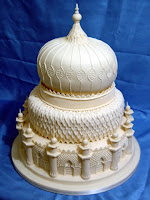
What is your favorite kind of cake? What would you choose for your birthday if you lived in the Regency? (And I love this Brighton Pavilion-shaped cake…)

Posted in Uncategorized | Tagged , | 7 Replies

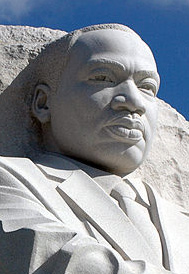
Today we honor Martin Luther King, Jr., the civil rights leader who, with nonviolent protest, reminded our country and the world that “all men are created equal”and should be treated as such. Here in the Washington, D.C. area there will be special events and celebration of Dr. King’s life at the new memorial dedicated to him.

What if Dr. King had not lived? How would the course of the civil rights movement been changed? What if his life had not been so tragically cut short? What other great accomplishments might he have made?

That’s my theme today. What if? Regency-style.

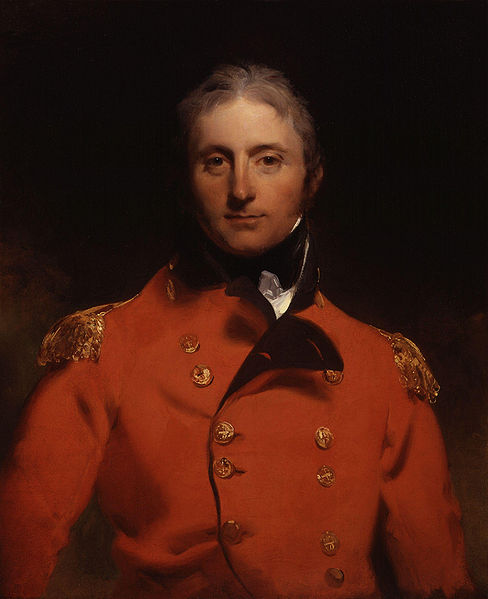
Today is also the anniversary of the death of Sir John Moore. On this date in 1809, the British army in Spain was in retreat from French forces, reaching the sea in Portugal where transport ships were due to arrive to take the soldiers back to England. Sir John Moore commanded the British forces and gained a tactical advantage over the French which enabled the British army to escape. During the fighting, Moore was struck by cannon shot and, after several hours of suffering, died from the wounds.

Moore had a distinguished army career that began with the American Revolution, included the Irish Rebellion and establishment of several army reforms, culminating with the Napoleonic war in Spain.

But it seemed to me that his death was also one of those pivotal events in history. If Moore had not been killed, the course of history might very well have been altered.

Moore was commanding in Spain at that time, because three senior commanders had been recalled for inquiry after allowing the defeated French army to evacuate their troops, with all their materials, supplies, and plunder, without further conflict. One of those recalled was Sir Arthur Wellesley, who was commanding forces at Vimeiro. Wellesley, who would, of course, become the Duke of Wellington, had been vehemently against the evacuation and he was ultimately cleared of any wrong doing.

After Moore’s death Wellesley was appointed to head all the forces in Portugal. What if Moore had not been killed? Would he have retained the command? Could he have accomplished all that Wellesley accomplished in Spain? Would Moore have been in command at Waterloo? Could he have brought about that victory?

One more interesting note about Sir John Moore. While he was dying, he is supposed to have said to his friend, Stanhope, “Remember me to your sister.” The sister was Lady Hester Stanhope, the colorful and adventurous Middle Eastern traveler. Some thought Lady Hester and Moore might have married. What if that would have happened?

Can you think of other pivotal moments in history? Do you ever wonder “What if?” about an event in your life?

Check my Diane Gaston blog today for my January 15 website contest winner.

And spare a moment today to think about Dr. Martin Luther King, Jr.

I’ve been sick most of this week and Behind on Everything, so I thought I’d recycle this post from a few years ago. Old but still apropos.

~ ~ ~ ~ ~ ~ ~ ~ ~ ~ ~ ~ ~ ~ ~ ~ ~ ~ ~ ~ ~ ~ ~ ~ ~

“People do not die of little trifling colds.”

But what Mrs. Bennett didn’t say is sometimes it feels like you could.

I’m so annoyed. The kids have just gone back to school and this was supposed to be my chance to reconnect with my writing. Instead, I’m battling a stuffy nose, the plugged ears, chest congestion, cough and interrupted sleep. Despite the vaporizer fogging our upstairs with eucalyptus steam and a full complement of medicines, traditional and herbal, I am just barely functional when I wanted to be blazing into the new story. It’s so not fair!

Anyway, I thought I’d check out one of my period sources on medicine. It’s DOMESTIC MEDICINE, by William Buchan, first published in 1769 with 18 subsequent editions. Buchan was pretty forward-thinking about general health and prevention and many of his suggestions are far less kooky than those of his counterparts (though that’s not saying much!) I think of it as the sort of book my heroines might have owned and used to help keep their families healthy during the happily-ever-after.

Anyway, here are some suggestions:

“THE patient ought to lie longer than usual a-bed…”

Please, Dr. Buchan, tell that to my kids!

“A SYRUP made of equal parts of lemon-juice, honey, and sugar-candy, is likewise very proper in this kind of cough. A table-spoonful of it may be taken at pleasure.”

This sounds very nice.

“If the pulse therefore be hard and frequent, the skin hot and dry, and the patient complains of his head or breast, it will be necessary to bleed, and to give the cooling powders recommended in the scarlet fever, every three or four hours, till they give a stool.”

I checked some of the recommended medications, and they include “Peruvian bark” and “snake root”. Googling these exotic terms, I learned that Peruvian Bark is also called cinchona bark, and can still be used to treat fevers. Seneca Snake Root has expectorant properties. OK, so far, Dr. Buchan is not so dumb.

However, I don’t think my medicine cabinet contains any Peruvian Bark or Snake Root…

And the bleeding I could definitely do without!

Here’s another tidbit.

“MANY attempt to cure a cold by getting drunk. But this, to say no worse of it, is a very hazardous experiment.”

Aw, I’m willing to try it at this point. It couldn’t make me feel any worse, could it????

~ ~ ~ ~ ~ ~ ~ ~ ~ ~ ~ ~ ~ ~ ~ ~ ~ ~ ~ ~ ~ ~ ~ ~ ~

I’m still not up for bloodletting, but I am grateful for: Advil Cold & Sinus, echinacea and green tea. As a bonus, this week I watched Northanger Abbey (the delightful 2007 version) with my older daughter, who was also sick and off school for a day. I’d been promising her this ever since we read the book together, and it certainly made us both feel better!

How do you comfort yourself through a cold?

And congratulations to the following winners of a Kindle or Nook copy of SAVING LORD VERWOOD. Please send your email address, and if you wish, the email address of a friend who might enjoy a copy, to elena @ elenagreene.com (no spaces). Also, please be sure to let me know if you want Nook or Kindle.

Karen
Lorraine
Maria D
Helena
CrystalGB

Elena
www.elenagreene.com
www.facebook.com/ElenaGreene

Posted in Uncategorized | Tagged , , | 5 Replies


There are a few things in romantic fiction I don’t care for; they include spies, people eating steak and salad in contemporaries (why is it always steak and salad?!?), children who do not act like children, and telling a story using time period shifts.

But forget the kids and the food; I am currently reading Joanna Bourne’s The Black Hawk, and damned if I’m not liking it, despite it being about spies and using time period shifts to reveal the story.

Bourne’s use of language and description is incomparable–it’s as close to Kinsale and Ivory as it can get without being anything like either of those. Plus I like that her hero isn’t hugely tall or overly buff without reason:

The muscles of his belly, his shoulders, his arms, were stark as rocks jutting from a hill, smooth as peeled wood. He was a fierce and violent simplicity, like a force of nature. There was not the least softness upon him anywhere.

I have had to tell myself to be patient as the story unfolds. But it’s worth it. And shows me that all rules–even my own!–are meant to be broken, if the circumstance is extenuating enough (I have to say, though, that the cover guy looks very little like how I picture Hawker. But I’m reading on my e-reader, so I don’t see the cover a lot).

What are your reading idiosyncracies?

Megan

Posted in Uncategorized | Tagged | 2 Replies
Follow
Get every new post delivered to your inbox
Join millions of other followers
Powered By WPFruits.com