Back to Top

Monthly Archives: April 2013

Pioneer VillageI’ve been visiting relatives in California, only my third trip to this state. In Bakersfield we visited the Pioneer Village, which consists of buildings of various ages in California history which have been moved to one location.

While we were touring the site, one of our relatives mentioned how much shorter California history is compared to our history in Virginia (We meant western civilization history, not Native American history, which, of course, spans plenty of time). I immediately thought that both histories pale in comparison to British history. My goodness, the UK has discovered museums that date back to 680 BC, with collections of artifacts that go back 1,000 more years.

I tried to find some Regency connection to California, without success. The Spanish first landed in the 1500s and Sir Frances Drake explored the California coast in 1579, but California was not settled by any Europeans until two hundred years later when Spanish missionaries came to convert the Native American “heathens.”

During the Regency, Russian settlers came down from Alaska to settle in California. In 1812 Russians established a settlement called Fort Ross. In 1821 Mexico gained independence from Spain and claimed California as part of their country, but the Californians often clashed with the new governors.

So I could not find any evidence of British exploring the area during “our” time period.  In the 1770s, Captain Cook mapped the California coast, but that was earlier. It wasn’t until the 1850s that Englishmen (and other Europeans) flocked to California during the Gold Rush.

Diane at Pioneer VillageUsually when I go someplace I can find some connection, even when I went to Alabama, but this time I feel like I might truly be in a foreign land….

Do you know of a connection between California and the Regency? In what strange place have you found a Regency connection?


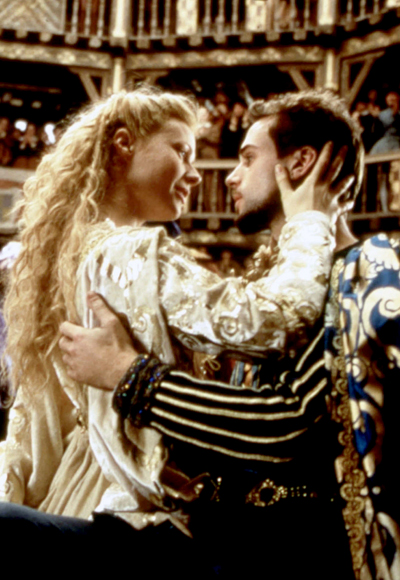
ShakespeareLOLToday marks Shakespeare’s 449th birthday!  Well, sort of–he was baptised in his hometown of Stratford-on-Avon on April 26, 1564, and since that usually happened about 3 days after a baby was born, plus it’s St. George’s Day AND Shakespeare died on April 23 in 1616, it just makes a neat little juxtaposition, so April 23 is the Official Day.

Not much is really, concretely known about Shakespeare’s personal life.  He grew up in Stratford, where he probably attended the free local grammar school, The King’s New School.  His father was a glover in town who was very prosperous for a time (and married an Arden, local gentry), but then kind of went downhill.  At 18 he married Anne Hathaway, who was 26 (the hussy!) and gave birth to their first child, Susanna, 6 months later.  Twins followed, Judith and Hamnett (Hamnett died at 11, but Judith grew up to make a disappointing marriage).  Between 1585 and 1592, he built a successful theater career with the Lord Chamberlain’s Men (later the King’s Men) as an actor, playwright, and eventual sharer in the company.  He made enough money to buy New Place, the biggest house in Stratford, as well as rent respectable lodgings in London (see Charles Nicholl’s book The Lodger Shakespeare about a lawsuit he got embroiled in via his landlords the Mountjoys on Silver Street.  His part in the quarrel was tiny, but it’s a great picture of London life at the time).  Around 1613 he retired back to Stratford where he died 3 years later.  His direct line ended with his granddaughter Elizabeth, but his monument can still be seen at the church there.  That’s about it really, though bits and pieces keep popping up to give grist to the scholarly mill.  He left 38 plays, 154 sonnets, and 2 long narrative poems.
Shakespeare2But what’s really important isn’t what Shakespeare did in his life, but the beauty of the words and the worlds he left us, which have brought such immense joy to so many people and taught us so much about the world around us and ourselves.  One of the best nights in my life was spent at the Globe Theater, watching a production of A Midsummer Night’s Dream, imagining what it must have been like to be there when those words were first spoken, and what that world must have been like. (This also happened to be the first Shakespeare play I ever saw, when I was about 7!  An outdoor production where Puck would climb the trees to say his lines, which really impressed me then…)  I just saw a production of Love’s Labors Lost (not the best play, but fun) updated to the 1950s, where it lost none of its humor and meaning, and goes to show the timelessness of Shakespeare’s characters.  (Really, I think he and Jane Austen, and possibly Dickens, had the greatest insight into human nature of any writer…).  Plus there’s a new movie version of Romeo and Juliet coming this summer, and I can’t wait!!!

For a man who left so little mark of his personal life on the world, there’s no end to great biographies.  Some of my own favorites are: Peter Ackroyd’s Shakespeare: The Biography; Jonathan Bates’s The Soul of the Age; Park Honan’s Shakespeare: A Life; James Shapiro’s 1599: A Year in the Life of William Shakespeare (which mostly sets Shakespeare in the wider Elizabethan world); and Harold Bloom’s Shakespeare: The Invention of the Human.  Since I’m working on 2 Elizabethan projects of my own at the moment, I’m happy to live vicariously in Shakespeare’s Tudor world whenever I can. 🙂

What are your own favorite Shakespeare plays, or memories??

When, in disgrace with fortune and men’s eyes,
I all alone beweep my outcast state
And trouble deaf heaven with my bootless cries
And look upon myself and curse my fate,
Wishing me like to one more rich in hope,
Featured like him, like him with friends possess’d,
Desiring this man’s art and that man’s scope,
With what I most enjoy contented least;
Yet in these thoughts myself almost despising,
Haply I think on thee, and then my state,
Like to the lark at break of day arising
From sullen earth, sings hymns at heaven’s gate;
For thy sweet love remember’d such wealth brings
That then I scorn to change my state with kings.
Sonnet 29
ShakespeareKiss
Posted in Research | Tagged | 3 Replies

I used to be a software engineer by profession, but I have to confess even then I had this love/hate relationship with technology. Even though I learn pretty quickly, I resent the time it takes to figure out how new stuff works. I’d rather be writing! You would not have believed how much I was cussing when I helped my daughters set up their new laptop, which uses Windows 8. What brilliant soul invented a FOUR STEP process just to power off?

I’m also cheap and I don’t care if other people have shinier gadgets, as long as my own gadgets meet my needs.

But I’ve made some progress recently. After over a year of successfully self-publishing e-books, I now actually own a Nook reader myself. I really do like it, especially the ease it brings to taking LOTS AND LOTS of books with me on a plane.

However, my recent trip to Florida showed me another thing I need to upgrade. My father-in-law passed away last year and my mother-in-law not only discontinued their internet service but also threw away all their maps. Since our poor old cell phones aren’t good for anything but phone calls, there was no good high or low tech way of figuring out how to get places we wanted to go on the spur of the moment. OK, maybe we do need to upgrade from what my daughters tell me are “loser phones.”

regencyshower

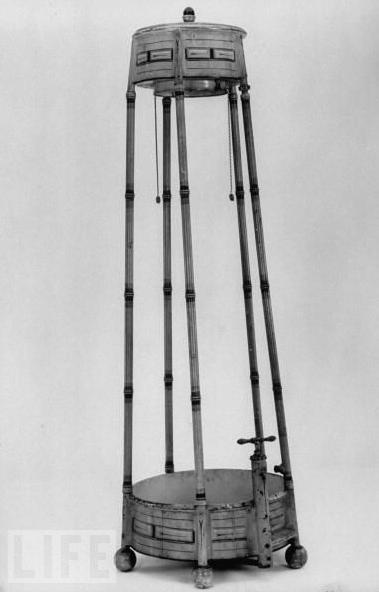
If I lived in Georgian times, would I be so averse to new technology? Perhaps my cook would resist using one of the new closed stoves, but I can’t imagine that I would resist advances in personal hygiene, like the invention of the shower. Even though it did recirculate the same water… Here’s a cool article from Jane Austen’s World on Regency showers.

Are you a technophobe or do you embrace new technology? What do you rely on now that you never dreamed of needing a decade ago? What would you miss most going back in time?

Also, in the spirit of upgrading, I have a shiny new mailing list. If you don’t always have time to get here to the Riskies but would like to know the big stuff—new releases and special deals—please sign up here.

Elena
www.elenagreene.com
www.Facebook.com/ElenaGreene

Posted in Rant, Research | 3 Replies

One of the unfortunate effects of e-readers is that you can no longer press a book you’ve just finished into someone’s hands and tell them they absolutely must read this but they’ll be in trouble if they don’t give it back. It also makes spying on fellow commuters’ reading a lot less interesting. So, I have two books on the go at the moment, my usual reading pattern. One is on the kindle for the commute and the other is my bedtime reading.

Now the one on the kindle is sort of weird. It’s a romantic contemporary by an English writer and it’s not quite as strange as the one by another English writer where h/h would suddenly fall into a liplock and then resume polite conversation. Many times. There’s a lot of food in this one and people politely offering tea/coffee which seems to be a characteristic of English fiction.

And, segueing effortlessly into the next topic… Charles Dickens is always writing about food too.

Next day, child swallowed two beads; the day after that, he treated himself to three, and so on, till in a week’s time he had got through the necklace — five-and-twenty beads in all. The sister, who was an industrious girl and seldom treated herself to a bit of finery, cried her eyes out at the loss of the necklace; looked high and low for it; but I needn’t say, didn’t find it. A few days afterwards, the family were at dinner — baked shoulder of mutton and potatoes under it — the child, who wasn’t hungry, was playing about the room, when suddenly there was the devil of a noise, like a small hailstorm. (Pickwick Papers)

George Orwell, in his essay on Dickens comments:

As a whole, this story might come out of any nineteenth-century comic paper. But the unmistakable Dickens touch, the thing that nobody else would have thought of, is the baked shoulder of mutton and potatoes under it. How does this advance the story? The answer is that it doesn’t. It is something totally unnecessary, a florid little squiggle on the edge of the page; only, it is by just these squiggles that the special Dickens atmosphere is created.

AD20111223689300-Charles DickensMy other reading–after that somewhat long squiggle on the edge of the page–is Claire Tomalin’s biography of Dickens, which is terrific. I could go on and on about this book and Dickens’ strange life, but one thing that surprised me is that even his contemporaries didn’t like his portrayal of women.

They’re either dumb and pretty (begging to be killed off or humbled), saintly (sometimes the same) or straight out of a melodrama (much writhing and breast-beating, doubtless must die as Bad Girls do). Even a tough girl like Lizzie Hexham (Our Mutual Friend), whose occupation is fishing corpses and other flotsam and jetsam out of the Thames, has to be warned that she is in moral danger when she is pursued by Eugene Wrayburn. Really, Mr. Dickens? You don’t think a working-class girl (with impeccable and inexplicable good diction) wouldn’t know about the birds and the bees? Or, horrors, see a liaison with a rich bachelor as an opportunity?

So what are you reading?

And don’t forget, Carolyn’s contest is still open, affording the delightful prospect of reading about hot demons.

Posted in Reading | 6 Replies

Megan and I are at the RWA New England Chapter Conference this weekend.  We will be celebrating Romance Writers (mostly women) of the 21st century.  We’ll also be hanging out with Romance Writers of the 21st century and going to some great workshops, including a master class with Julia Quinn on dialogue (at which she is, indeed, a master).  While we’re going to workshops with women writers of the 21st century, I thought it might be nice to give you a glimpse of women writers of the 18th and early 19th century.

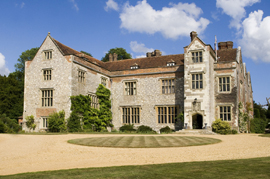
Chawton House

Chawton House

Chawton House Library was founded in 1996 by Sandy Lerner in the home owned by Jane Austen’s brother, Edward Knight in Chawton England.  After years of  restoration, it became the home of a extensive library of women’s writing in English 1600 to 1830.

According to the site, “Writers whose work is held in the collection include Penelope Aubin, Aphra Behn, Frances Burney, Maria Edgeworth, Eliza Haywood, Charlotte Lennox, Hannah More, Sydney Owenson, Ann Radcliffe, Mary Robinson, Mary Shelley, Frances Sheridan, Charlotte Smith and Mary Wollstonecraft, and many more both well-known and lesser-known writers, as well as a significant number of anonymous works.”

Fortunately for us, Chawton House Library has made many of these texts available on line and continues to add to their digital collection.  You’ll find the Georgian/Regency era represented among the novels available.  If you’d like to visit the library in person, it is open to the public.  Anyone may apply for a reader’s pass.

In addition to this extraordinary resource, Chawton House and its farm has been restored to its 18th century condition using traditional methods.  The farm is also run on 18th century methods.  It is an easy walking distance to Chawton Cottage, Jane Austen’s last home and the site of the Jane Austen;s House Museum.  If you’re in the area (and don’t we wish we were?), Chawton House Library  offers a wide variety of events that illuminate the period in which we read and write.

It’s well worth a virtual visit.  Enjoy.

Follow
Get every new post delivered to your inbox
Join millions of other followers
Powered By WPFruits.com