Back to Top

Welcome to the October meeting of the Jane Austen Movie Club! The first Tuesday of every month, Risky Regencies is the place to be for daring discussion and dastardly debate about Jane Austen film and television adaptations!

This month: the 1999 Patricia Rozema film of MANSFIELD PARK.

First, a word of caution: I know a lot of us have very strong views on this movie, so let’s be sure to remain polite and respectful at all times!

Discuss any aspect of the film that you like — but, in case it helps to get the dicussion going, here are a few questions you may or may not want to think about:

If you’ve read the novel, what did you think of it? Do you think it would be possible to do an adaptation that (a) is faithful, (b) works cinematically, and (c) is also interesting/pleasing to modern viewers? Why or why not?

Did you think Alessandro Nivola and Embeth Davidtz were well-cast as the Crawfords? Did you find them attractive? Dangerous? Sympathetic?

What did you think of the character of Fanny, and of Frances O’Connor’s performance? If you’ve read the book, what do you think of the changes? If you haven’t, did you like the character? Did she seem true to the period?

What did you think about Jonny Lee Miller as Edmund? Did he seem a good match for Fanny, or did you wish she had someone more strong/manly/perceptive/handsome/anything else?

What did you think of the “feminist” subtext? Do you think the movie Maria was plausibly a victim?

If you’ve read the book, what did you think of the way Rozema turned some characters more “good” or sympathetic (e.g. Tom) or less (e.g. Sir Thomas)? If you haven’t read the book, did you find these characters believable? Did they fit well into the story?

And, of course, ask or answer any other question that interests you!
Now, to help jog everyone’s memory, here’s a partial cast list:

Written & Directed by Patricia Rozema

CAST:

Fanny Price: Frances O’Connor

Edmund Bertram: Jonny Lee Miller

Tom Bertram: James Purefoy

Maria Bertram: Victoria Hamilton

Julia Bertram: Justine Waddell

Sir Thomas Bertram: Harold Pinter

Mrs. Price/Lady Bertram: Lindsay Duncan

Mrs. Norris: Sheila Gish

Mary Crawford: Embeth Davidtz

Henry Crawford: Alessandro Nivola

Mr. Rushworth: Hugh Bonneville

And if you have any suggestions for what we should discuss next time, suggest away!

All comments welcome!

Cara
Cara King, author of MY LADY GAMESTER and Jane Austen movie junkie

Posted in Uncategorized | Tagged , , | 30 Replies

Risky Regencies had some happy news. Amanda’s A Notorious Woman was reviewed in the Chicago Tribune September 29!

The reviewer is John Charles, who does so many marvelous reviews for Booklist, an American Library Association publication. He’s such a great and enthusiastic supporter of Romance. John Charles also was one of the authors of The Complete Idiot’s Guide to the Ultimate Reading List. Remember? Cara and Amanda and Megan each made the Ultimate list!

Mr. Charles regularly reviews several romance titles at once in the Chicago Tribune, but it is a special thrill to know he was willing to review Amanda’s Harlequin Historical along with books from single title publishers.

Of A Notorious Woman, Mr. Charles says:
“Danger, deception and desire are the key ingredients in “A Notorious Woman,” and Amanda McCabe skillfully brews all these potent elements into a lushly sensual, exquisitely written love story.”

Read the entire review here
(it also has a review of Coleen Gleason’s Rises the Night. See our interview with Coleen here).

There’s a nip in the air, the kids are back in school, Christmas decorations are showing up at Neiman Marcus. It must be……..Romance Writing Contest Season!

And what is the big huge kick off? The Golden Heart and RITA Contests, sponsored by Romance Writers of America.

My pal Kathryn Caskie once dubbed me The Contest Empress because I entered and finaled in and won so many contests. Here’s a sample:

My Marlene medallion

Me accepting the 2003 Golden Heart

The happy Mills & Boon editors and happy me after I won the 2006 RITA for Best Regency.

So it is with great delight that I tell you that The Wet Noodle Posse (2003 Golden Heart Finalists) are blogging this whole month on how to make your Golden Heart entry the BEST it can be. If you are planning to enter the Golden Heart, or any romance writing contest, this month of blogs will give you tips from the experts. We’re all Contest Empresses on the Wet Noodle Posse. Do visit the WNP blog but come back and see us Riskies, too!

Oops! I almost forgot. Come to my website for a sneak peek at The Vanishing Viscountess! Hurry. It won’t be up for long. There’s a new contest, too. And other news…

What is your opinion of reviews and of writing contests? The Empress demands to know!

Today we have as our Risky guest Jane Lockwood, whose first erotic historical, Forbidden Shores (Signet Eclipse), is released October 2. Your comment or question through Monday will enter you into a drawing for a signed copy of the book; the winner will be announced here on Tuesday.

Janet: Jane, welcome to the Riskies. I feel as though I know you already! Tell us about the book.
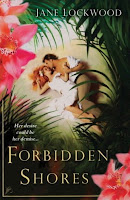
Jane: Forbidden Shores is about three people who each fall in love with the one person of the three who cannot love them back. I think I tend to see love as a catalyst, a powerful force that can be destructive as well as healing. Generally everything I write starts off with people who are quite happy as they are until they fall in love. Then they kick and scream as everything changes. It’s set against the background of the abolitionist movement and takes place mostly on a Caribbean island; Clarissa, the heroine, actually quotes from The Tempest at one point, and Hero #2 (March) is the enigmatic, powerful ruler of the island, a sort of Prospero figure. And if you were really going to explore the analogy, Allen, Hero #1, is Caliban. (Oh, and by the way, it’s much more explicit than the cover or back cover blurb suggests.)

Janet: What was your inspiration?
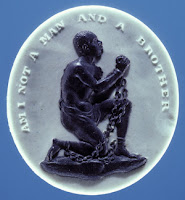
Jane: A brilliant book called Bury the Chains by Adam Hochschild about the British abolitionist movement. Abolition was a hot, polarizing issue in Georgian England and full of conflict and sacrifice and passion, and I knew I wanted to write about abolitionists after I read it. I originally intended to set the book in England but my editor thought Quakers collecting signatures for petitions in the rain not nearly as sexy as sex on the beach of a Caribbean island.

Janet: So you had to deal with the issue of slavery in the book.

Jane: It was very painful and difficult to write about. Slaves working on sugar plantations were treated inhumanly and shamefully. I certainly didn’t want to go into lurid details, but I didn’t want to tone it down, and neither did I want to idealize the slaves who appear as secondary characters.

Janet: OK, let’s talk about something safer–sex. You have a menage a trois–was that difficult to write? And since there are so many erotic romances with menages, how did you make yours different, or dare I say, risky?

Jane: After diligent research–[unseemly snorts of laughter]–I didn’t want to make it too slick and multi-earth-moving. It’s part crazy lust but it also represents the desperation of all three not getting what they really want and knowing that this is as close as they can get. So there’s a fair amount of clumsiness and reluctance, but the heroine, whose idea it is, has the best time (my editor’s suggestion).

Janet: What’s the hardest thing about writing erotic romance?

Jane: I think you could have phrased that a little better. Really, finding other things for your characters to do; making them believable as people.

Janet: Is there any sort of sexual practice you’d feel uncomfortable writing about?

Jane: In this book, with its context, any sort of master/slave sex play. I guess I’m expected to say “no non-consensual sex” but I think once your characters are experimenting and exploring they may well do things they don’t want to do–or think they didn’t want to do.

Janet: Did you do any special research?

Jane: Not as much as I would have liked. For the sea voyage, I re-read a wonderful book by Eric Newby, The Last Grain Race, that gives an incredible portrait of life below decks on a sailing ship. Newby, who died last year, was the travel writer for the Observer in England, and in 1939 he sailed on a grain ship from Dublin to Australia on a ship that’s now a restaurant in Philadelphia, the Moshulu. I also re-read The Wide Sargasso Sea, a book I find unsatisfying because both voices are Jean Rhys’s (even though she has a wonderful voice). As well as some books on the history of the Caribbean, I found a couple of great websites: the Antigua & Barbuda Museum and Brycchan Carey’s Links and Web Resources for Slavery, Abolition and Emancipation. I visited Bristol, now my favorite English city, and its wonderful (free!) museums. And I borrowed the wording for a manumission from Olaudah Equiano’s Interesting Narrative.

Janet: What’s your favorite part of the book?

Jane: The chapter where Allen does his own laundry (a big no-no for a Georgian gentleman) and then climbs the mast of a ship (talk about phallic symbolism!).

Ask Jane questions about Forbidden Shores or writing erotic romance. I’ll make sure she’s here to answer them!

Posted in Uncategorized | Tagged , , | 33 Replies

BTW, I’m starting this post with something totally unrelated to my topic, but I wanted to share this pic! I found it on a film costuming blog I sometimes visit, and it’s the first glimpse of the Keira Knightley film The Duchess! Even though I wish they had cast someone else as Georgiana, I’m always excited about a chance to look at 18th century costumes.

And now for my regularly scheduled post! A few weeks ago I read a fun book by Maureen B. Adams, Shaggy Muses: The Dogs Who Inspired Elizabeth Barrett Browning, Emily Bronte, Emily Dickinson, Edith Wharton, and Virginia Woolfe. While not exactly deep. ground-breaking scholarship, I loved the way it illuminated this aspect of the writers’ lives, their very different relationships to their pets, and how their dogs provided not just companionship and distraction, but grounding during times of intense creativity and psychological upheaval.

Elizabeth Barrett Browning’s spaniel Flush seemed to be a sort of conduit for her own emotions when she was confined to home as an “invalid”; in letters she often ascribed her own feelings to Flush, and thus made them safe to express. But he also made her feel more empowered when he was kidnapped by a band of evil dognappers and she went out herself and got him back! (I HATED those dognappers). Luckily for Flush, he got to end his life in Italy, running around the piazza with all the wild Italian dogs.

Emily Bronte’s mastiff, Keeper, was weird dog for a fascinatingly weird person. He was enormous and often bad-tempered, fighting with the village dogs and such. But he wandered the moors with Emily at all hours, and was sweet as a kitten when she subdued him by beating him up when he got on the parsonage furniture. (Her sister Anne had a small spaniel, Flossy, who it seems was allowed to get on the furniture with impunity…) Keeper stayed close to Emily as she was dying, followed her funeral cortege to the church, and then spent the rest of his life lying outside her empty bedroom door.

Emily Dickinson also possessed a very large dog (“as big as myself,” she wrote in a letter), a Newfoundland named Carlo that her father bought her for protection. He was too gentle for that, but he proved an excellent, laid-back, affectionate companion for the Very Intense poet. In my Google searches, I found that the Emily Dickinson House in Amherst even has Carlo Look-Alike Contests once a year!

Edith Wharton, on the other hand, had a pack of very tiny dogs, Papillons and Chihuhuas and Pekinese. Link was the last one, and he often sent invitations and letters in his own name to Edith’s friends and guests. They traveled everywhere with her, a little, dancing, yapping pack.

Virginia Woolfe’s attitude toward dogs seems to have been more prosaic than Wharton’s! They weren’t like her “babies,” they often ran off or got into trouble, but they were still an important part of her life. Most of them seem to have been large hounds or mutts, but there was one expensive spaniel, a gift of her lover Vita Sackville-West. Woolfe even wrote Flush: A Biography about Barrett Browning’s dog!

So, if you love pets and poetry as I do, this is a fun book! I showed some of the illustrations to my own dogs (Victoria the Pug, and Abigail the poodle) and they enjoyed it immensely. Though they now want to travel all over Europe with me, as Wharton’s dogs did. 🙂 I suppose I can’t say my dogs are my “muses”–I’ve never written a story about a bluestocking poodle falling in love with a French poodle comte, for instance. But they ARE a huge comfort when I’m blocked in a story and feel like I Will Never Write Again, or when I’ve gotten a bad review and am feeling down. They sit on my lap and give me kisses, assuring me that they love me and think I am a great writer and fabulous mommy no matter what that nasty reviewer says. I couldn’t do without them.

Do you have your own pets? Or know any good Pets In History stories (I always love those!)?

Happy Saturday! Take your dogs for a nice long walk (maybe not your cats, though–my cats would never let me put a leash on them, but they are excellent companions and comforts, too)

Follow
Get every new post delivered to your inbox
Join millions of other followers
Powered By WPFruits.com