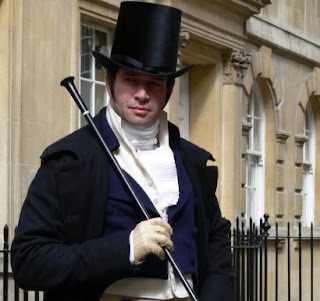
 I was bitterly disappointed in the Beau Brummell movie! I watched it with my “Writers Group” and afterward my friend Helen said, “This makes the Stewart Granger version look like a documentary.”
To say the movie was shallow is an understatement. The BBC website makes it appear that it is based on Ian Kelly’s biography of the Beau, but, if so, the BBC read a different Kelly biography than I did. Kelly’s biography explored a complex man, one who, by the end, I thoroughly cared about, but this Beau Brummell has no redeeming features, except perhaps being depicted by the thoroughly handsome James Purefoy, who does a nice acting job with what is given him to do.
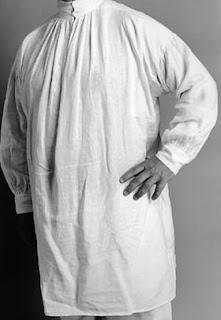 Purefoy doesn’t quite share as much of himself as he did in Rome, but he does show off the clothes very well–and what is underneath the clothes, too; however, the show does not begin to do justice to the dressing ritual for which Brummell was renowned. And the very first scene is wrong wrong wrong. It shows Brummell donning a white shirt–one that clearly opens all the way in the front. (That’s wrong, isn’t it, Kalen? Men’s shirts did not open all the way). You’d think they’d get the clothes right for a show about the man who transformed gentlemen’s dress and whose influence is still felt today.
There were other things that struck me as wrong. The Prince Regent, Beau Brummell, and Byron all calling each other by their first names. That just was not done! Schoolboy friends might use first names, or one’s siblings, but the Prince Regent?
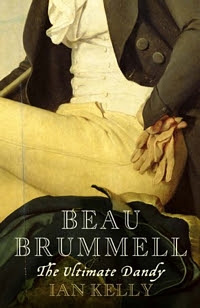 Furthermore, Brummell, according to Kelly’s biography, had faithful friends who understood his problems and really did stick by him even after his exile. The TV movie makes Brummell seem like everyone turned against him. The TV show makes a big deal about the waltz–and the Regent’s supposed objection to it. It is hard to believe that the Patronesses at Almack’s would have approved the waltz if the Regent opposed it. Additionally, the biography says there is little evidence Brummell even danced it, although he did stand with the patronesses and tell them who danced well and who did not
The show was so busy chronicling Brummell’s fall that it never got around to showing the vast extent of his celebrity. It was Brummell’s celebrity that paid the bills at his tailors, all of whom were thrilled for him to wear their clothes. If Brummell wore their clothes, other men flocked to their shops. It is like Johnny Depp wearing Armani on the red carpet–walking advertisement. Mystifyingly, the movie never showed Robinson, Brummell’s renowned valet, assisting him in his dress. Instead Robinson acted more like an officer’s batman.
But the worst part of the movie was the angle involving Byron. The show makes a somewhat tantalizing relationship with Byron the reason for Brummell’s falling out with the Prince Regent, yet the book does not connect the two in this way. In fact, Kelly makes a good case against Brummell having an affair with Byron at all, even though the men apparently admired each other. Kelly indicates that there is no strong evidence that the Beau had a preference for men except in that adolescent, pack of pals kind of way.
What really is a shame is that there was a story here that would have been fascinating and emotionally wrenching. James Purefoy certainly would have been equal to the task of depicting a more complicated, more likeable, more tragic Brummell. I’ll suggest you all read Kelly’s book to discover it, though.
Here’s the Boston Globe‘s take on the show.
Did you see the show? What did you think? Did you spot any other errors?
Have you ever looked forward to a movie only to be bitterly disappointed?
 On a happier note, take a trip over to the Romance Vagabonds. Their guest blogger all week is Joanne Carr, an editor for Harlequin Historical and Mills & Boon Historical. This should be helpful if you are interested in writing for the Historical lines or if you are just curious about the workings of publishing behind the scenes.
*Purefoy’s photo is from the Boston Globe site.


 The words whose misuse has been annoying me most lately are reticent, infer, and literally.


