Back to Top

“Oh! Miss Woodhouse, the comfort of being sometimes alone!”

I sometimes think that one of the greatest and most subtle difference between our time and the Regency period is that now we take privacy and the right to time alone for granted. Then, it wasn’t so clear cut. Very few people lived alone, and “living alone” then might well mean a household with a servant or two. If you were an unmarried woman, you’d live with your family. I ran into an interesting fact somewhere that a household of three or more unrelated women was considered a brothel under the law in London (oh, how I wish I could give a source and a time period for this–I believe it was Georgian).

Living alone for a woman would be particularly difficult since she’d need someone to lace her into her stays. I’ve seen mid nineteenth-century front-lacing stays of linen for a working-class woman, and I’m sure they existed in our period. Yet, if you were a lady, you’d have back-lacing stays because that’s what ladies wore–and a maid, or sister or other female relative had to lace you into them every morning and out every night. And even at night you wouldn’t be alone–chances are a sister would share the bed.

Even if poets could wander lonely as a cloud, it wasn’t encouraged for women. Your activities would be tied into those of your family and you would be busy, busy, busy–there was a prevailing belief that women were weak and inconsistent creatures who would get into trouble morally if left to their own devices. Finding time “for yourself” was an alien concept; even Jane Austen had to snatch time to write, pretending she was producing something of little consequence.

How do you think you’d cope?

In Georgette Heyer’s FREDERICA, the heroine’s little brother calls the hero, the Marquis of Alverstoke, a “second-best nobleman.” Of course, the “best” is a duke. Maybe that’s why I found 121 romance titles at Barnes & Noble with “Duke” somewhere in the title.

For me, “duke” (or “millionaire” for that matter) in the title doesn’t affect my buying decision either way. Beautiful estates and gardens and horses are fun to imagine, but I don’t necessarily prefer a hero with vast wealth and power over one who’s in dire straits or one that is somewhere in between. I do want to know how his situation affects him and how he deals with it.

A duke was kind of like a CEO of a large company. He had political and economic clout, influence over people’s lives and the state of his country. If the hero’s a duke, his power and the responsibilities that go along with it ought to be important elements in his story. Otherwise it seems that his rank is just a shortcut for creating a “perfect” hero (who sounds like a bore to me). If he is a duke, I want to know how that affects him besides the obvious attraction he has for golddiggers.

Anyway, here are a few from my Dukes Done Right list:

Possibly my favorite fictional duke is the Duke of Salford in Georgette Heyer’s SYLVESTER. He is so busy being the perfect duke he has trouble being a human being. Of course, Phoebe, the heroine, helps him in that area.

Rafe, Duke of Candover in Mary Jo Putney’s PETALS IN THE STORM. I am usually skeptical of spy-dukes. In this case it works because he is busy being an impeccable duke when the spy thing is thrust upon him. His rank also plays into part of the conflict with the heroine.

Christian, Duke of Jervaulx in Laura Kinsale’s FLOWERS FROM THE STORM. In this case, Maddy, the heroine, is a Quaker. Christian’s rank creates a daunting chasm between her simple and unworldly view of life and his approach to dealing with his vast holdings and responsibilities. It raises the stakes when his relatives try to declare him insane.

So what do you think about romances featuring dukes?

Do you love them? Who are some of your favorite fictional dukes?

Or do you think there are too many dukes already? Do you think Romanceland could use more marquesses, earls, etc…, or even (gasp!) a few mere misters?

Elena, who likes variety in her fantasy men 🙂
www.elenagreene.com

Yesterday, Keira suggested I tell you all how fared the production of Shakespeare’s The Winter’s Tale that Todd and I were in, which closed on Saturday.

She also suggested I share some pictures. (All photo credits, by the way, go to Bob Paz, Caltech’s photographic genius.)

Ahem. Well. Let me start by saying that this was a visually stylized (and sometimes dramatically stylized) version set in feudal Japan. We had very odd hair and make-up, and lovely costumes which, however, did not flatter any woman who had a figure.

Did I say odd hair? For some of us, that meant odd wigs. Very odd wigs. And the women’s makeup consisted of nothing but a thin layer of very pale base, and a large amount of very pink rouge bracketing the eyes. This lady here (not me) is an example of both wig and makeup!

There — now that I have prepared you — you are prepared, are you not? You won’t laugh (too much)? Very well.

Here’s Todd as King Leontes, going mad. (He did a lot of that in this play.) This is when King Leontes becomes suddenly (and wrongly) convinced that his wife, Queen Hermione, has been cheating on him with his best friend — and that the child she’s pregnant with is a result of this (nonexistent) affair.

And, yes. Todd is wearing a wig. A huge wig.

Now here’s me, in purple. And let me just say that I know the wig, the makeup, and the fifteen-foot-long obi wrapped around and around my waist, aren’t flattering to me. I know it. And I was remarkable in my restraint during this play in how little I stressed about it. (Honest! Well, maybe.) But I’m just saying.

(I’m just saying, it’s all Keira’s fault. She made me show you these pictures.)

Okay. Sorry. Where was I? Oh yeah. In the above picture, my character, the lady Paulina, comes up with a brilliant plan. I will show Queen Hermione’s now newly born baby to mad King Leontes — who will of course melt at the sight of the cute little baby, and snap out of his madness.

And here I am again as Paulina, with the baby, and with Antigonus, Paulina’s husband. Paulina breaks in on the king and insists he listen to her yell at him a lot (he yells too, of course — very Shakespearean), and insists he look at the cute little baby. In this picture, Paulina’s husband (who I suspect knows the king a bit better than she) is trying to get his wife and the baby out of the room before the king decides to execute them all.

But does the king listen? Of course not! (I suspect Shakespeare thought that if men listened to women more often, the world would be a better place.) The king orders the baby be abandoned in the middle of the forest by poor Antigonus (the guy in green above). Then comes the most famous stage direction in all of Shakespeare: “Exit, pursued by a bear.” The bear, of course, makes poor Paulina a widow.

Meanwhile, the king defies the Oracle’s proclamation of Hermione’s innocence. So as the good always suffer for the sins of the wicked, King Leontes is punished by the gods by having his older child and heir, Prince Mamillius, die for his sins. (Not that the prince ever did anything bad!) In shock, Queen Hermione falls down dead of grief. In the above picture, Paulina is telling Leontes just how really really bad he is. This time, he believes her, and is really really sorry.

Sixteen years go by, and Leontes is still sorry, and Paulina is still making sure he stays that way. (You see how stern I look!)

Meanwhile, the abandoned baby has grown up as a shepherdess, and a prince (son of Leontes’ old best friend) falls in love with her, and there’s lots of comedy and happy star-crossed love. (The first three pictures at the top are from this part of the play.)

Eventually, everyone comes together, and they discover the shepherdess is really the daughter of King Leontes. Now everyone is mostly happy — so Paulina decides to show them the statue she has of dead Queen Hermione. And — surprise, surprise! It comes to life.

Guess Queen Hermione wasn’t really dead after all. Or…was she?

Here’s Paulina, stealing center stage, more or less saying “can I help it if I can work miracles?”

Well, there you have it! Lots of pretty pictures. Lots of weird wigs. Lots of Cara pretending not to whine.

So — which costume (or hair) do you like best here? Or hate the least?

What’s the weirdest setting you’ve seen for a Shakespearean production?

When Shakespeare plays or movies are set in different times or places (e.g. McKellen’s Nazi-ish Richard III) do you love it, hate it, or think it all depends?

Cara
Cara King, author of My Lady Gamester and obsessive Shakespeare fan

Posted in Uncategorized | Tagged , | 18 Replies

Oh, this is a week of ANTICIPATION for me!

First, I am eagerly awaiting the Risky Regencies very first COVER MODEL Interview!! Coming March 11 and 12

When my The Wagering Widow came out Feb 2006, the publicist for Richard Cerqueira, romance novel cover model, contacted me to let me know Richard’s hand was on the cover–and a much better image on the inside! I did some promotion for Richard at the Romantic Times Convention last year and he almost-almost-joined me for a booksigning on Long Island at Side Street Books in Patchogue (alas, he was out of town that day).

Now he has agreed to be interviewed here at Risky Regencies! He’s going to tell us all about the nitty gritty of doing a romance shoot and he’s also got some exciting news to share about his life….

Richard also will kindly offer us a prize: an autographed photo of him at a Romance Cover Shoot. Wait until you see it!!

But before next Sunday….. the days will finally be counted down and the wait over.

Gerard Butler’s new move 300 will be released this Friday, March 9 and I will have seen it!

The movie is the cinematic recreation of Frank Miller’s graphic novel, 300, telling of the Battle of Thermopylae in 480 BC. A small force of 300 Spartans led by King Leonidas (Butler) hold back an invasion of the huge Persian army for three days. The brave 300 fight to the death, ultimately losing the battle, but because of them, the Persian army sustained astronomical losses, Greece was never conquered, and Western Civilization was preserved!

The movie, as you can imagine, will be very violent, but the innovative cinematography promises to present the images in a unique form. Like in the movie Sin City, Zack Snyder filmed the actors against a blue screen, computer generating the setting details afterward. To learn more about 300 and to view some amazing movie trailers, go to the 300 internet site

What, besides it being Diane’s latest obsession, connects the movie 300 to the Regency Period?
That is your question of the day, my friends!!!

Ha ha! You think I’m done but there is more anticipation in my beating little heart.

EHarlequin is going to post their Readers Choice Awards on March 14. My A Reputable Rake is up for Favorite Historical and Mistletoe Kisses is up for Favorite Anthology.

Your task, should you choose to accept it, is to go to eHarlequin and vote for your favorites. You will have to sign in or register, but that is an easy matter (just look for the little sign-in icon in the upper right corner). Vote HERE.

I’m not done yet.

By now you know that my Innocence and Impropriety is in bookstores this month. (I’ve only told you a million times!) Now I am anxiously awaiting its Reviews.

So far the reviews have been positive. Check out the ones on Amazon.com and Romance Reviews Today.

But more are due any day now…..

I’ll be Blogging about Innocence and Impropriety and the writing life on Romance Vagabonds on Wednesday, March 7. They call themselves “just a ragtag bunch of writers…” Just my kind of folks, I say!!!

And that is ALL I have to look forward to…….except doing taxes, but that is a whole other kind of anticipation!

Question Number 2 of the day: What are you looking forward to?

Cheers!
Diane


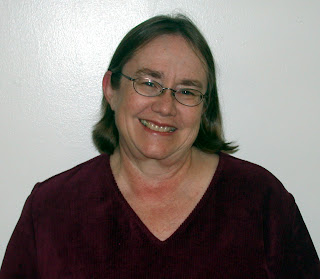
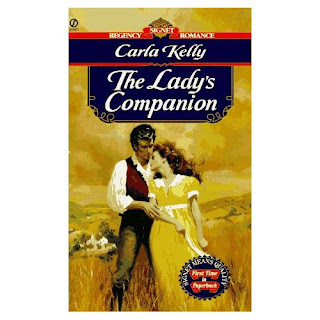
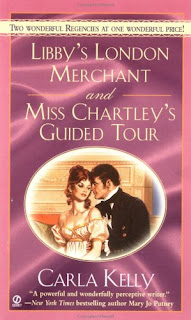
Carla Kelly has won two RITA awards from the Romance Writers of America and has published over a dozen Regency novels, contributed to anthologies, and published fiction outside of the genre, in particular a collection of short stories set in the American Frontier titled Here’s To The Ladies.

Beau Crusoe, her newest release, has just been released. Her last fictional foray (she edited On The Upper Missouri: The Journal Of Rudolph Friederich Kurz, 1851-1852) was in the anthology Wedding Belles, published in early 2004, so Kelly fans have been eagerly awaiting this book. She’s got a new publisher and Beau Crusoe, rumor has it, is a bit racier than her earlier traditional Regencies. Risky Regencies sat down for a virtual cup of tea with the amazingly talented Ms. Kelly.

(And remember, comments on this post will be entered into a contest to win one of two signed copies of Beau Crusoe).

Carla, thank you for being here.

Q. Readers frequently list your books as their favorites of all time; what do you think it is about your writing that readers respond to?

A. Gosh, start off with easy questions… I’m probably the wrong person to answer this. I just write the way I write. A friend of mine did tell me once that she liked my books because the main characters are ordinary, and prone to squaring their shoulders and solving their own problems – probably as most of us do in real life. Maybe we see ourselves in these practical people.
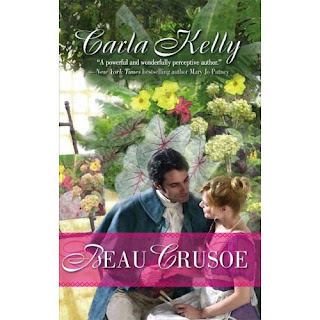
Q. How did you think of writing this particular book? Did it start as a character, a setting, or some other element?

A. It started as a setting, and then the “what if” took over. Several years ago, I read Tony Horwitz’s marvelous book, Blue Latitudes: (subtitled – I think – ‘Going boldly where Captain Cook has gone before.’) Horwitz followed Capt. James Cook’s first voyage in the Endeavor, as he went to Tahiti to observe the Transit of Venus. I was fascinated. Years earlier, I had seen an equally excellent mini-series of Cook and his voyages. And Thor Heyedahl’s Kon-Tiki was the first book I read all night, under the covers with a flashlight. And then there is the towering figure of Sir Joseph Banks, a scientist. There’s a theme here.

My current landlocked status in North Dakota in no way reflects my childhood as the daughter of a naval officer, living overseas or on one coast or the other. I love the ocean, and I know how terrible it can be.

I knew I would write another sea story, because I like writing them – such a C.S. Forester fan I am – and I duplicate no other writer when I do it. This matters to me.

Q. How long did it take? Was this an easy or difficult book to write?

A. It took too long. I was moving along on the Beau when Harlequin announced it was dropping its historical line. My agent and I decided it was best to stop, because the terms of my contract didn’t include the subscription-only idea Harlequin hatched. So I quit writing it.

The, when Harlequin announced it was starting the line again and all was forgiven, I was so irritated I didn’t feel like writing. Plus, since I had no prospects after the line was discontinued, I’d taken a job as staff writer for a small, understaffed daily newspaper in our town. This eventually meant I had to ask for two extensions on the deadline because – irony of ironies – I was too busy writing to write. I’m still working for the newspaper, but if Harlequin will agree to my next two proposals, the paper will get an instant two-week notice. I work too hard for too little pay there, but that’s North Dakota.

The story itself wasn’t difficult. I knew what I wanted to say. Yeah, well, it was 100 pages longer than the story you have, so I needed to trim.
Q. Tell me more about your characters. What or who inspired them?

A. The Beau is really an amalgam of naval officers who also were amateur scientists. He was not alone in his interests. The growth of England’s sea power, coupled with the happy era of interest in the natural world, gave the study of natural science a huge push. These amateur scientists fascinate me. I wanted the Beau to be among that august company. And there was Sir Joseph Banks. Oh, my. And Susanna was just trying to make the best of a bad situation, as we often have to do, even now.

Q. Did you run across anything new and unusual while researching this book?

A. I learned a great deal about fiddler crabs! I still have a small drawing of one perched at eye level above my computer. My husband enlarged the drawing, which I plan to frame, as my little gift to me for Beau Crusoe. I also learned more about the Royal Society, which still awards a Copley medal.

Q. What is it about the Regency period that interests you as a writer?

A. In two words: Napoleonic Wars. Beyond that, I’m interested in an era where people knew their place and lived their lives within a narrow sphere. The Industrial Revolution was starting to make itself felt, too, when there would be many wrongs to right, and people wouldn’t know their place anymore.

Q. What do you think is the greatest creative risk you’ve taken in this book? How do you feel about it?

A. It’s sexier than my other books. I’m ambivalent, particularly since Beau’s encounter with Lady Audley is so blatant. I tried to make it ironic and ruefully witty, and hope I succeeded. Don’t think I’m going to send this one to my 85-year-old mum, though.

Q. Is there anything you wanted to include in the book that you (or your CPs or editor) felt was too controversial and left out?

A. Yes, actually. I wrote a “Dear Reader” after the final chapter, which was an epilog, of sorts, bringing the story all the way up to the present. My editor seemed to think this would confuse readers into thinking the novel was a true story, and asked not to include it. I disagreed with her, but went along. Perhaps, unlike her, I know and trust my readers’ intelligence and know they would not be confused.

HOWEVER, if, after reading the book, any readers are interested, I will happily e-mail that “Dear Reader,” and they can attach it to their copy of Beau Crusoe. I will e-mail it only after they have finished the book: ckelly@ daktel.com
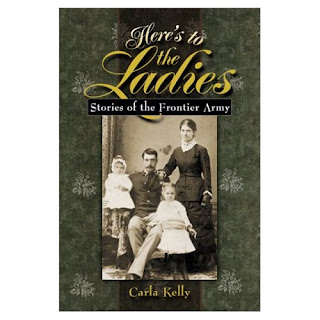
Q. In Here’s to the Ladies, you wrote about Frontier America, and also wrote in the first person in at least one of the stories in the collection; what other time periods and/or writing styles have you, or would like to, try?

A. When I finished Beau Crusoe, I sent my editor at Harlequin a detailed outline for a novel set at Fort Laramie during the Great Sioux Wars. It’s a novel I really, really want to write, because I know this subject so well. I also sent a detailed outline for a novel set in 1701 at Castillo de San Marcos in St. Augustine, which I really, really want to write. She could not have been less interested. She also broke the news gently to me that all Harlequin wants are more Regencies from me. Seems a shame. I decided not to write any more, but recently ate my words and sent her one detailed outline for another regency, and a sketch of a second. I’m doing this because a) I really am eager to stop writing for the newspaper b) I have two excellent ideas here. Maybe I’ll toss in a third and we can call it a Portsmouth Trilogy. But each book stands alone. I’m not a fan of spinning on more and more characters that appear everywhere, like Where’s Waldo.

As for other styles, I’m comfortable with the way I write, which I suspect is a little different than some.
Q. What are you working on next?

A. Depending on whether my editor likes my next two ideas, probably a Regency set in the grubby naval town of Portsmouth, during the darkest days of the Blockade brought on by Napoleon’s Berlin and Milan Decrees, and the British answer – Orders in Council. People are hungry, fortunes are few, and times are tough. (Aren’t people always more interesting when times are desperate?)

In the sketchy outline for the 2nd book, there’s nary an aristocrat in sight. I seem to be specializing in dukeless books, which I’m sure suits my readers, because I never seem to get those right, anyway. And if Harlequin isn’t interested in those, I’ll probably just go ahead and finish my Wyoming story set in 1910. Well, I’ll finish that, anyway, and then sell it to a publishing house in Utah, which is interested.

Q. Is there anything else you would like readers to know about you or your books?

A. I do so much more than write Regencies. I’m sure that’s true of all writers.

Thank you, Carla!

Posted in Uncategorized | Tagged , | 41 Replies
Follow
Get every new post delivered to your inbox
Join millions of other followers
Powered By WPFruits.com