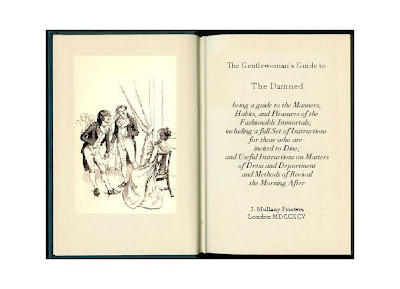
The new book was turned in yesterday! It is GONE! Hooray! So I ate a celebratory Kit-Kat, read a novel from the TBR pile, and am now getting ready to go grocery shopping and clean up the house, things which tend to get neglected when deadlines loom. (Oh, who am I kidding? They’re neglected all the time…) In the meantime, I have a new cover–To Court, Capture, and Conquer is an Elizabethan-set “Undone” coming out in November (only 4 weeks away!), and I also have the first review for Duchess of Sin (check it out here!).
It’s a good start to my favorite month of the whole year. I love October. I love the cooler weather, the way the leaves start to change color and pumpkins appear at the farmer’s market, I love shopping for cute new boots and sweaters. Most of all, I love Halloween! It’s a fabulous holiday, all costumes and candy and fun (not to mention cool stuff like fake tombstones and talking portraits from the Halloween aisle at Target), with none of the pressures of Christmas or Valentine’s Day. To celebrate, I’m going to do Spooky Posts each Tuesday this month, starting today with a few of the Most Haunted Places in England.
 1) Red Lion Pub, Avebury: The Red Lion Pub (“the most haunted pub in England”) sits in the middle of the famous stone circle at Avebury, which dates from between 4000 and 2400 BC (the stone circle, not the pub…). The building itself dates to the early 1600s, and was a farmhouse until it became a coaching inn in 1802. There have been reports of at least 5 different ghosts and a variety of paranormal activity on the premises (which may or may not be due to all the ale and cider being served). The most famous ghost is “Florrie,” whose story is an old and predictable one–her husband was a soldier in the Civil War of the 17th century, who went off to fight and came back unexpectedly to find Florrie in flagrante with another man. He shot the man and stabbed his wife and threw her down a well (which is now a glassed-over table in the bar area). Florrie has been seen emerging from and disappearing into the well (which must be disconcerting when trying to have a peaceful drink with one’s date). She also throws salt and pepper mills across the bar, hangs around in the ladies’ room, and is particularly irked by men with beards.
There have also been sightings of two ghostly children, a phantom horse-drawn carriage, rooms that are extremely cold even in summer, and things vanishing only to appear in plain sight days later. It’s said guests often check out in the middle of the night and run away…
 2) 50 Berkeley Square, London: This townhouse is said to be the most haunted spot in London (debatable, I think…). It was built in 1740, and from 1770 to 1827 was the home of Prime Minister George Canning, though it was after his time that the supernatural trouble started. After Canning a Miss Curzon lived there, until she died at the age of 90, and the house was taken over by a Mr. Myers–which is when stuff hit the fan at Number 50. Myers it seems was something of a male Miss Haversham, who went crazy when his fiancee (who the house was meant for) jilted him. He lived in a tiny room at the top of the house, all alone, and only came out at night to wander the house with his candle. There were also tales of an earlier inhabitant who locked his insane brother up in the attic. After Myers died it was hard to find a tenant for the house. Baron Lyttelton wrote in 1872: “It is quite true there is a house in Berkeley Square said to be haunted, and long unoccupied on that account. There are strange stories about it, into which this deponent cannot enter.”
Charles Harper in Haunted Houses (1907) was more specific: “It seems that a Something or Other, very terrible indeed, haunts or did haunt a particular room. This Raw Head and Bloody Bones, or whatever it is has been sufficiently awful, to have caused the death…of at least two fool-hardy persons who have dared to sleep in that chamber.” There are tales of a maidservant, a nobleman who slept in the room on a dare, and two sailors looking for an empty house to sleep in, all dying of fright at the sight of the Raw Head and Bloody Bones. (The one sailor who survived described an oozing, hideous, foul-smelling mass that filled the room). Since 1938 it has been the home of the antiquarian booksellers Maggs Brothers, with no reports of disturbances.
 3) Borley Rectory: Borley Rectory was built in 1862 by Henry Bull, rector of Borley Church, on the site of a demolished Georgian house, and eventually enlarged to house the family’s 14 children. A new-ish, stolid house like this seems like an unlikely candidate for “most haunted place in England,” but it is on property that has been there since early Medieval times. The church dates from the 12th century, and its near the ruins of Borley Hall, once the home of the Waldegrave family. There were legends in the Victorian era of a nearby monastery where a monk and a nun were caught in an affair and horribly murdered (but this was debunked as having no historical basis in 1938; in fact, it probably came from a horrid novel).
 Supernatural events began happening around the turn of the 20th century, when 4 of the rector’s daughters reported seeing the ghost of a nun hovering near the house, which disappeared as they approached it. The church organist declares that the Bull family “were very convinced they had seen an apparition on several occasions.” There were reports of phantom carriages driven by headless horsemen as well. In 1927 Rev. Guy Smith and his family moved in, and Mrs. Smith discovered the skull of a young woman in a paper package in a cupboard (how it was never seen before, I don’t know. Perhaps they were even worse housekeepers than I am…). The Smiths talked to a reporter from the Daily Mirror about bells ringing (whose strings had been cut), lights appearing in windows, and footsteps. The moved out in 1929, followed by Rev. Foyster and his wife Marianne and daughter Adelaide. The ghost seemed to really like Marianne, writing messages to her on walls and papers, throwing stones and bottles, ringing bells, etc. They left in the late 1930s, and a seance was then held which contacted “Marie Lairre” a French nun who had left her order and married a member of the Waldegrave family, only to be killed on the sight of the rectory. A second spirit called himself “Sunex Amures” and declared he would burn down the house that night. He waited over a year though–the house burned down in March 1939 and a woman’s bones found in the destroyed cellar.
 4) Chillingham Castle, Northumberland: So, we’ve looked at a pub, a townhouse, and a rectory, now we come to a castle! And one that looks like it ought to be haunted, too. It was the seat of the Grey family and their descendants the Earls of Tankerville from the time it was built in the 13th century until the 1980s. In medieval times it occupied a strategically important place along the border between England and Scotland, and was repeatedly attacked and besieged. In the 17thc century the need for a military stronghold in the area declined and the castle was remodeled into a stylish home, with residential wings, a banquet hall, and library, with the moat filled in. Landscape designers were brought in during the 18th century to make it more elegant. During WWII the castle was used as an army barracks and fell into disrepair after that, until the 1980s when it was bought and renovated by the Wakefields, who have opened the castle to the public. They seem to enjoy marketing it as “the most haunted castle in Britain.”
The most famous ghost is the “Radiant Boy” who would moan and cry in agony at midnight from the Pink Room. When the wails die away, a bright halo of light appears around the old canopied bed, and anyone sleeping there can see the figure of a boy dressed in blue, approaching them in a cloud of light. Another well-known specter is Lady Mary Berkeley, a wife of one of the Greys. She wanders the hallways looking for her husband, who scandalously eloped with her own sister! She also sometimes steps out of her own portrait to follow people around. The silver pantry is haunted by a “white figure” who locks people in. There are also phantom coaches and a ghostly funeral procession. The house has been featured on shows like Most Haunted and Ghost Hunters International.
There you have it! Four spooky places out of thousands in England. Have you ever visited any of them? Which one would you most like to see? What’s your favorite haunted house???
And next week–famous ghosts! If you have any suggestions, let me know…