One of my current projects is an as-yet-uncontracted historical romance set mostly in America in the immediate aftermath of the Battle of New Orleans. And the first thing I realized as I developed the idea was just how little I know about my own country’s early 19th century history. What I do know is patchy. I learned a good bit about the War of 1812 researching my 2012 book, An Infamous Marriage, but my focus was on the war in and around Canada. Partly because of that research, I know Tecumseh, but he died in battle before this story started. I’ve learned about Cherokee history and the Trail of Tears–my husband’s family is Oklahoma Cherokee–but that doesn’t directly touch this story, either.
So I’m now in all-out research mode. Since I’m writing a road romance, I can’t just learn New Orleans. I have to learn about everywhere my hero and heroine would pass through on their way to safety–including what transportation methods and routes actually existed back then in what was still largely frontier country. When I mentioned this to my husband, who’s far more up on the history of technology than I am, the first thing he said was, “Steamboats.”
Now, when I hear “steamboat,” I picture something like the musical Show Boat, or maybe Mark Twain or the Civil War. (Told you the history of technology is one of my weak points!) But because I trust my husband’s instincts, I immediately started looking into it…and discovered that 1815 was just at the dawn of steam travel on the Mississippi. When my story opens, the Enterprise was in New Orleans.

She’d come all the way downriver from Pennsylvania, bringing much-needed supplies for Andrew Jackson’s army. During the rest of the winter and early spring, she mostly shuttled between New Orleans and Natchez. Later in the year she earned fame by sailing all the way upriver (up rivers, plural) to her Pennsylvania home port. Though the journey took many months, it was a portent of the future. Before steamboats, travel upriver on the Mississippi was impractical–rivermen would float down on flatboats, barges, or canoes, then abandon their boats and walk or ride overland to their homes in Kentucky, Pennsylvania, or other points north.
Once I found out there was a steamboat–and one named Enterprise!–I had to set my hero and heroine aboard her. They’ll get off at Natchez, though, and take the Natchez Trace…which is a story for a future blog.
Have you ever stumbled across a piece of history that wasn’t what you expected it to be? And do you have any historica blind spots like mine for technology?
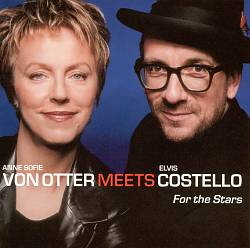 Today is my writing day and I’m all set up in the eyrie (ok it’s on the second floor but eyrie sounds so much better) with a thermos jug of tea and snacks which I seem to have eaten already. I’ve dusted off my writing CDs, an opera compilation, Ann Sofie von Otter’s crossover album with Elvis Costello For the Stars, and Handel’s Messiah. I know, weird, but I like to listen to vocal music when I write. I have yoga blocks and a couple of short workout videos bookmarked if I need to take a break.
 yrie James is the bestselling author of eight critically acclaimed novels, including The Missing Manuscript of Jane Austen, The Lost Memoirs of Jane Austen, The Secret Diaries of Charlotte Brontë, Dracula My Love, Nocturne, Forbidden, and The Harrison Duet: Songbird and Propositions. Her books have been translated into eighteen foreign languages. In addition to her work as a novelist, she is a screenwriter, a member of the Writers Guild of America, and a life member of the Jane Austen Society of North America. She lives with her family in Los Angeles, California. Connect with her on her
 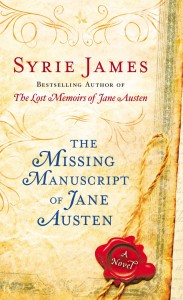 I had done a great deal of Austen and Regency era research when I wrote my novel The Lost Memoirs of Jane Austen, an education which has been enhanced over the years by additional reading and by JASNA’s many fun and informative conferences and meetings. I’d visited England many times including a wonderful, self-guided Jane Austen tour several years before.