Back to Top

Highclere Castle I was watching Downton Abbey last night (no spoilers- I know not everyone has seen the end yet) and after the episode there was a feature on Highclere Castle, the country house and estate that “play” Downton Abbey in the mini-series.

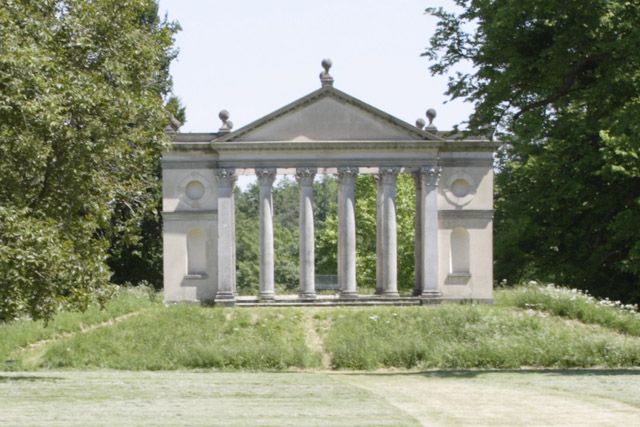
The house as it exists today was remodeled in 1839-42 in the style of the new Houses of Parliament so it did not exist in “our” Regency time, but, in the late 18th century the 1000 acre parkland was designed by Capability Brown and developed by the second Earl of Carnavon. At scenic points in the park the Earl placed follies to add to the beauty of the  landscape.

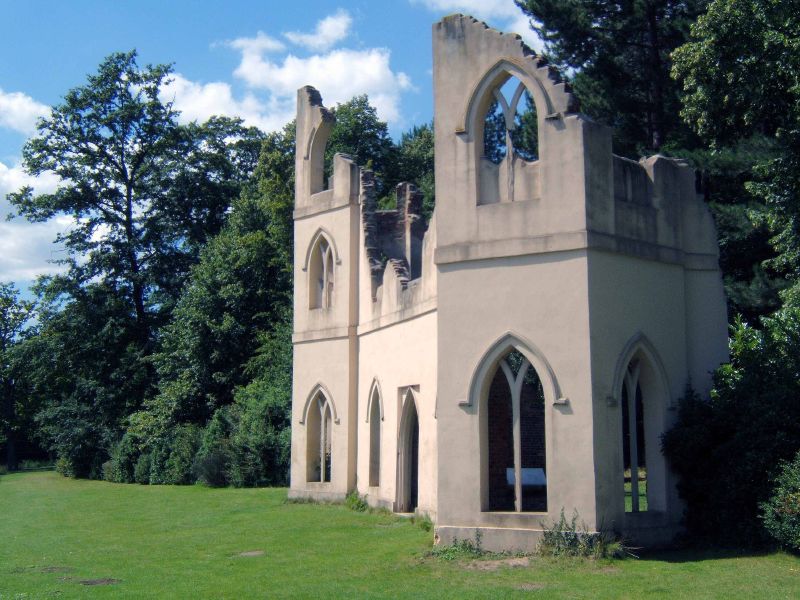
Follies are extravagant buildings constructed just for show and for no other purpose. They were popular among the wealthy in the 18th century, often inspired by Roman and Greek ruins gentlemen had seen on their grand tour, but they could also mimic old English ruins,  castles and towers and abbeys.

Follies

Highclere Castle

Neoclassical Temple Folly Highclere Castle Gardens

Gothic_Temple,_Painshill_Park_-_geograph.org.uk_-_101624

Gothic Temple Painshill Park

Painshill-Abbey1

Abbey Painshill Park

Brizlee Tower

Brizlee Tower

If you could have a folly, which one of these would you choose? Or would you prefer some other folly?

Remember there is still time to comment on Michelle Willingham’s Interview and earn a chance at one of four free books. I’ll select the winners at random after midnight tonight ET.


Five years ago (yes, this blog has been going for that long and more) I blogged about visiting Montpelier, James Madison’s house in Virginia. Last weekend I finally got back to see the house in its restored glory. I was worried I wouldn’t like it as much as I did last time when it was a construction zone, down to lathe and plaster. I remember standing in the drawing room and feeling shivers down my spine when the docent said that Jefferson, Lafayette, and Madison had all been in this room together, and that analysis of nail holes gave them clues as to where Madison had hung his paintings. Now, with the room fully restored, and the paintings (or reproductions thereof) hung, it was the full reveal–beautifully done but lacking that leap of the imagination the room demanded in its unrestored state.

No pics allowed in the house, but I took a few of the outside. Here’s the view looking west toward the Blue Ridge Mountains, barely visible on the horizon, the final frontier of the republic at that time.

When Lafayette visited he gave Madison a cedar seedling which grew into this magnificent tree, and one of Madison’s black walnuts survives next to it.

The garden created by the Dupont family, who were the last private owners of the house, is quite lovely, even when there’s not a whole lot in bloom. It’s full of bits and pieces they picked up in Europe (ah those were the days).

There’s a lot of interest now in the slaves who worked on Madison’s estate and excavations have revealed the buildings where they lived and worked. Here are the reconstructions of those buildings. One of their most famous slaves was Paul Jennings, who did the heavy lifting when Dolley Madison rescued the Gilbert Stuart painting of George Washington from the White House when the British invaded. He was also present at Madison’s death. His memoirs, A Colored Man’s Reminiscences of James Madison are available on google.

The restoration is not yet complete. We saw a room full of odds and ends that may or may not have been owned by Madison. Madison didn’t mark his books, astonishingly, and when Dolley sold the house in 1844 to her son from an earlier marriage, he sold stuff right and left to pay off gambling debts. There was also a room where the original plaster/lathe was revealed and an exhibit of costumes worn by Eve Best as Dolley Madison in the PBS American Experience episode.

Tell me about your favorite historical sites or places you’d like to visit.

Recently a friend sent me a link to stickk.com. According to the website, StickK is a method for setting and achieving goals developed by Yale economists. You make a commitment contract (for exercise, weight loss, writing, or just about any other goal) and if you don’t meet your goal, you donate a sum of money you designate to a cause of your choice.

It got me thinking about my work-in-progress and the snail’s pace at which it is progressing. In my defense, I’ve been really trying to work for an hour every day. When I miss, it’s usually due to issues related to my disabled husband, the kids or the house. (It is NOT a good thing when you are on a first-name basis with your plumbing and heating guys.) But there are days when I’m tired and the words don’t come.

Although it sounds like StickK works for a lot of people, I’m not sure it would be right for me. I already have a tendency to beat myself up, so maybe I don’t need a program like that to do it to me.

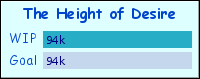
One thing I have learned helps my productivity is seeing my progress visually. When I participated in National Novel Writing Month a few years ago, I loved logging my daily wordcount and watching the graph update. So this week, I decided to look for something similar. Here’s my progress bar from storytoolz.com.

Click to view daily statistics

Unfortunately, life intervened on Wednesday and Thursday and so I haven’t had the fun of updating my wordcount. As for today, a dear friend and I are taking a mental health day and going for what is probably our last hurrah of the season on the ski slopes.

Next week I will be productive. I promise!

How about you? What sort of motivation do you find works best?

Also, Heaven Sent is my working title, but I’m worried that it sounds too much like an inspirational romance. What do you think?

Elena
http://www.elenagreene.com/
www.facebook.com/ElenaGreene

Posted in Writing | Tagged , | 8 Replies

So I have mentioned my day job, which is being the Community Manager at HeroesandHeartbreakers.com. One of my primary responsibilities is to assign blog topics, and to see what’s working and what’s not, and follow up in response.

One of the things I knew prior to starting the job–duh!–is that paranormal romance is the most popular genre. Not only that, once we started gathering a relatively large community, I saw that PNR posts inspire the most passion.
So why is that? It’s not like historical fans aren’t passionate, nor that they don’t visit the site and read the posts. They just don’t get all hot under the collar (and other places…) the way PNR fans do.
One of the reasons why, I think, is that although historicals are released in series, they don’t have ongoing cliffhangers. Or if they do, it’s not the Fate of the World that is in balance, but perhaps discovering who a spy is, or who stole the jewels, or who someone’s parents are, or whatever. Not earth-shattering stuff.
I also think that historicals, once the HEA is achieved, don’t have many places to go; in PNRs, there is always a world to save, or demons to kill, or vampires to stake. A couple can BE a couple in subsequent books and still be interesting. How interesting would it be to see Lord and Lady Whomever live their lives, have great sex, and be all spoony about each other?
I have to admit, as someone who gets bored once the couple is happily together–even at the end of the book–it wouldn’t be interesting at all.
There are historical mysteries featuring ongoing couples, but their working relationship is more important than their romance, at least in the ones I’ve read. They’re not as passionate anymore because they have to concentrate on solving the mystery.
So–any thoughts about how a historical series could spur on the kind of passionate response a PNR series has?
Follow
Get every new post delivered to your inbox
Join millions of other followers
Powered By WPFruits.com