Back to Top

Monthly Archives: February 2015

As I think I’ve mentioned here on several occasions, this summer Mr Fraser, our daughter (who turns 11 in two months), and I will be going to Europe this summer, among other things to attend the bicentennial reenactment of the Battle of Waterloo.

We’re going to be there for nearly four weeks, so there will be far more to our trip than just Waterloo. While some of the trip has nothing to do with my Regency research interests–e.g. the five nights we’ll be spending in a cottage in the Dordogne River valley near Sarlat–we’re planning a week in Spain that’s turning into The Frasers’ Excellent Roman Ruins and Peninsular War Battlefield Road Trip Adventure.

I’m still researching the details, but at this point it looks like I’ll get to feed my Wellington obsession at the following sites:

Vitoria, where in June 1813 Wellington trounced Jourdan and the British army captured the French baggage train, laden with treasure Joseph Bonaparte and his courtiers had seized from Madrid–the incident that opens my 2013 novella, A Dream Defiant.
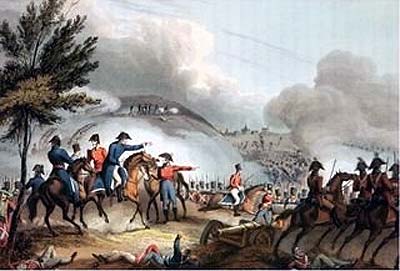
Salamanca, where Wellington, who is primarily regarded as a brilliant defensive general, proved himself pretty damn capable on the attack as well. As Maximilien Foy, one of the French generals there, put it:

“This battle is the most cleverly fought, the largest in scale, the most important in results, of any that the English have won in recent times. It brings up Lord Wellington’s reputation almost to the level of that of Marlborough. Up to this day we knew his prudence, his eye for choosing good positions, and the skill with which he used them. But at Salamanca he has shown himself a great and able master of manoeuvring. He kept his dispositions hidden nearly the whole day: he allowed us to develop our movement before he pronounced his own: he played a close game: he utilized the oblique order in the style of Frederick the Great.”

Badajoz, site of a bloody siege and storming followed by brutal and shameful pillaging in April 1812–and another battled that’s shown up in my writing, in my 2010 debut, The Sergeant’s Lady.

Talavera, the 1809 victory that first raised Wellington to the nobility as a viscount.
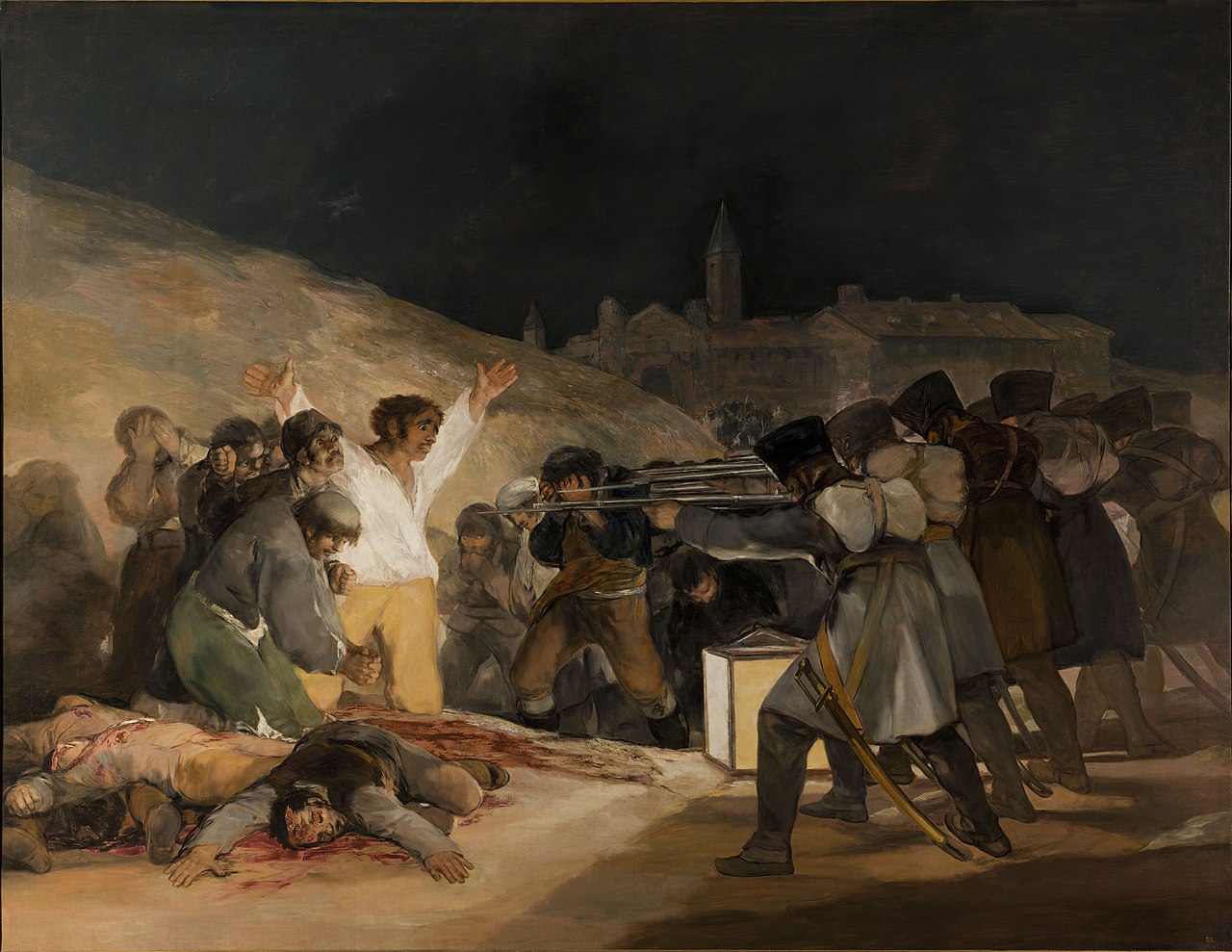
And last but very far from least, we’ll end up in Madrid, where we’ll visit the Prado and I’ll be able to see many of Goya’s works, including ones like the above illustrating the horror and brutality of war–something I try my best never to forget even as I write adventurous romances with soldier heroes.

I’m more thrilled than I can say that this trip I’ve been planning and dreaming of for a decade is now just a few short months away, and I can hardly wait to come back with pictures and stories to fill months of blog posts!
Three cheers for the Risky Regencies and how exciting that I can count myself one of them as of today. Thanks to the long time members for thinking of me and making this happen. Now I have an outlet for the research that never gets used, for research that is so great I need to share more than the mention it gets in a book, to discuss story concepts, release of new books, both ePublished and from legacy publishers, and the general commenting back and forth that makes this blog one of the best.

But first I want to tell you how and why I became a writer of Regency set romance. When I started writing I wanted to write books with happy endings and romance was the only place that welcomed an upbeat ending. (It was more than 25 years ago) I started with contemporaries when Harlequin and Silhouette were in competition, in what I think of as the golden days of romance.

After selling two books in quick succession (FATHER CHRISTMAS is now available as an ebook) I sold nothing, zip, zero for twelve years. I wrote and submitted proposals and the occasional complete manuscript and shook my head, or yelled, or cried at every rejection. Then one day a good friend of mine suggested that I write a regency. My answer was, “But regencies don’t make any money.” And her reply (with exasperation edging her voice,) “Mary, if you wanted to make money you would have written to the market for the last twelve years.”

Oh. Good point. For me it’s always been about sharing the story. Making money is a wonderful fringe benefit. So I finished the regency that I had started years before and sold it within three months. And eventually I made money writing series for Kensington, Bantam and Berkley.

Why has it been such a good fit? I was a history major in college. For me history is crammed full of stories waiting to be told.

Even more important: the Regency is, I think, the first period in history that 21st century people can truly relate to. The early nineteenth century is when the pendulum begins to swing from doing what is good for the community to what is good for the individual. In the late eighteenth and early nineteenth century men and women considered, for the first time, marrying for love rather than for what a marriage could add to the family in terms of wealth, land or social advancement.

Add to that the war with Napoleon and the beginnings of the Industrial Revolution and the period from 1800 to 1825 is a treasure trove of ideas and inspiration.

Why you love reading (or writing) regencies? What sort of stories do you enjoy the most?

winter landscape - winter sunrise

I’ve been trying to keep showing a cheerful front to the world here in this blog, Facebook and elsewhere, but it’s time for a confession. I haven’t done any creative writing in many months.

I’m not ready to go into the reasons at this point. I can only say that I’m facing a challenge bigger than any I’ve encountered thus far, including my husband’s stroke. The good news is that I have learned a lot from that crisis and am using it all now. I am no longer looking for a light at the end of the tunnel. I’ve also discovered that I can light my own way.

My instincts (which have been serving me very well lately and I should have listened to before) are telling me to focus my energy on solving the current crisis and that it is OK to take a break from writing. Sometimes writing is a solace, but pushing myself to write now—even if I had time—would be like a runner trying to train on a broken leg.

I am doing is letting go of the guilt imposed by internal and external critics and trusting myself. I know how to be mindful, how to tell I am being too hard or too easy on myself, how to ask the right questions and find out what I need more of, what I need less of, not only to get through the crisis but to thrive afterwards.

I think we all can do this. As Jane Austen wrote, “We have all a better guide in ourselves, if we would attend to it, than any other person can be.”

In order to learn to attend to that guide, I’ve been rereading Women Who Run with the Wolves, by Clarissa Pinkola Estes. She writes about women’s need to “go home”, where “Home is a sustained mood or sense that allows us to experience feelings not necessarily sustained in the mundane world: wonder, vision, peace, freedom from worry, freedom from demands, freedom from constant clacking. All these treasures from home are meant to be cached in the psyche for later use in the topside world.” One can “go home” many ways, including going into nature, praying, meditating, making art.

She also writes “if a woman doesn’t go when it’s her time to go, the hairline crack in her soul/psyche becomes a ravine, and the ravine becomes a roaring abyss.” I know from experience that this is true. So while I’m dealing with some crazy-making issues, I’m also doing my Morning Pages (a type of journaling taught in The Artist’s Way by Julia Cameron), meditating at every day and finding pockets of time to do smaller projects that sustain my creativity while demanding less time than the writing.

I am not leaving the Riskies, as our new schedule of posting just once a month allows me enough time to do the rest of the work I must do before I can write again. And I will get back to writing. The river hasn’t dried up; it’s only gone underground for a while.

Do you “go home”? How?

Elena

Murder in the Queen's GardenFebruary 3 was the release date for the third Kate Haywood Elizabethan Mystery, Murder in the Queen’s Garden!  I loved writing this one–summer at beautiful Nonsuch Palace, alchemy, dancing, courtly skullduggery…

To celebrate, I’m taking a look at why I love this time period so much–and giving away a signed copy to one commenter…

I’ve been fascinated by the Elizabethan age for as long as I can remember! When I was a kid, I would read everything I could find about the period—romance novels, thick history books I could barely lift off the library shelf, Shakespeare plays, and bawdy poetry I couldn’t really figure out, but I liked the weird words such as “fie, away, sir!” and “z’wounds!” I dressed up as Anne Boleyn for a fifth grade book report, and spent days watching videos like The Six Wives of Henry VIII and Elizabeth R.

That’s what I love the most about writing the adventures of Kate Haywood—getting to live at the court of Queen Elizabeth, losing myself in that world and seeing I through Kate’s eyes, but then returning to my cozy house with running water and electricity! (I do love the 16th century, but not really enough to want an open sewer running down the middle of my street, or cooking a roast over and open fire while trying not to set my petticoats on fire…)

Kate is a young lady with many interests. She is the queen’s favorite musician, a performer and composer, as well as the catcher of villains who try to harm the new queen. She finds herself in the very midst of all the excitement of the day, and in vicariously living her life I get to be there, too. A bit like the archaeologist I wanted to be when I was a kid, before I realized how dusty the job would be!

So—what are some of my favorite things about Queen Elizabeth and her world?

  1. There were so many strong, fascinating women in charge! Not just Elizabeth herself (who overcame a lonely, dangerous upbringing to become the most famous monarch in English history), but her mother and stepmothers, Mary Queen of Scots and her mother Marie of Guise, Catherine de Medici and Diane de Poitiers, and so many others)
  2. The wondrous explosion of the creative arts, especially theater, music, and poetry (Shakespeare, Marlowe, Sidney, Spencer, to name just a few)
  3. The Age of Exploration. Men willing to pack themselves into tiny wooden boxes and launch across the oceans to find lands that might or might not be out there. That’s amazing to a homebody like me!
  4. The advances in science and medicine
  5. And, because I am a girly-girl, the clothes! This isn’t the era whose fashions I would most want to wear myself (that would be the Regency—high waists and lighter corsets!), but the fashions of the Elizabethan era are so fascinatingly elaborate, with lovely fabrics and colors, intricate embroidery and lace ruffs. (for a closer look, Janet Arnold’s wonderful Queen Elizabeth’s Wardrobe Unlock’d is a great source)
  6. The architecture. Places like Hardwick Hall and Hampton Court, and Nonsuch Palace (which is gone now, but which Kate gets to explore in Murder in the Queen’s Garden!) are amazing settings for royal shenanigans!

For more “behind the book” info on Kate Haywood and her adventures, you can visit my website at http://amandacarmack.com! I’m also on Facebook and spend way too much time on Pinterest.

What is your favorite time period? Where would you visit if you had a time machine???

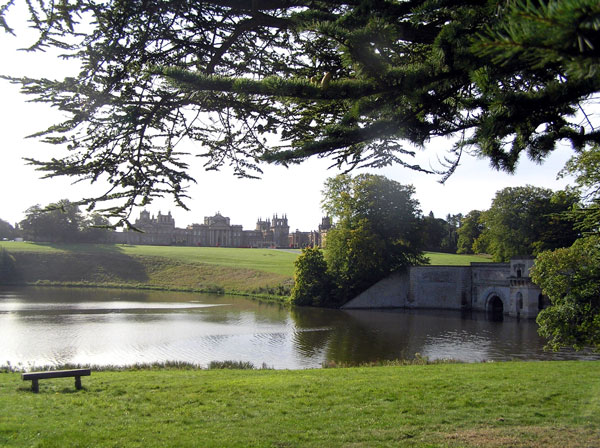
With some pride I can claim I’m ahead of the curve here. Next year, 2016, is the 300th anniversary of the birth of the famous landscaper and designer Lancelot “Capability” Brown, who transformed the grounds of English stately home. Today, however, is the anniversary of his death in 1783. You can visit capabilitybrown.org for lots of information and plans for next year.

An anonymous obituary of Capability Brown reads: Such, however, was the effect of his genius that when he was the happiest man, he will be least remembered; so closely did he copy nature that his works will be mistaken.

And that’s pretty much true. We have come to associate his hallmark “Serpentine” style–gentle undulations of land, curving rivers and drives, circular clumps of mature trees–as what we expect to see when visiting an English historic house. Brown never saw his completed work, trusting to nature and time to finish the job.

He is thought to have worked on over 170 gardens in his 35-year career. He began his career as undergardener and then head gardener at Stowe, one of his most famous creations:

stowe_grecian_vale_originalHere’s his plan for Bowood House, with the Grecian temple on the right (east) point and how it looks today:

bowood_plan_originalBowood-House-Foto-WikipediaBlenheim Palace:

blenheim_palace_originalPetworth House:

petworth_house_garden_originalAnd talking of Capability Brown (his nickname came about from assuring his clients that their estates held great capabilities), let us not forget Terry Pratchett’s fictional Bergholt Stuttley “Bloody Stupid” Johnson from Discworld:

His efforts in landscape design are especially noteworthy, and the Ankh-Morpork palace gardens are considered to be his greatest accomplishment. It is here that we find such creations as the hoho, which is a fifty foot deep ha-ha, the gargantuan beehive currently used as a pigeon coop in the absence of ten foot long bees, a structure referred to only as the “Johnson Exploding Pagoda”, iron patio furniture that melted and crazy paving that committed suicide, and the chiming sundial that also tends to explode around noon. In the palace grounds is also a maze so small that people get lost looking for it. Another notable feature is the ornamental trout lake, built long, but, sadly, only one inch wide. It currently houses one trout that is quite content provided it doesn’t want to turn around. “Perfect for the dieting fish”. At one point there was also an ornate fountain which, upon being turned on, did nothing but groan ominously for several minutes before firing a small stone cherub a thousand feet into the air. Read more

I’m wondering if there are any books with landscape designer heroes or heroines. Enlighten me! Or tell me which historic homes you’ve visited, or would like to visit, in England.

Follow
Get every new post delivered to your inbox
Join millions of other followers
Powered By WPFruits.com