Back to Top

Monthly Archives: July 2015

Barbara Cartland came up a few times at the Romance Writers of America conference this week, which reminded me of her wonderful cookbook. I posted some scans from it a long time ago, back when I had my first author photo taken (I still had long hair then!). This is some of the funniest food photography I’ve ever seen and I think you all deserve to see it.

***

I think my favorite author photo ever is this one of Barbara Cartland from the back of the cookbook:

In fact, the only photos to rival it are other photos of Barbara Cartland [google image search: look!!!]. I hope that someday I’m confident enough to have a photo that over-the-top taken of myself.

I bought this book at the library book sale a couple of years ago. It’s called The Romance of Food. It’s one of the best book sale purchases I have ever made.

The inside front cover describes it as “a collection of recipes which will revive even the most jaded lover and put a song in the heart of the most enraptured[…]Also, to show just how irresistible to the eye as well as to the palate are dishes such as Flower of the Heart, Summer Splendor and Fleur de Lis d’Amour, they and many others have been photographed at her own home, one of the most romantic settings in England.”

On page 12, we learn:

“Some of the youngest-looking men on the screen and stage declare they owe their youthful appearance to a large consumption of liver and kidneys. Pope Pius V, famous for his aphrodisiacal dishes, originated a pie in which layers of sliced bull’s testicles alternated with ground lamb kidneys.”

Here are some of the best photos:

“Seafood in a Melon Basket: the hidden wonders of the deep evoke the mystic wonders of Love.”

The caption for that one reads: “An exotic creature from the deep, the color of two red lips, which can invite, provoke, and surrender.”

And this one is just for Susanna Fraser:

“Beef Wellington: England’s greatest General who defeated Napoleon and a plate worthy of his name in the Battle of Love.”

Some other great captions [tw: racism]:

“Noisette of Lamb with Baby Vegetables: What woman does not long to be carried like a lamb in the arms of the man she loves.”

“Gypsy Magic and Imperial Splendor: The gypsies wandering romantically through the Countryside make watercress soup but the Russians with fire and passion prefer Borsch.”

“Duck with Orange and Grand Marnier Sauce: A plate of Chinese magic in whose life the duck has always had a very special place.”

“Normandy Pheasant: The leaves of Autumn fall from the trees but the beautiful exotic pheasant, who comes from China, delights the sportsman and surprisingly the sportswoman.”

“Mocha Chocolate Cake, Black Currant Gateau and Meringues: An English tea; how many men have been beguiled and captivated by a soft voice offering them a meringue?”

Can you describe a plate of food in the style of Barbara Cartland?
Posted in Food | 8 Replies

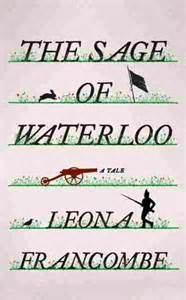
How many books have been written about Waterloo? Leona Francombe, the author of THE SAGE OF WATERLOO estimates over two hundred with her book one more entry into the field. And a very unique entry it is.

The Sage of Waterloo is a rabbit named William. With an anthropomorphic bent which I usually dislike the author gives a unique view (wow that’s stating the obvious) of a battle that is as well known as DDay.th9IB0KITG

Waterloo is not a subject that I have studied extensively (hello Diane Gaston!) But I think even the well-educated student of the war will find this book fascinating and beautifully written. William hooked me on page 6 “If you just stumble across Hougoument the scene is quite unremarkable….Until you see the three chestnut trees. Two are dead, the third not far behind them. They look like freaks…and then you realize they’re over three hundred years old, and the only remaining witnesses to the fighting and you understand. Place your hand on one – even a dead one, and you will feel a pulse.”

William’s home is the farm that was the scene of the earliest fighting at Waterloo, a battle that claimed close to fifty thousand dead and wounded (counting both sides together) and ended a war that was as all involving as the World Wars that came over 100 years later.

William’s story manages to cover some of the more familiar aspects of Waterloo including the Duchess of Richmond’s Ball, but what fascinated me the most is his recounting of what happened at the once elegant and serene chateau/farm of Hougoument the day before the Waterloo.

“Go there yourself and you will feel it: the knowing wind…and a strange sort of peace that is not peaceful at all. Sometimes, …it’s as if a worn curtain is shifting and through a tear in the fabric you can see something unimaginable for such a sleep backwater.”
Who can resist reading on after that? The New York Times reviewer, Laline Paull, says that “will hinge on whether its premise instinctively charms or alienates.”

Obviously I was charmed.

What is your favorite recounting of the Battle of Waterloo and why has the battle never been made into a movie?

As I’m preparing my first two novels for re-release, I’m reminded of all the research I did while I was writing those first books for Dorchester and exploring the Regency period at the same time. In Bewitched, I had my hero and heroine buy presents for the hero’s family, and for some reason, I thought it would be an excellent idea if they bought snuff for his brother. And so I happily dived into all things to do with snuff…

Beau Brummell
By the Regency era, snuff had become the preferred choice of tobacco in the fashionable world and had largely replaced pipes and cigars. In this, the beau monde followed the example of dandy extraordinaire Beau Brummell, and what’s more, he also dictated how snuff was to be taken: According to Brummell, only one hand should be used to open one’s snuff box and transfer the snuff to the nose. To take a pinch of snuff in an offhand manner—even better: in the middle of a conversation!—without glancing at either snuff or snuff box and, most importantly, without grimacing, was considered the highest art. If you were clumsy or if you took too large a dose, you ran into danger of dribbling the snuff down your neckcloth or, even worse!, to stain your nose. (And now let’s all imagine a romance hero with… On second thought, let’s not.) (Ugh!)

Snuff-taking was an expensive habit—not only did the prices for snuff ran high, but the substance also had to be carried around in a suitable container: the snuff-boxes of the rich were pieces of intricate workmanship. The lids were often decorated with miniatures—some of them innocent, some of them… err… less so. (The latter were sometimes hidden on the inside lid or behind a sliding cover.)

The collecting of snuff boxes became a rich man’s hobby, and again, Beau Brummell was leading the fashion. According to his biographer William Jesse, among the boxes Brummell owned was one particularly intricate container: “His passion for snuff-boxes was extreme: he had one which he only could open, and some friend of his, while he was at Belvoir, tried it with his pen knife, with the intention, no doubt, of purloining his snuff, which was always excellent. Hearing of the outrage, Brummell said, ‘Confound the fellow; he takes my snuff box for an oyster.'” (from The Life of George Brummell, Esq.) (There are also slightly different versions of this particular anecdote.)

Indeed, you didn’t just share your snuff with anybody. Sharing snuff acted as a marker of favor and a sign of friendship: “If you knew a man intimately,” Gronow writes in Recollections and Anecdotes: A Second Series of Reminiscences (1863), “he would offer you a pinch out of his own box; but if others, not so well acquainted, wishes for a pinch, it was actually refused. In those days of snuff-taking, at the tables of great people, and the messes of regiments, snuff-boxes of large proportions followed the bottle, and everybody was at liberty to help himself.”

Snuff was provided in dry or moist versions, many of which were scented as well, with jasmine, orange flowers, musk roses, or bergamot. It came in different colours, ranging from yellow to brown, black or even purple. Detailed descriptions of different kinds of snuff can be found in Arnold James Cooley’s Cyclopaedia of Six Thousand Practical Receipts (1851):

“Among some of the most esteemed French snuffs are the following:—Tabac de cedrat, bergamotte, and neroli, are made by adding the essences to the snuff.—Tabac perfumée aux fleurs, by putting orange flowers, jasmins, tube-roses, musk-roses, or common roses, to the snuff in a close chest or jar, sifting them out after 24 hours, and repeating the infusion with fresh flowers as necessary. Another way is to lay paper pricked all over with a large pin between the flowers and the snuff.—Tabac musquée. Any scented snuff 1lb.; musk (grown to a powder with white sugar and moistened with ammonia water) 20 grs.; mix.”

(My hero & heroine eventually bought tabac de neroli.)

PS: Oh gosh, I’ve just discovered that back in 2006, there was a film about Beau Brummell based on Ian Kelly’s biography. With James Purefoy as Brummell and Matthew Rhys as Lord Byron. *swoons*

Matthew Rhys as Byron*swoons again*

Posted in Regency, Research | 3 Replies

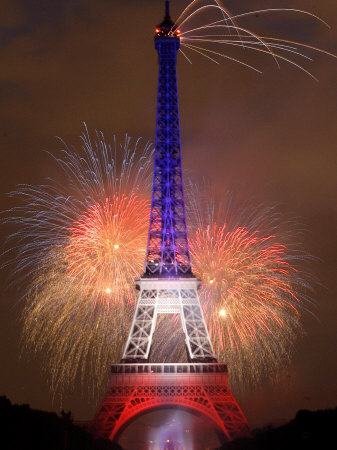
Bastille1Or rather, happy day before Bastille Day, since July 14 is the time to celebrate the day in 1789 when an angry mob stormed the prison and released scads of prisoners–well, 7 anyway. It was officially declared a national holiday on July 6, 1880. It’s a good excuse to spend your weekend drinking champagne, eating wonderfully unhygenic cheese, wearing berets, and listening to “La vie en rose” over and over (it’s MY excuse, anyway, though really every day is a good day for champagne and Piaf!)

To help you get your celebration in order, here are a few links to give you some party pointers and a few quotes to inspire you.

Fun party drinks (they mostly appear to be sticky-sweet concoctions made from things like cherry brandy, but I think the Marie Antoinette sounds sort of yummy…)

Fun party menus (though with drinks like the Montmartre, who needs food???)

Official stuff from the French Embassy

And more on how to celebrate

“France has more need of me than I have need of France” –Napoleon

“It’s true that the French have a certain obsession with sex, but it’s a particularly adult obsession. France is the thriftiest of all nations; to a Frenchman sex provides the most economical way to have fun. The French are a logical race.” –Anita Loos

“In America, only the successful writer is important; in France all writers are important; in England no writer is important; and in Australia you have to explain what a writer is” —
Geoffrey Cottrell

“I have tried to lift France out of the mud. But she will return to her errors and vomitings. I cannot prevent the French from being French.” –Charles de Gaulle

“Boy, those French. They have a different word for everything.” –Steve Martin

“Paris is always a good idea.” –Audrey Hepburn in Sabrina

“To err is human. To loaf is Parisian.” –Victor Hugo

“Frenchmen are like gunpowder, each by itself smutty and contemptible, but mass them together and they are terrible indeed!” –Samuel Taylor Coleridge

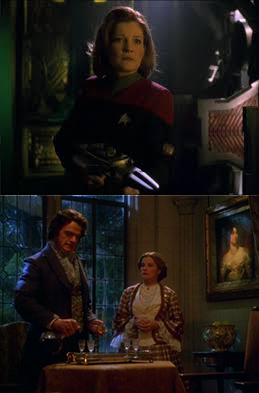
Janeway_PicsI’ve been streaming Star Trek: Voyager on Netflix a lot lately. Although the series (like all the Star Trek series) had some uneven writing, I do love the strong female characters, including Captain Kathryn Janeway.

Some Star Trek fans hated her, but I’m with Sara Eileen Hames, who wrote this blog post on the TOR website: “Janeway Doesn’t Deserve this Shit”.

Hames quotes one of the more egregious bits of snark she has read about Janeway:

“What they needed was a take charge, dynamic female Captain, what they gave us was a moralizing, overly-liberal pushover all too willing to throw her crew’s life away for no reason at all if it made her seem superior and at least as interested in prancing around in frilly dresses on the holodeck as she is in leading her crew.”

So there it is—her worst offence is taking a little free time from her stressful job to enjoy a romance holo-novel. The horror!

And not just any romance, but a historical romance featuring a governess. How cool is that?

Here’s something Hames herself wrote that sums up how I feel:

“Janeway is a strong female character to rock all strong female characters: A leader who is female-gendered, in touch with her sense of gender, and yet invested with a non-gendered position of highest responsibility which she executes with capability and compassion.”

In other words, everything that is most frightening to the fan-boys who admire Kirk’s girl-on-every-planet exploits. (Don’t get me wrong, I enjoy Kirk, but he does fall in love rather easily…)

Here’s another reason I love Janeway. She’s older than your average kickass heroine. While I enjoy heroines like The Avengers’ Black Widow, as played by Scarlett Johansson, and though they are interesting characters in their own right, they can also be perceived as serving the purpose of appealing to the fantasies of teenaged boys (and less evolved older men). Captain Janeway is sexy but her purpose is to captain a starship.

Likewise, a good romance heroine has more to her than beauty. She may or may not be physically tough, but she always has strength of character, like Jane Austen’s heroines who refuse to cave in to pressure and marry men not worthy of them.

It’s been far too long since I’ve had much time to read, so my favorite examples of strong historical romance heroines are from older books: Alys from Mary Jo Putney’s The Rake and the Reformer, who works as a land steward and supports the hero in battling his alcoholism, and Melanthe from Laura Kinsale’s For My Lady’s Heart, who is outwardly tough as nails while hiding heartbreaking secrets.

I hope at some point to have time to read more for pleasure, so help me out. Which historical romances have you read recently that feature particularly strong heroines?

Elena

Follow
Get every new post delivered to your inbox
Join millions of other followers
Powered By WPFruits.com