Back to Top

Monthly Archives: August 2016

Hi everyone! I’m reposting an old History Hoydens post today, about Regency ghosts. When I wrote it, I was working on a book with a ghost character. The book is now under my bed, but who knows what the future will bring? I still think this stuff is fascinating. The block quotes are from The Haunted: a Social History of Ghosts by Owen Davies.

The character I imagined was a murder victim seeking justice (or maybe vengeance…he wasn’t entirely a nice ghost), which has been a popular kind of ghost over the centuries—so popular, in fact, that murder investigations have been opened because of ghost sightings, up through the early part of the eighteenth century. In one case in 1660, a Westmoreland magistrate investigated the death of Robert Parkin because of a report that Robert’s ghost had appeared to a man in the parish church crying “I am murdered I am murdered I am murdered.”

In 1728, a Dorset coroner exhumed a body because of several sightings of the boy’s ghost. In this case the ghost didn’t even speak—its appearance was enough to indicated foul play, despite no previous suspicion about his death. Upon examining the body, the coroner decided he had really been murdered.

Murder victims sometimes haunted their killers: a servant who had killed his master and gotten clean away to Ireland was driven to turn himself in by a headless ghost who appeared to him every night demanding “Wilt thou yet confess?” Sometimes they haunted other acquaintances.

David Garrick in his iconic

David Garrick in his iconic “just caught sight of the Ghost” pose, 1769. Image via Wikimedia Commons.

One of the most upsetting incidents described in the book is this one:

The astrologer and occultist John Heydon (1629-c.1670) recounted how one of his mother’s maids was pulled out of her bed one night by the ghost of a lover named John Stringer, who had recently been murdered by a jealous admirer. Despite three doors leading to her bedroom being locked, the maid ‘had the right side of her haire and headclothes clean shaved or cut away’ by Stringer’s ghost.

That poor woman! Whether you believe in ghosts, or whether you think she imagined the ghost out of guilt and shaved her own hair, it’s an awful story. I hope the “jealous admirer” was prosecuted, and didn’t get to continue stalking and attacking her and her loved ones.

Sometimes ghosts appeared to strangers at the site of their hidden graves. This tied in with another ghost tradition, that souls who didn’t receive Christian burial would walk until their bodies were found and interred in consecrated ground. In 1806, in a town near Manchester, the townsfolk drained a deep pool after a recently missing man’s ghost repeatedly appeared over it at midnight, leading to suspicion he had been murdered. His body was actually found at the bottom, although the evidence indicated he had drowned accidentally. (Not…really sure what this “evidence” would have consisted of at the time. Since writing the original post I’ve read a lot about Elma Sands’s 1800 murder in New York, which also involved the body spending time in water, and there was more or less a complete lack of contemporary forensic knowledge displayed in the autopsy testimony by prominent doctors. So I guess what this really means is that the coroner’s jury ruled for accidental death.)

Francis Grose [in his 1787 A Provincial Glossary, with a Collection of Local Proverbs, and Popular Superstitions] wondered why the ghosts of those murdered did not go straight to the nearest justice of the peace, rather than hang about their burial place frightening passers-by. ‘Ghosts have undoubtedly forms and customs peculiar to themselves,’ he concluded. [Google books link for Grose]

Ghosts historically have not talked much, although apparently they talked more before the Victorian era!
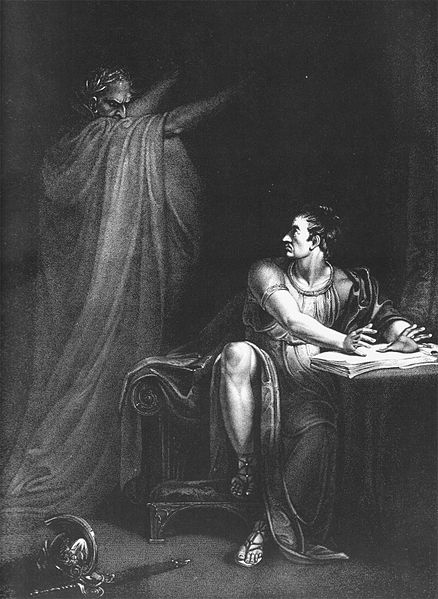
“Brutus and the Ghost of Caesar.” Copperplate engraving by Edward Scriven from a painting by Richard Westall. London, 1802. Image via Wikimedia Commons.

Completely silent ghosts became the norm to a much greater extent over the course of the nineteenth century. Generally ghosts who did speak were wrong-righting ghosts. (Although there were exceptions! In 1706 Mr. Shaw, a fellow of St John’s College, Oxford, chatted with the ghost of a dead colleague for two hours before receiving his warning of untimely death.) Murder victims were the most common. (Conflicts over inheritance were also a big one: “Mother’s ghost appeared to me and she says I get the antique dining set!”)

Ebenezer Sibly, eighteenth century writer on astrology and the occult (and huge racist), insisted that only murder victims could speak (and possibly only those who had been killed in “circumstances uncommonly horrid and execrable”), because the traumatizing memory did “more powerfully operate upon the faculties of the apparition, so as to enable it to frame the similitude of a voice, so as to discover the fact, and give some leading clue to detect and punish the wicked perpetrator.”

What’s your favorite ghost story? (Either a famous one, or one that happened to you or someone you know…)

RARMDid you know that August is Read A Romance month? it’s a growing movement started by romance advocate Bobbi Dumas who reviews for NPR, the New York Times and Kirkus.  Click on this link for details on RARM:  http://www.readaromancemonth.com/about-read-a-romance-month-2/

This year I am participating along with 92 other authors including, among others Regency authors, Joanna Bourne, Lauren Wittig, Cathy Maxwell, Caroline Linden and Jade Lee. There are 93 authors in all, three each day of the month. Authors answer questions based on this year’s theme, books they recommend and more personal recollections of romantic moments in their own lives.

Take a minute to check out the calendar, make a copy and be sure to share the details with your friends http://www.readaromancemonth.com/author-calendar-2016/ See if some of your favorite authors are interviewed, come by on their day, read and comment.

MY DATE is Monday August 21. PARM2I’ll remind you more than once so you WILL remember.

I read, write and love romance! Have you heard of Read A Romance Month before this post? Do you have any other favorite sites that celebrate romance?

Hello all! I’m sorry that I haven’t been around much of this year. Life has been more than ordinarily challenging–maybe I’ll share some of the story someday.

What I can tell right now is that once again I’m working on a comeback. I’ve some experience at this already, having made two creative recoveries in the past, and this time I am more strongly motivated than ever. Perhaps over the next few years, I’ll even surprise myself. I hope so!

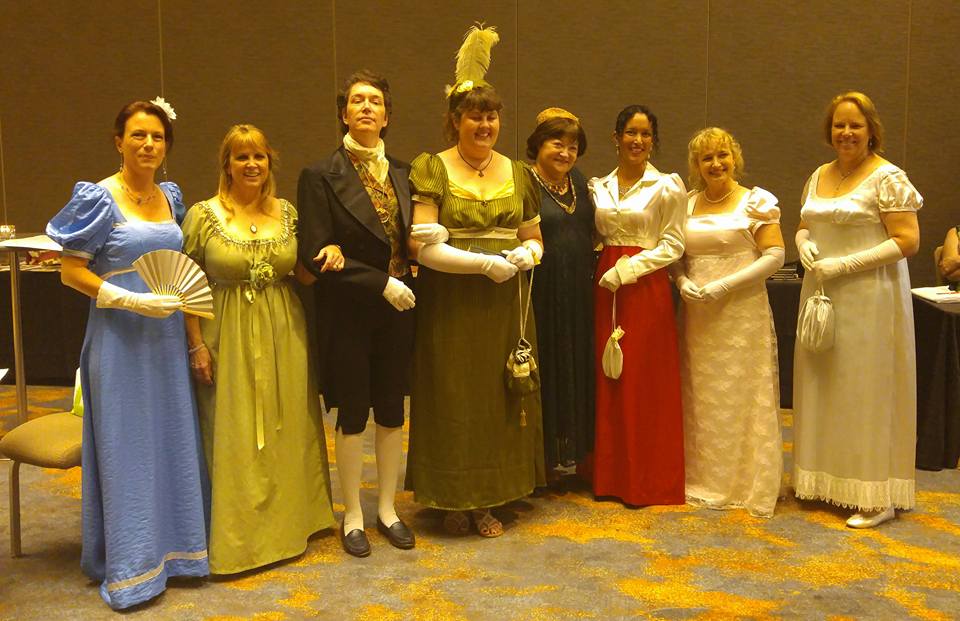
One of the first steps I’ve taken was heading out to this year’s RWA conference in San Diego. I know about a month has passed, but you may still enjoy some pics from the Beau Monde (Regency special interest chapter) soiree. Here are some of the members, including me, posing in our Regency garb.
RWA_2016_Beau_Monde

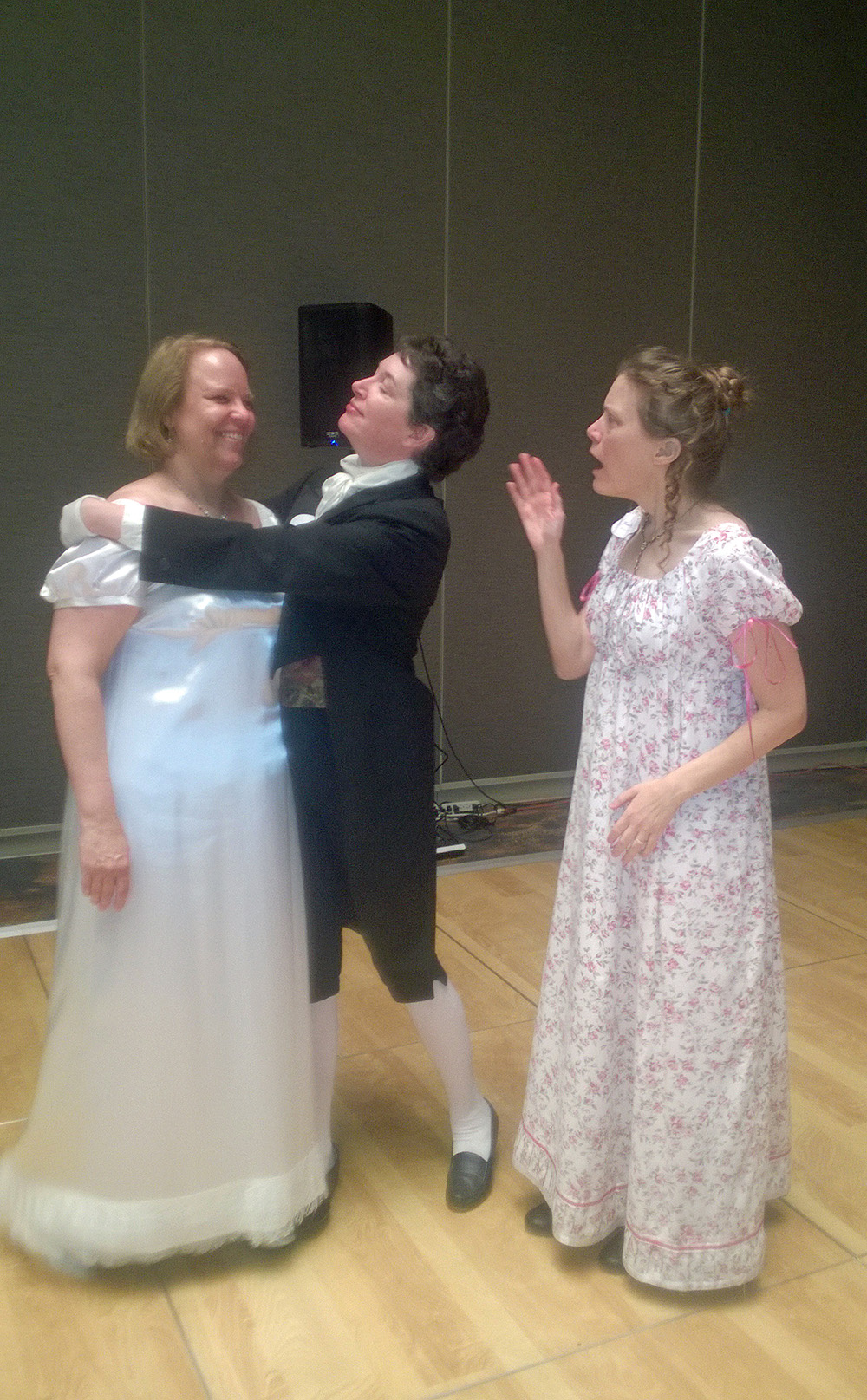
And here I am with Cara King, author of My Lady Gamester and past Risky, along with Sir Reginald Scott, the rakish cousin of author Regina Scott.
RWA_2016_Roommates_Smaller

Some of us helped out with a video used as part of the RITA and Golden Heart ceremony. Here’s the video from Youtube. Check us out at about 15:15.

Since RWA, I have been starting work on several projects. More on that soon! And it’s nice to be back. 🙂
Elena

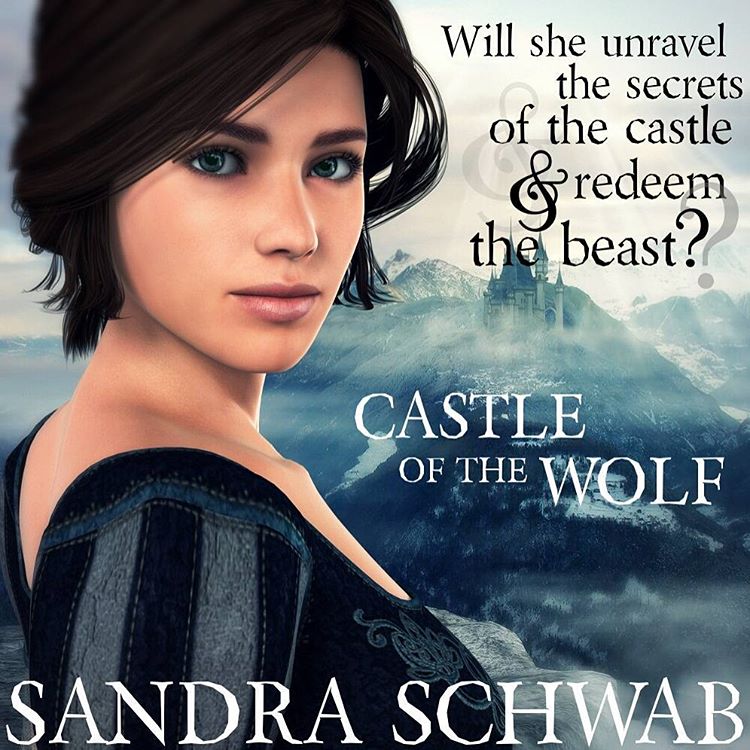
Sandra Schwab, Castle of the Wolf Teaser image
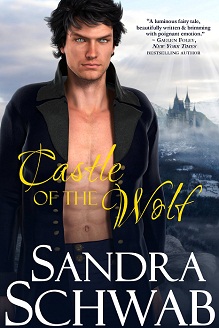
Last month I re-released Castle of the Wolf, a novel that was originally published back in 2007. It is a gothic romance — well, at least, it was planned as one, only then the lady with the sturdy boots turned up in the story and stomped all the gothicness to dust. Quite… eh… literally.

In the best gothic tradition, Castle isn’t set in England, but in southern Germany — in the Black Forest, to be exact, the place where I spent my primary school years and a place that is drenched in stories and covered with deep, dark woods. And quite a few castle (ruins).

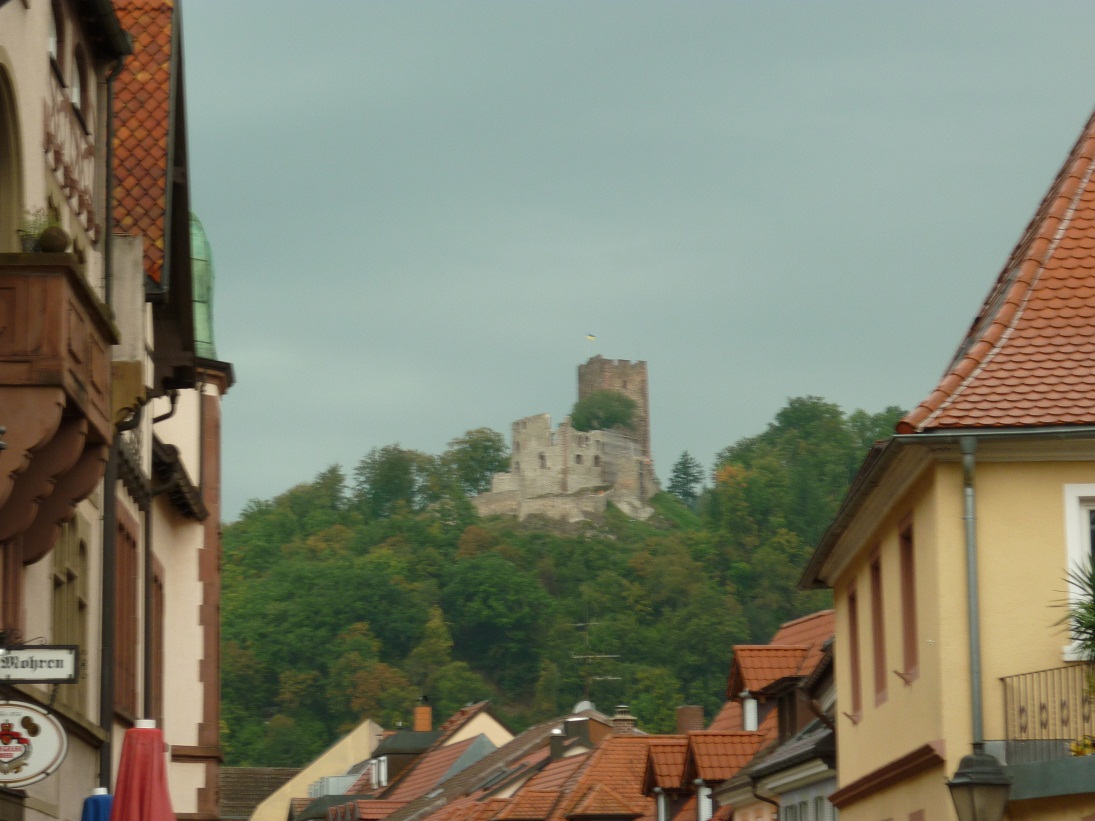
Kastelburg in Waldkirch

The Kastelburg in Waldkirch. I spent my primary school years in this little town, & the town & castle were the inspiration for the main setting in Castle of the Wolf

Upon her father’s death, my heroine surprisingly inherits one such castle upon the condition that she marry the son of its former owner. Alas, that son turns out to be a super-grumpy dude, who does his very best to make Cissy leave the castle again. Enter rats, bats, a mouse skeleton (hey, it’s a gothic romance, there needs to be a skeleton, right?), and a bunch of very mysterious gargoyles. Oh, and there’s a very intriguing deck of (erotic transformation) cards too. In other words, my heroine has her work cut out for her if she wants to unravel the secrets of the castle.

One of the main themes of the novel is hinted at when Cissy is still in England and is packing her bags:

Cissy carefully wrapped one of her tea dresses around her copy of the Lyrical Ballads  so the leather-bound volume would come to no harm in the travel chest during her journey. […]

“I cannot imagine what you want to do in Baden.” Wood creaked as her brother George shifted on the chair. “There is nothing for you there.”

There is nothing for me here. For a moment, Cissy had to close her eyes. Then she shook her head and busied herself with wrapping her book and putting it away. “I am going to have a castle.” Just imagine: a castle. Like a princess. She took up another tome.

“And marry a man you have never seen in your life.” Suddenly George sounded aggressive. “How our dear father could have come up with such a harebrained scheme is quite beyond me, I swear!”

Distracted, Cissy frowned and rubbed a thumb over a scratch in the blue leather cover of her book of German fairy tales, a present from her father for her nineteenth birthday. With her forefinger she traced the golden lettering: Kinder- und Hausmärchen gesammelt durch die Brüder Grimm.

Castle of the Wolf is a story about stories: it’s stuffed full of references to fairy tales, local legends, and to modern popular literature. While Cissy travels to the Black Forest by steamboat down the Rhine, she hears the grizly legend of the Mouse Tower of Bingen (evil bishop eaten up by mice), and later on Fenris, the grumpy hero, provides for a nice Austen / Bridget Jones moment: “For somebody called Fenris to strut around like a snarling demon wolf was just as ridiculous as, say, for somebody called Darcy to refuse to dance at an assembly.” I also couldn’t resist putting a German copy of Terry Pratchett’s Men at Arms (Helle Barden) into the castle library.

However, the most significant body of reference is formed by works of British and German Romanticism. I mean, when you have a grumpy hero and a completely exasperated heroine, you just have to reference Byron’s Byronic heroes, right? (Or rather, let the heroine reference them.) (She has never liked Byron’s Pirate and thinks Fenris’ sulking around the castle is a tad too melodramtic.) In addition, the German setting allowed me to refer to all my favorite German literary fairy tales, first and foremost Ludwig Tieck’s “Eckbert the Fair” (no happy ending, alas) with the enchanting song about woodsolitude sung by a magical bird:

Wooldsolitude,
Brings joy to me
Now and tomorrow
Forevermore,
What joy to me,
Woodsolitude.

In the course of Castle of the Wolf, Cissy also reads one of my favorite literary novels in German, E.T.A. Hoffmann’s The Life and Opinions of the Tomcat Murr. The first two volumes of the novel were published in 1819 and 20; Hoffmann died before he could begin working on the third volume. In a way, it is fitting the novel remained a fragment, for it is told in fragments: it is the autobiography of the (rather conceited) Tomcat Murr, who rips apart an older book to have paper to write on and as blotting paper. This older book is another biography, that of the bandmaster Kreisler, and at first it seems that these two stories don’t have anything to do with each other, but they become more and more intertwined. The Life and Opinions of the Tomcat Murr was clearly a writing experiment for Hoffmann, a fun project where he created something very innovative and very intriguing.

cover Castle of the WolfSo in other words, my own novel, Castle of the Wolf, is a declaration of love for stories and for reading and for seeing the world through the lens of fiction.

If you would like to accompany Cissy on her journey to the Black Forest, grab a copy of Castle at the following retailers:

Amazon: http://www.amazon.com/dp/B01IDD8K7U/
Apple: https://itunes.apple.com/us/book/id1133885806
B&N: http://www.barnesandnoble.com/s/2940153356716
Kobo: http://store.kobobooks.com/Search/Query?fcmedia=Book&query=9783000400926

Happy reading!

Follow
Get every new post delivered to your inbox
Join millions of other followers
Powered By WPFruits.com