Back to Top

Monthly Archives: September 2014

So…what have I been doing while I was MIA from the Riskies for a couple of weeks???  Have been a bit under the weather (ugh!), and using up all my energies trying desperately to get caught up on the deadline for my “Regency in Brazil” story–and also in being jealous of Risky Diane and her England adventures!  And being much too excited about the prospect of a new Royal Baby, of course.  (I hope it’s a girl!  Prince George would make a fantastic big brother, LOL)

moscowfireBut today in Regency history–in 1812, the great fire of Moscow broke out and raged for several days.  According to the “In Your Pocket” city guide (which gives some good, concise info on the march to Moscow, and the bitter disappointment to Napoleon that those stubborn Russians were willing to burn the country down to keep it from him!):

On 15 September Napoleon arrived at the Kremlin and the very same day massive fires began in the Kitay Gorod area just to its east. Fanned by high winds and wooden housing, the inferno soon threatened the Kremlin itself and more fires were being spotted in other parts of the city. Moscow was soon ablaze in a terrifying firestorm. As a French diplomat in Moscow later noted in his memoirs, “the air was charged with fire; we breathed nothing but smoke, and the stoutest of lungs felt the strain after a time.” With fire raging across the city, on 16 September Napoleon was forced to leave the Kremlin, relocating to the safety of the Petrovsky Palace, an imperial residence on the road to St. Petersburg, while his troops gave up the fight against the fire and instead took to pillaging whatever treasures remained. 

By 18 September the fire was brought under control and Napoleon returned to the Kremlin at the centre of a city of ashes – still awaiting the tsar’s final surrender. Yet the tsar refused to give up, while Kutuzov was based south of the city, out of reach of the French and busy mustering new troops and bolstering his army. To make matters worse, the great fire had destroyed yet more of the French army’s rapidly dwindling supplies, and Napoleon’s men were now beginning to starve. Finally after occupying Moscow for just five weeks the situation reached critical levels and Napoleon was left with no choice but to begin a long retreat west.

And, of course, these very dramatic events inspired a very dramatic piece of music–Tchaikovsky’s “1812 Overture”!


I think it might be time for a re-read for War and Peace!  (Don’t laugh–when I first read it, I took it on a beach vacation, and everyone laughed at me for choosing THAT as a beach read!  But it was fascinating….)

Should we go set off some fireworks today in sympathy??  What have you all been doing this week????

Posted in History | 1 Reply

A sketch of Castle Sooneck

… or at least I hope I will.

And not just any castle, but Castle Sooneck, one of the umpteen (and I mean UMPTEEN!) castles, ruin, and other historic sites along the banks of the river Rhine in the Upper Middle Rhine Valley. A cultural heritage organisation of the area as well as a local newspaper were looking for a “castle-blogger,” somebody to move into Castle Sooneck for six months and blog (in German and English) about life on the banks of the Rhine. The deadline for applications was at midnight on Sunday – and of course, I sent in my application. For how cool would it be to live in a castle?!?!

Well…

Let’s just say it probably won’t be all roses and rainbows: Apparently the view from the castle-blogger’s bedroom will be the (active) stone quarry next door. And down in the valley up to 400 trains a day pass by on one of the major transport routes of Europe.

Add to that that castles tend to be drafty places and that those thick walls don’t make for particularly warm rooms. What the colder season (= anything that’s not summer) can be like in a historic building is rather vividly described by the Dowager Duchess of Devonshire in the chapter about “Cold Houses” in her book Home to Roost:

“A new heating system was installed when we moved in[to Chatsworth] and it works pretty well. Even so, the wind can penetrate huge old window frames which don’t fit exactly. In September we go round with rolls of sticky brown paper to stop the gaps. When the front door is open and people with luggage dawdle, all our part of the house feels the blast so we’ve cut out a small door out of the big one and you have to enter at speed. There are zones of intense cold, seldom visited in winter: the Scupture Gallery, State Rooms and attics, where a closed-season search for forgotten furniture can feel colder than being out of doors.”

I would imagine that it’s probably different in a castle (if anything, it would be worse). But hey, that’s what woolen sweaters, thick socks, and the tea kettle were made for, right? Moreover, the scenery of the Upper Middle Rhine Valley would certainly make up for any minor inconvenience: it is one of the most beautiful areas of Germany – and Regency people were mad for it.

Tourism dwindled down during the Napoleonic Wars, but as soon as Napoleon was safely banished to his island, the British came back to the Rhine in huge numbers, undeterred by either customs stations or the German beds, which, apparently, were on the horrid side if Murray’s Hand-Book for Travellers on the Continent: Northern Germany, 1845 is to be believed:

“One of the first complaints of an Englishman on arriving in Germany will be directed against the beds. It is therefore as well to make him aware beforehand of the full extent of misery to which he will be subjected on this score. A German bed is made only for one: it may be compared to an open wooden box, often hardly wide enough to turn in, and rarely long enough for an Englishman of moderate stature to lie down in.”

No, not even the German beds could deter the British tourists. Happily, they all followed in the footsteps of Childe Harold, often dragging a copy of Byron’s work along on their journey to appreciate more fully the

blending of all beauties; streams and dells,
Fruit, foliage, crag, wood, cornfield, mountain, vine,
And chiefless castles breathing stern farewells
From gray but leafy walls, where Ruin greenly dwells.

The ruins and castles still dwell along the Rhine, and it would be a great thrill indeed to explore (and sketch!!!) them all as the castle-blogger of Sooneck. 🙂

~~~

What about you? Would you like to live in a castle for six months? Or would all the stairs put you off?

Posted in History, Regency | Tagged , | 8 Replies

IMG_0024
I arrived home yesterday at about 9:30 pm, which was like 2:30 am in the UK, so I am a little tired today but already missing England. There were so many wonderful experiences on this trip, it is hard to pick out one to share today.

Since this was The Duke of Wellington tour, most of the sites we visited related to the Duke. One I knew little about was Walmer Castle.

IMG_0023The Duke of Wellington was appointed Lord Warden of the Cinque Ports, a post he held for 23 years. The Cinque Ports are five ports on the English Channel that were originally formed for military and trade purposes, but is now entirely ceremonial. Henry VIII built Walmer Castle as a defense against possible invasion.

Wellington spent part of each year at Walmer Castle. One of the reasons he liked it so well was that it was enough distant from London that he was not inundated by visitors. One notable visitor, though, was Queen Victoria who came with Prince Albert and their two oldest children.

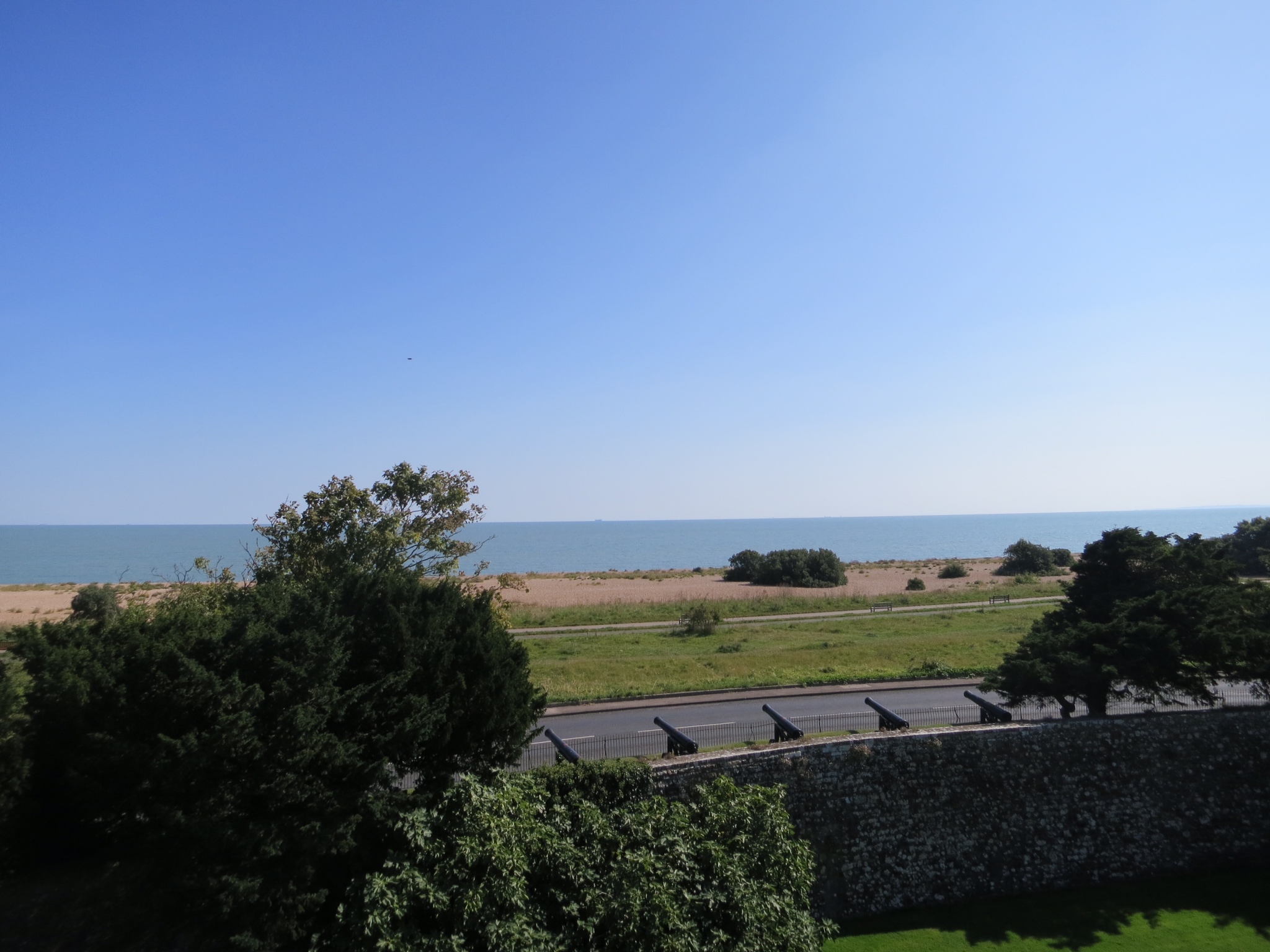
IMG_0022We saw Wellington’s bed chamber at Walmer. There was a writing desk under a window where Wellington wrote letters early in the morning, looking out at the sea as he did so. Wellington wrote letters standing up and the desk looked somewhat like a lectern.  In that room was his camp bed where he preferred to sleep and also the arm chair where he suffered his fatal stroke.

Wellington used to walk every day and he was a favorite with the local children. He’d keep a number of sovereigns each suspended from a red or a blue ribbon. He’d ask the children if they were for the navy or the army. Navy received blue ribbons and army received red ones.

IMG_0021The gardens of Walmer, now beautiful, were reputed to be a shambles during Wellington’s tenure. He’d hired a gardner with no knowledge or experience in gardening. One day in London a Sergeant Townsend wrote to the Duke to complain of being discharged from the army without a pension. Wellington gave him the job of gardener at Walmer.

The gardens are beautiful today.

Two other notable Lords of the Cinque Ports were Sir Winston Churchill and the Queen Mother.

More later!

Things have been interesting and hectic around here in the past couple of weeks, so I hope you don’t mind if I take this opportunity to just give you a short summary of changes in the Robens household.

The big thing is that I finished my manuscript, did a first round of edits (see picture) and sent it to my agent. Woo Hoo!  That was way too long in getting done, but I’m pretty happy with it and looking forward to the next round of changes.

While I’m waiting to get notes from Louise, I have another big (and only peripherally greenjanerelated to writing) project. I am moving the Republic of Pemberley  web site to a new server and new platform. If you are familiar with this web site, you might have an idea of what a huge undertaking this is. I’m admittedly daunted, but it must be done. We are no longer the 10,000,000 page views a month site that required a dedicated server. We are down to about 3,000,000 that we hope, in conjunction with a more streamlined platform, will live happily on a smaller, less expensive, server.

gunnarAnd I have added to the family. In July, after several years of pining for a dog (as three cats are apparently not sufficient), I adopted Gunnar, a three-year-old rescue Corgi. He’s adorable, well-behaved, smart, and friendly. As you can see by the picture, he also thinks he’s a cat so fits right in with the rest of the family.

This is what’s going on in my life and why I have no research post for you today. Now I’m off to buff up my computer move project schedule. What are your plans for the weekend?

It’s been an extremely busy summer. I could never have guessed how much effort (and emotion) goes into launching a child into college. I miss her, but she’s doing very well. I don’t hear from her as much as I’d like, but that’s actually good news.

Now the weather’s gotten much cooler, and I’m looking forward to many things this autumn.

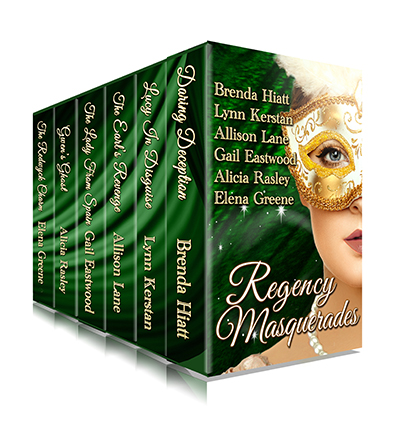
RM3DWebI’ve been working on Regency Masquerades, a boxed set of reissued Regencies with a wonderful group of authors: Brenda Hiatt, Lynn Kerstan, Allison Lane, Alicia Rasley and fellow Risky Gail Eastwood. It’s coming out October 13 and is available for preorder now at Amazon, Barnes & Noble, iTunes and Kobo Books. The introductory price is just 99 cents. Check it out!

Over the summer, I did some story brainstorming but didn’t have much time to write. Now that my schedule is starting to open up, I am looking forward to fresh writing!

oaktreeI’m also looking forward to other pleasures of the season. The foliage in upstate NY is amazing, even when it’s on this oak tree that drops its leaves about two weeks after the surrounding maples (necessitating another round of raking).


Some people rave about pumpkin coffee. Personally, I’d rather have a pumpkin muffin with regular coffee, but to each her own. My love at this season is apples. Love to pick them, eat them, drink cider, make apple crumble with oatmeal topping. YUM.

What are you looking forward to this autumn?

Elena
www.elenagreene.comm

Follow
Get every new post delivered to your inbox
Join millions of other followers
Powered By WPFruits.com